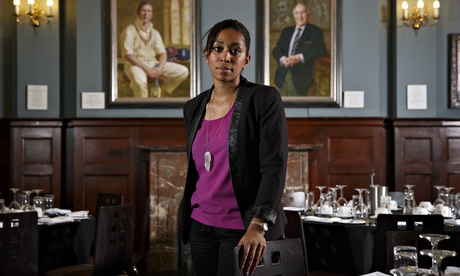
Ebony Rainford-Brent, recently appointed Surrey’s first director of women’s cricket, is far too modest when describing her ascent from 10-year-old novice to England international as “pot luck”. Yet for the talented former all-rounder embarking on a new cricketing journey, the boundaries that could have easily prohibited an impressive career are being used for good.
“I got lucky. God knows what I could be doing now,” she says when reflecting on a remarkable rise to the top. “For some reason they needed a girl to play in a tournament at a local school. So I played, and I got talent-scouted.”
Rainford-Brent has come a long way from the sceptical kid who first picked up a bat 20 years ago. This month she became only the second director of cricket in the women’s game, Surrey following a precedent set by Sussex with Charlotte Burton and appointing the 30-year-old to work within both the elite and grassroots levels of the club.
Surrey Women finished second in Division One of the County Championship last season, beaten only by Kent. It marked their significant progress of recent years and they have next year’s title in their sights. For Rainford-Brent, the camaraderie of the dressing room has been exchanged for a new internal role, in which she hopes to make significant developments that will benefit the first team in the long term.
Women’s cricket has progressed greatly since Rainford-Brent was first enticed into the game. Growing up in urban south London, a career in the sport had never been contemplated. Back then, there was no orthodox pathway for inner-city girls keen on the game, never mind an effective system to attract youngsters in the first place.
Rainford-Brent’s oldest brother was murdered in Brixton when she was five years old. She came from a sporting family but her potential was spotted randomly during a weekend session at Stockwell Park school in Lambeth, run by the Cricket for Change charity. Had it not been for a chance encounter, her story could have been quite different.
“I look at my journey and it was almost complete pot luck,” Rainford-Brent says. “I grew up down the road and an organisation came into my school, it was going into a lot of state schools, trying to introduce cricket, with taster sessions. I was the only girl who was interested, luckily I had older brothers who were sporty, but I didn’t like cricket and I wasn’t interested.
“But I was encouraged to go down to a session on a Saturday and I was spotted. At that school where I played with my mates, there was so much talent. But it was very informal at the time, it wasn’t structured and there weren’t systems in place. There was very little funding.
“It has changed a lot. If I was a young girl now, at 10 years old, I would think: ‘There’s a career there.’ I could be on a good wage, travel the world, get a sponsored car, all these opportunities. When I started there wasn’t any of that, you funded yourself to get around. But I have that experience and will use it to put more measures in place.”
Back then her sporting heroes were the Surrey and England players Alec Stewart and Alex Tudor, people from whom she seeks advice on a regular basis.
The initial challenge in her new job, she says, will be to make the transition from team to administration, retaining her close relationships with the playing squad – many are still close friends – but at a distance that enables her to make major decisions.
“I think it’s going to be a bit weird. I’ve had advice from various people, Alec Stewart is great for advice. That’s the tough thing, I’ve had three years out of playing but I still know everyone in this team and I’m quite passionate,” she says. “I might have to learn to disconnect a little bit, it’s going to be a fine line. I don’t want to change my relationships because they are brilliant, but it might require a bit of space.
“It’s an amazing role, to have been part of the game here, coming through these doors since I was 10 and to have had an amazing career here, to now be able to come back and work. Work needs to be done. We want Surrey to be driving change in the domestic game, which at the moment is a bit placid and needs some investment. We want to see Surrey Women respected as much as the men’s first XI.”
Stewart and Tudor may have been worthy idols, but Rainford-Brent believes the progress made by the international women’s game in recent years will have a marked effect at grassroots level. Youngsters will no longer need to look to men for inspiration, she says, with many girls already professing a desire to be the next Charlotte Edwards or Sarah Taylor.
For Surrey, many challenges lie ahead. Rainford-Brent is determined to play a key role in the development of the domestic game, which she believes needs greater investment and infrastructure. To have the power to influence the game’s future, though, is an opportunity she is relishing.
“We need to show that these director roles are valuable. I think some counties still have budgets and are not sure if it is worth the investment, but I think if we can show there is a lot to be done then it will encourage others to get on board. I want to be at that forefront.
“I think we want more women to come through in the game as a whole. On the playing side and in administration, it’s absolutely critical. I would love to see more women coming through to higher positions and there’s nothing that would stop a female director of cricket for a whole club. The barriers are definitely moving away.”