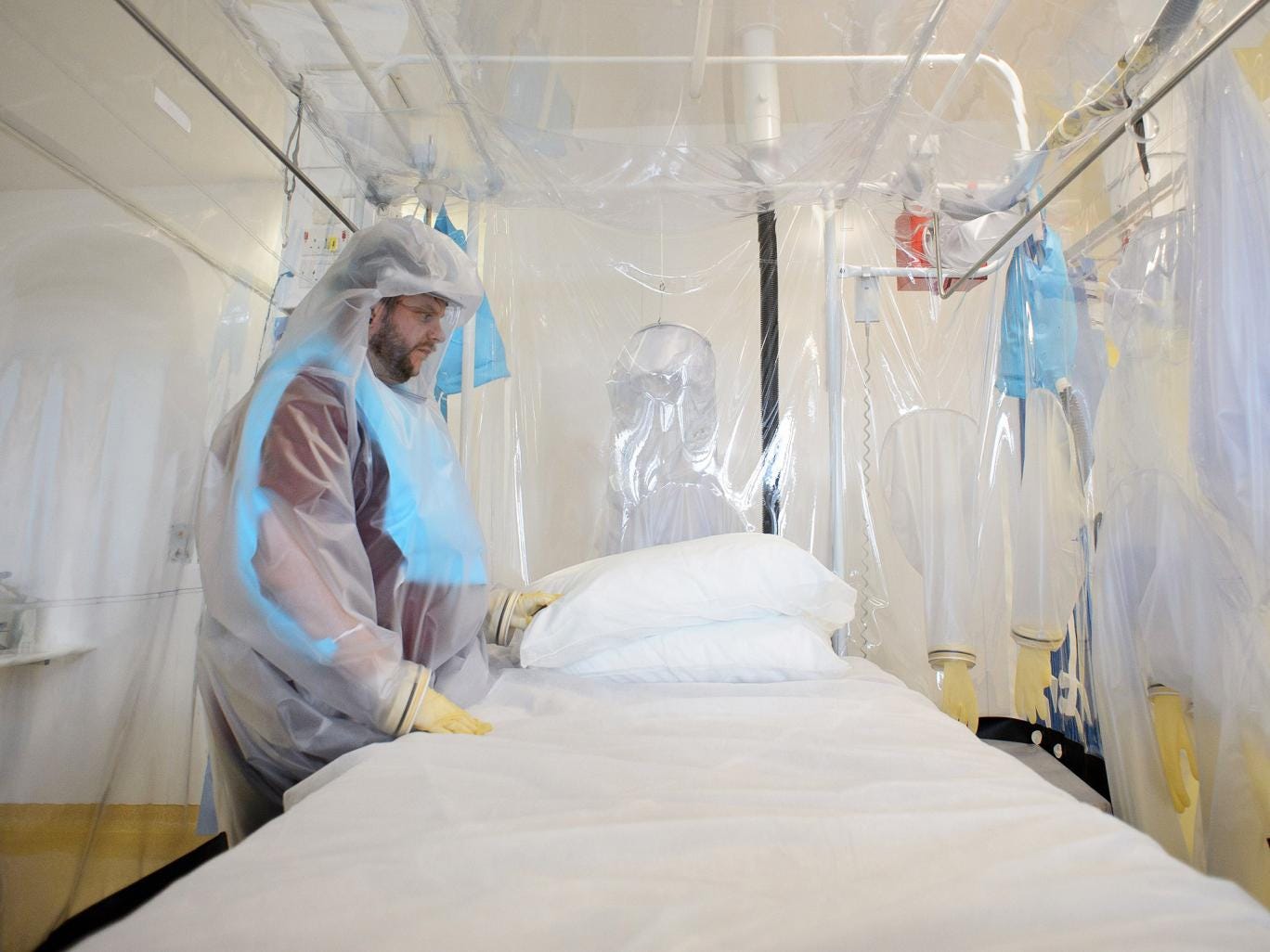
Scientists have found a group of women who appear to be immune from the deadly Ebola virus.
British and European scientists studying those who have survived the disease made the discovery while studying people who have survived Ebola. But early findings from that research show that some people haven’t contracted the disease at all — potentially showing how others can become resistant to the disease, despite it living on in their body for perhaps months after recovery.
Ebola is highly-contagious, and can be caught through exposure to bodily fluids once symptoms have appeared. But some of the women found studied during the research had been exposed to the disease but not caught it.
“These are phenomenal women who have had a horrendous story to tell,” Professor Miles Carroll, a a virologist at the UK government’s chemical and biological weapons research facility, told The Guardian. “They have had lots of contact with the virus, clearing up vomit, diarrhoea, sleeping with children with Ebola overnight, and they never presented with Ebola symptoms and somehow they have an immune response to the virus.”
The team studied 60 women, including 25 from Guéckédou in Guinea where the current outbreak is thought to have started. One woman studied was found to have antibodies in her blood, despite never having the virus.
Nobody is yet sure how those women become immune. But further study could show what is happening in the body to allow them to be — and so provide extra information about what happens after people have recovered from the disease.
The virus has been found by experts to be lingering on in some organs and other parts of the body. It is thought that Ebola’s power to cling on in the body is the reason that Ebola nurse Pauline Cafferkey is ill from complications from the disease — despite having apparently recovered from it at the beginning of the month.