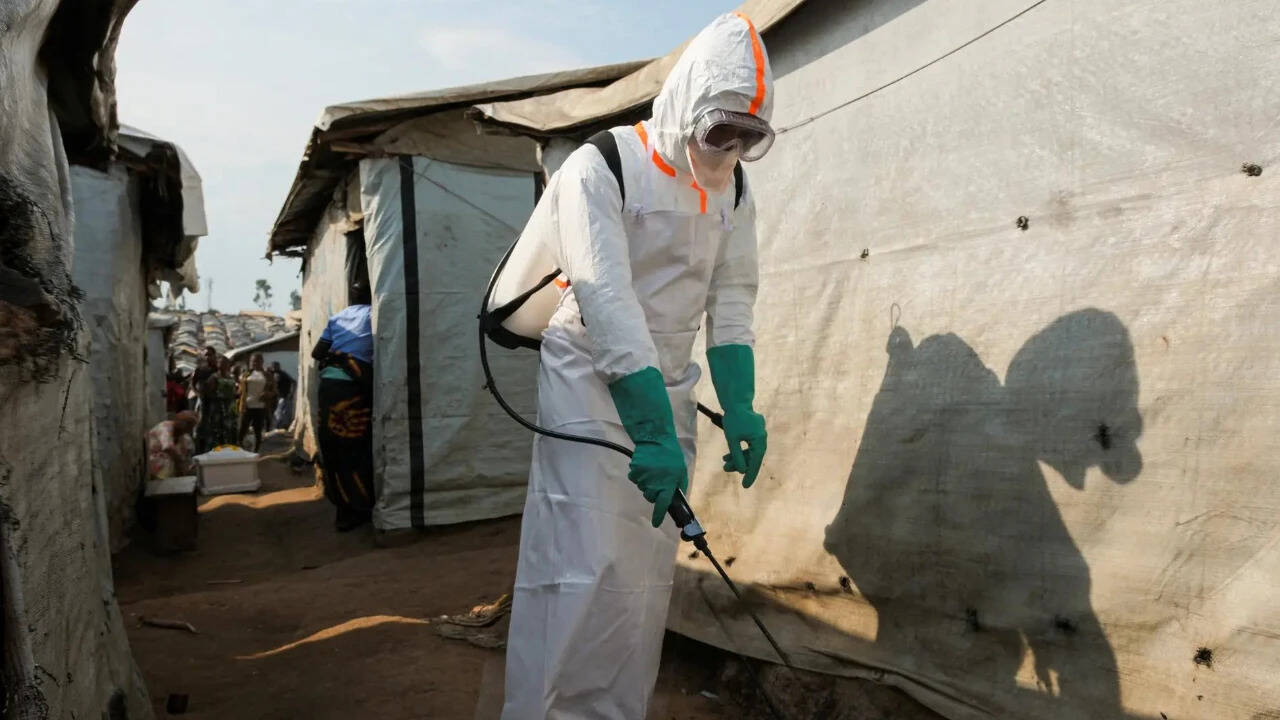
The Ebola outbreak in the Democratic Republic of the Congo (DRC) could cost African economies up to US $3.6 billion, eliminate tens of thousands of jobs and push nearly one million more people into poverty if the crisis worsens, the United Nations said on Tuesday.
Get breaking news anytime, anywhere. Download the TOI app now!
The warning comes as the United Nations Development Programme (UNDP) released a rapid socioeconomic assessment of the outbreak, saying the impact extends well beyond public health and risks triggering a wider development crisis across the region.
"The resources and we step up, we can contain this outbreak and prevent further losses," Damien Mama, United Nations Development Programme resident representative in Congo told Reuters.
"If we do not, this health emergency risks becoming a much deeper and prolonged development crisis across the region and potentially the continent."
According to the UNDP report, Rapid Socioeconomic Assessment of Ebola Outbreak in the DRC, the current outbreak of the Bundibugyo Ebolavirus is driving a far-reaching socioeconomic crisis in the DRC and neighbouring countries including Uganda, Rwanda and South Sudan.
The agency said the outbreak could push 9,85,000 additional people into poverty, with women expected to bear a disproportionate share of both the economic and health consequences. It also warned that the crisis could eliminate tens of thousands of jobs, disrupt education and healthcare services and inflict losses of up to US $3.6 billion across African economies if regional and global shocks intensify.
UNDP said that while immediate public health measures such as quarantines remain necessary, wider restrictions on travel and trade are unintentionally damaging local economies and informal livelihoods.
"Ebola does not stop at the hospital gate," said Ahunna Eziakonwa, UN assistant secretary-general and UNDP regional director for Africa.
"It affects livelihoods, education, food security, trade, public finances and trust. If we treat this Ebola outbreak solely as a health challenge, we risk missing the much larger development emergency unfolding around it."
According to the assessment, the economic impact stretches well beyond those infected with the virus, disproportionately affecting vulnerable communities with limited financial resilience.
Even under a baseline scenario in which transmission is successfully contained in the DRC and Uganda, the report projects that the DRC alone could suffer real GDP losses exceeding US$1 billion and lose around 55,000 jobs.
UNDP said trade disruptions, border restrictions, transport delays, declining consumer confidence and interruptions to informal markets could reduce Africa's GDP by US $2.37 billion even if the outbreak remains largely contained. It added that the poorest 20 per cent of households could see a 1.76 per cent decline in daily consumption, reversing fragile development gains and increasing the risk of long-term poverty.
The report further warned that the diversion of healthcare resources towards Ebola response efforts could trigger wider health consequences. It estimated that disrupted medical services could result in up to 2,520 excess infant deaths in the DRC from non-Ebola causes.
To reduce the socioeconomic impact, UNDP proposed a gender-responsive policy framework, including targeted cash transfers and consumption subsidies for vulnerable groups, particularly female-headed households. It also called for replacing blanket border closures with targeted screening measures and community-based protection systems to allow informal trade to continue safely, while ensuring emergency financing keeps maternal, reproductive and infant healthcare services operational alongside Ebola response efforts.