Summary
- In the first case of Ebola being diagnosed on UK soil, a Scottish nurse is being treated in an isolation unit in Glasgow after being diagnosed with the virus hours after arriving home on Sunday night from west Africa via a British Airways flight from Heathrow.
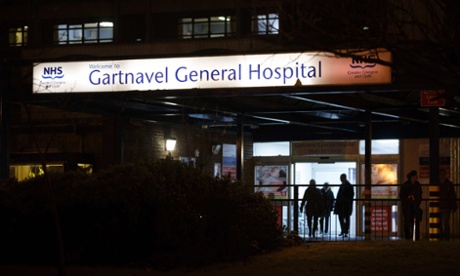
- The healthcare worker was admitted to Glasgow’s Gartnavel hospital after feeling unwell with a fever at 7.50am on Monday morning, having flown into the city at 11.30pm on Sunday.
- The charity Save the Children has confirmed that the patient was an NHS healthworker who had been working at the Ebola Treatment centre at Kerry Town, Sierra Leone. They were in Sierra Leone for two months.
- Steps are being taken to trace scores of passengers on the nurse’s Royal Air Maroc flight into the UK from Casablanca in Morocco, and the 71 passengers on her internal British Airways connection – BA 1478 – from Heathrow to Glasgow on Sunday night.
- After chairing a meeting of the Whitehall Cobra contingencies committee in London, UK Health Secretary Jeremy Hunt said there would be a review of the “procedures and protocols” adopted by NHS workers and other government staff working in Sierra Leone.
- Urgent preparations are being made to transfer the nurse to the UK’s main Ebola treatment centre at the Royal Free hospital in London, where the British nurse William Pooley was successfully treated after contracting Ebola in Sierra Leone earlier this year.
Updated
Health Secretary: Review of procedures and protocols
After chairing a meeting of the Whitehall Cobra contingencies committee in London, Health Secretary Jeremy Hunt said there would be a review of the “procedures and protocols” adopted by NHS workers and other government staff working in Sierra Leone.
We are reviewing our procedures and protocols for the other NHS workers who are working in Sierra Leone alongside colleagues from the Department for International Development and the Foreign Office.
They are doing a very, very brave job, under very challenging circumstances. We want to make absolutely sure that we are doing everything we can to keep them safe.
Hunt also told the BBC that the authorities were in the process of tracing all the passengers on the flights between Casablanca and London and London and Glasgow.
The clinical advice is that the risk to other passengers was very low, he added.
Save the Children confirms patient is NHS worker working for it
Save the Children has confirmed that the woman being treated for ebola in Glasgow is an NHS healthworker who was working for the charity.
Michael von Bertele, Save the Children Humanitarian Director, said:
We can confirm that an NHS healthworker working with Save the Children at the Ebola Treatment Centre at Kerry Town, Sierra Leone, has tested positive for Ebola.
Our thoughts are with the individual, their family and colleagues at this difficult time. We wish them a speedy recovery.
Save the Children is working closely with the UK Government, Scottish Government and Public Health England to look into the circumstances surrounding the case.
By coincidence earlier this evening, we published the fourth report for the Guardian by Martin Deahl, a consultant psychiatrist from Shropshire who is working in Sierra Leone.
From his placement with the international aid agency Goal at their Ebola treatment centre in Port Loko, he reflects on the highs and lows of the ‘most surreal and extraordinary’ Christmas of his life:
Late on Christmas Eve we got the lab-test result for Gabriel, one of the patients on the confirmed ward.
He collapsed two weeks ago just as the UK’s international development secretary, Justine Greening, was arriving at the Goal Ebola Treatment Centre (ETC) for a visit.
I had helped him to a chair and unwittingly became an Ebola contact in the process. It’s easy to forget that it’s not just the red zone that’s dangerous: Ebola is everywhere.
British Airways has said that the airline is working closely with health authorities in England and Scotland and will offer assistance with any information they require.
A spokesman said:
Customers who flew from London Heathrow to Glasgow on BA1478 which departed at 2100 on Sunday December 28 and have concerns should contact the special number 08000 858531 set up by the Scottish Government.
The safety and security of our customers and crew is always our top priority and the risk to people on board that individual flight is extremely low.
[ The patient’s leg between Sierra Leone and Casablanca was flown with Royal Air Maroc]
Updated
British health authorities have confirmed the details of the flights on which the patient was travelling (via Casablanca, Heathrow and Glasgow):
UK #Ebola case: Patient left Sierra Leone on 28 Dec, flights: AT596 Freetown-Casablanca, AT0800 Casablanca-London, BA1478 Heathrow-Glasgow
— PublicHealthEngland (@PHE_uk) December 29, 2014
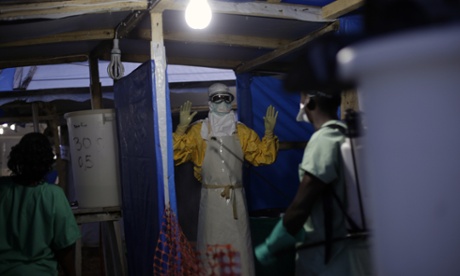
While we’ve been focusing for the last while on events here in the UK, the real crisis is still very much in West Africa, where the virus has caused more than 7,800 deaths.
Based on a two month investigation, the New York Times has just published a report on what it says was a fleeting moment last Spring to bring the epidemic under control, and which it says was lost.
After more than 20,000 cases and 7,800 deaths, it can be hard to recall that there was a moment in the spring when the longest and deadliest Ebola outbreak in history might have been stopped.
But without a robust and coordinated response, an invisible epidemic was allowed to thrive alongside the one assumed to be contained.
Although conditions were ideal for the virus to go underground, some of the world’s most experienced Ebola fighters convinced themselves that the sharp decline in newly reported cases in April and May was real.
The NY Times investigation reports that the World Health Organisation and the Guinean health ministry documented in March that a handful of people had recently died or been sick with Ebola-like symptoms across the border in Sierra Leone.
However, the information about two of those possible infections reportedly never reached senior health officials and the team investigating suspected cases in Sierra Leone.
Updated
The Department of Health tweets this public health message in a bid to alleviate fears:
To catch #Ebola you have to come into contact with someone’s bodily fluids pic.twitter.com/XzSxQGYGWI
— Department of Health (@DHgovuk) December 29, 2014
Public Health England has further advisory notes on Ebola here, including advice for humanitarian workers and for health workers in NHS hospitals, community care and for family and friends of staff who are working in environments where they may come into contact with Ebola.
Updated
Analysis
A confirmed Ebola case among one of the first healthcare workers to leave the UK for Sierra Leone is a major blow to the health authorities who have been trying to quieten fears about any possible impact here while ramping up the fight in west Africa, according to the Guardian’s Health Editor, Sarah Boseley.
In an analysis piece which you can read in full here, she adds that huge efforts were made to try to ensure that none of the hundreds of NHS workers who volunteered to make the trip would return with the virus.
It took several months before the final decisions were made on which volunteers would be sent. They were given psychological tests and intensive training; the first batch were trained for nine days, much of it in a simulated treatment centre at the sort of high temperatures to be expected in Sierra Leone.
While it’s not surprising that a healthcare worker from the UK has been infected, the unfortunate thing is that it has happened so soon, she adds:
It would be a tragedy if this incident stops more volunteers being sent or if it starts another wave of Ebola panic in the UK. This virus would not easily be passed on in this country.
The healthcare worker who has fallen ill must have been sufficiently well to pass the many temperature checks on the route home, first at Freetown airport, then in Casablanca which has a full body heat scanner and then at Heathrow airport, where Public Health England’s nurses take you through a questionnaire and yet another temperature check.
Updated
A spokesman for the Royal Free Hospital in London has said it was not yet clear when the patient would be transferred to London from Glasgow. He said:
The Royal Free London can confirm that it is expecting to receive a patient who has tested positive for Ebola.
The patient will be treated in the high level isolation unit (HLIU).
The unit is run by a dedicated team of doctors and laboratory staff and access is restricted to specially trained medical staff.
A specially designed tent is set up around the patient’s bed so the infection can be contained while they are treated.
Now is probably a good time to re-read this myth busting piece by the Guardian’s Health Editor, Sarah Boseley.
Some key points:
How is Ebola spread?
The Ebola virus is transmitted in the bodily fluids of people who are seriously ill, who are likely to be vomiting, bleeding or have diarrhoea. Blood, faeces and vomit are the most infectious fluids, and in late stages of the disease even tiny amounts can carry high loads of virus. But a nurse who got a patient’s blood on their hands could wash it off with soap and water without any ill-effects. He or she would become ill only if they had a cut or abrasion on their hand or touched their mouth, eyes or nose, which would allow the virus to pass into their bodily fluids.
What are the symptoms?
It can take two to 21 days for symptoms to show, although usually it is five to seven days. Typically, the first signs are a fever involving a headache, joint and muscle pain, sore throat and severe muscle weakness. Many of those symptoms are similar to flu, so Ebola is not immediately obvious, though it should be suspected in anyone who has been in west Africa recently. After that come diarrhoea, vomiting, a rash and stomach pain. The kidneys and liver stop working properly. Patients may bleed internally and also from the ears, nose, eyes and mouth.
Updated
Some reaction now from the Prme Minister, David Cameron, via Twitter:
PM and Scotland’s First Minister agree to ensure everything possible will be done to support #Ebola patient and protect public health.
— UK Prime Minister (@Number10gov) December 29, 2014
So what happens now in terms of the timetable for treating the nurse diagnosed in Glasgow? It’s now expected that they will be transferred to London tomorrow morning rather than tonight.
When they get there, it’s likely that infectious disease consultants are likely to consider the option of giving the nurse some of the plasma donated by Will Pooley, the British nurse who survived Ebola and subsequently returned to work in Sierra Leone in October.
My colleague Lisa O’Carroll, who has reported from Sierra Leone, adds:
Pooley banked 1.2 litres of plasma in a lab in Birmingham, consenting it to be used on a patient/and or for research for “convalescent therapy serum”.
However his plasma will only be relevant if the two nurses blood type matches.
Chance of nurse in Glasgow's survival much higher than Africa where Ebola has killed more than 350 health workers.
— lisa o'carroll (@lisaocarroll) December 29, 2014
Updated
Dr Sarah Wollaston, Conservative MP and Chair of the House of Commons Health Select Committee, has said that a case like this had been expected and that the risk to the public from returning health workers is “effectively zero”.
The real danger is if we do not continue to tackle the disease in West Africa, she told BBC News. The real danger would be if the disease was to “get out of control” in west Africa.
As Will Pooley, the British ebola survivor put it in his alternative Christmas message for Channel 4, ebola is “a global problem and it will take the world to fix it”.
Updated
The consistent theme of commentary coming through now from health experts is that that the public should be aware that Ebola is a disease which is very difficult to transmit.
Prof Nigel Brown, President of the Society for General Microbiology, said
If a person is symptomless they are unable to infect anyone else. Public health officials have fully prepared for an Ebola case being imported into the UK and are ready to respond quickly and efficiently.
We should be proud of the British healthcare workers and microbiologists who have volunteered to fight this disease in West Africa.
Prof Tom Solomon, Director of Liverpool’s Institute of Infection and Global Health, said:
From as early as July, we predicted that the UK was it risk of importing a case of Ebola. Despite restrictions in airline routes, and screening at airports, we thought we were likely to see a case before the end of the year. This has now happened.
Because this was a health care worker, who knew what to look out for, and what to do once they felt unwell, the risks to the general public are minimal. It is important to remember that the only people who get Ebola are those who have been caring for someone who had Ebola, because the virus is passed on infected bodily fluids.
Those comments were provided via the Science Media Centre.
The flight from Heathrow to Glasgow, along with 71 passengers and crew, was a British Airways flight BA 1478, the Guardian’s Libby Brooks reports from Glasgow.
The flight taken from Casablanca was via Moroccan airlines. The flight number is not yet known but Public Health England will be contacting those passengers.
Libby also files this from the Glasgow press conference in the last hour:
Dr Alisdair MacConacchie, NHS Greater Glasgow and Clyde Consultant in Infectious Diseases, who has been treating the patient, said that the patient had identified themselves as having a fever in the early hours of this morning.
She was then transferred to the Brownlee Centre using a specialist ambulance service and admitted to be managed in an isolation facility.
She had no contact with other parts of the the NHS or any accident and emergency facility.
MacConacchie described the patient’s condition as “quite stable and not showing any great clinical concern at the minute”. Asked about the patient’s prospects, he said that being clinically stable at this stage “should translate into a good prognosis”.
Updated
The British health secretary, Jeremy Hunt, will be chairing a meeting of the government’s Cobra committee, which decides on how to cope with national crises, the BBC’s Ross Hawkins tweets:
Breaking - The health secretary Jeremy Hunt is to chair a Cobra meeting about the Ebola case this evening
— Ross Hawkins (@rosschawkins) December 29, 2014
Updated
Patient is volunteer nurse who was with Save the Children
The health worker being treated in Glasgow is a volunteer nurse who had been working at the British-built Kerrytown hospital just outside Sierra Leone’s capital, Freetown, my colleague Lisa O’Carroll has been told.
She adds:
The facility is run by Save the Children. A spokeswoman for the charity said that the health worker flew to Freetown on 23 November and had worked in the discharge area for patients who have recovered from Ebola.
Three days ago Save the Children had marked the fact the hospital had become fully operational announcing that 66 patients had been cured and discharged since it had opened on 5 November. In addition, almost 200 had received or continue to receive treatment against the disease.
In its statement it noted that early treatment “maximises the chances of survival of those who are infected, and can make the difference between life and death”.
Almost all the health workers who have contracted Ebola in west Africa and who got early treatment have survived including Ian Crozier, a World Health Organisation doctor, who became so ill he ended up on life support at a hospital in the US.
Not only did he have state of the art medical support with dialysis machines used when he developed renal problems, he also had a donation of plasma packed with Ebola antibodies from Will Pooley, the British nurse who contracted the virus weeks before at the same hospital in Kenema, in Sierra Leone.
Updated
That press conference is being wrapped up now. Some key points from it and more broadly:
- A female healthcare worker who returned to the UK on Sunday night after working in Sierra Leone is being treated for Ebola at the Brownlee Unit for Infectious Diseases on Glasgow’s Gartnavel hospital campus.
- The patient transferred to Glasgow via Heathrow and Casablanca. A telephone helpline has been set up for anyone who was on the Heathrow to Glasgow flight last night. The number is: 08000 858531
- They were brought to hospital in the early hours of the morning after feeling unwell. Scotland’s first minister, Nicola Sturgeon, said that the healthcare worker had been in contact with only one other person since returning to Glasgow.
Updated
The Guardian’s Libby Brooks is at the press conference, from where she tweets this:
Nicola Sturgeon confirms that the patient was screened in Sierra Leone and at Heathrow pic.twitter.com/ZhgoG62c9N
— Libby Brooks (@libby_brooks) December 29, 2014
Sturgeon and others on the press conference panel are being asked if there are concerns on the back of healthcare workers in the US contracting Ebola while treating patients in hospitals there.
Sturgeon says that the patient will be transferred to the Royal Free hospital in London as soon as possible because that is where the facilities, staff and systems are in place to ensure the best quality and safest care.
However, both she and Dr MacConnachie stress the quality of facilities at the specialist Brownlee Unit for Infectious Diseases on the Gartnavel hospital campus.
Updated
Sturgeon says that there is no reason for the wider public in Scotland to be “at all” concerned.
Some comments from here here also from a Scottish government press statement issued earlier:
We have the robust procedures in place to identify cases rapidly.
Our health service also has the expertise and facilities to ensure that confirmed Ebola cases such as this are contained and isolated effectively minimising any potential spread of the disease.
Scotland’s NHS has proved it is well able to cope with infectious diseases in the past, such as swine flu, and I am confident we will be able to respond effectively again.
Updated
Sturgeon was being pressed by reporters at the press conference about whether the patient is an NHS worker or an aid worker but resisted doing so.
A telephone helpline has been set up for anyone who was on the Heathrow to Glasgow flight last night on which the patient arrived in Glasgow.
The number is: 08000 858531
Sturgeon emphasises though:
The contacting of other passengers is very much a precautionary measure.
The patient identified themselves in the early hours of this morning after feeling unwell.
That’s according to Dr Alisdair MacConnachie, NHS Greater Glasgow & Clyde, who is speaking on the same panel as Sturgeon.
He says that this is the first case of Ebola to be diagnosed in the UK.
[For background, William Pooley was the first British patient to be diagnosed with the disease. He was given the all-clear by doctors in London in September].
Updated
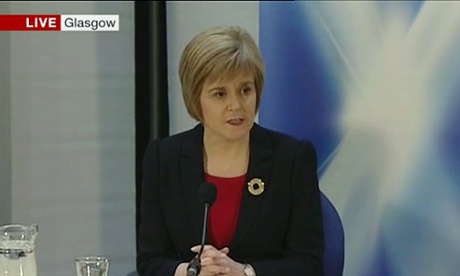
Scotland’s first minister, Nicola Sturgeon, is speaking now at a press conference in Glasgow.
The risk to others from the patient is said to be “extremely low” says Sturgeon, who adds that passengers from the flights to Heathrow from Casablanca and to Glasgow from Heathrow are being contacted as a precaution.
The patient is thought to have had contact with only one other person since returning to Scotland on Sunday night, adds Sturgeon.
You can read a snap news story here with further details, which has been filed by the Guardian’s Severin Carrell in Scotland.
Updated
A healthcare worker who returned to the UK on Sunday after spending time combating ebola in West Africa is being treated in Scotland after being diagnosed with the disease.
The patient, who has been isolated and is receiving treatment in a specialist unit in Glasgow, arrived in the city on a flight from Sierra Leone after transferring in Morocco and at London Heathrow.
Plans are being put in place to move the patient to the Royal Free hospital in London as soon as possible in line with UK and Scottish protocol for anyone diagnosed with Ebola.
We will be bringing you updates from Glasgow, where a press conference is shortly due to start, and from elsewhere.
Updated