Many truck drivers and locals enjoy taking refuge at the ramen shops along National Highway Route 8 in Sanjo, Niigata Prefecture, an area that becomes blanketed in snow in the winter. The Samurai Ramen restaurant is an exemplar of local ramen culture, serving a completely different type of noodle dish from those offered in other parts of Japan.
The dishes are particularly characterized by seabura (pork back fat). Back fat is drizzled on the surface of ramen at many shops in the local area with the aim of keeping the ramen warm.
Ramen delivery has proven popular in the region, where many metal product factories operate, likely because many manufacturing workers want to eat quickly. To help satisfy appetites, many shops use thick noodles for their ramen.
Tsuyoshi Yamazaki started Samurai Ramen in 1999. He is a 58-year-old local who has eaten and loved local seabura ramen for years. However, he realized he had to find his own style of making ramen to survive in such a competitive field. Through trial and error, Yamazaki finally settled on the current recipe. He uses medium-thick noodles, instead of thick ones, and revealed that his "secret ingredient" was local peaches to give the dish a slightly sweet complement to the pork-belly flavor.
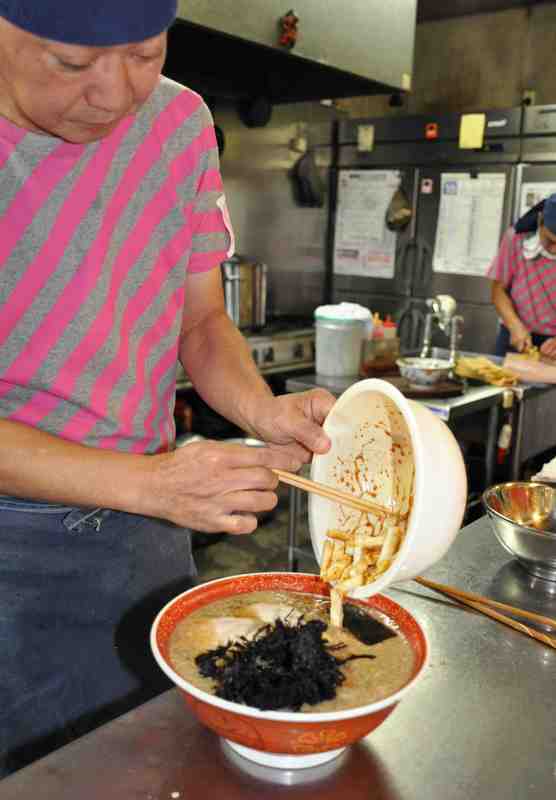
Yamazaki recommends his standard ramen for 620 yen plus tax. Another recommended dish is his toro ramen, 770, yen which is topped with strips of Chinese yam and seasoned with soy sauce. Tamanegi ramen, 720, yen on top of which chopped onion is placed, is also quite refreshing.
"To season eggs and bamboo shoots, I use the same soy sauce that I use for ramen soup so that I can achieve a harmonized taste," Yamazaki said. "I always pay attention first and foremost to the overall balance of the taste of the noodles."
The amount of back fat customers want on top of the ramen is expressed through jargon unique to his shop, which can make eating there that much more fun. When customers call out "shiro," which is Japanese for "white," they mean they want the usual amount of back fat on their ramen, which turns the dish slightly white. A "double shiro" and "triple shiro," means double or triple the amount of seabura fat. Customers also ask for "dorotama" which are seasoned boiled eggs.
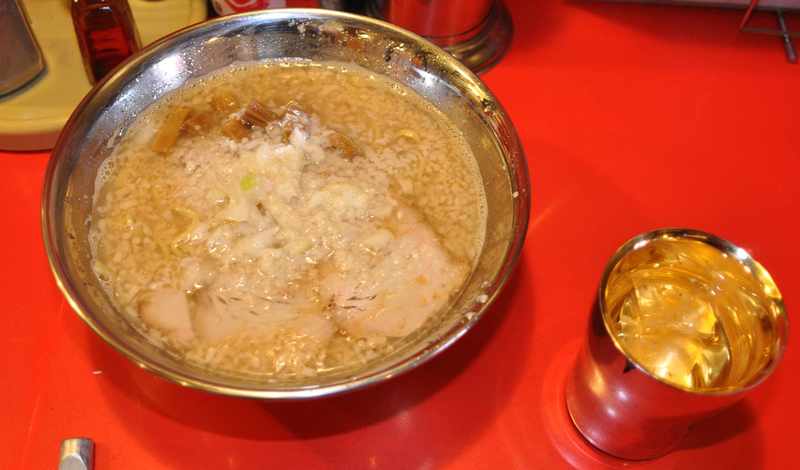
Last summer, Yamazaki was invited to an event in Tokyo that introduced the manufactured metal products of the Tsubame-Sanjo area. In honor of the event, he created a new dish, which is similar to the traditional seabura ramen with chopped onion topping.
This ramen was served in a special bowl created by local craftsmen. The bowl is made from metal but keeps the contents warm. The new ramen gained quite a following in Tokyo.
The Tsubame-Sanjo area itself is also becoming popular among foreign visitors, who want to get high-quality knives and cutlery there. "It is important to keep attracting foreigners to the area," Yamazaki said. "I will continue going my own way and creating new dishes."
Samurai Ramen
Hours: Monday to Friday, 11:30 a.m. to 3 p.m. and 5:30 p.m. to 11 p.m. (but closes at 10 p.m. on Thursdays). Weekends and holidays, 11:30 a.m. to 11 p.m. (but weekday hours are followed on first and third Saturdays).
Address: 4883 Ojima, Sanjo, Niigata Prefecture
Phone: (0256) 33-9220
Credit cards not accepted
The Japan News
Tsuyoshi Yamazaki makes toro ramen at his Samurai Ramen restaurant in Sanjo, Niigata Prefecture.
A metallic bowl is used for a new ramen dish that Yamazaki added to his menu.
Read more from The Japan News at https://japannews.yomiuri.co.jp/