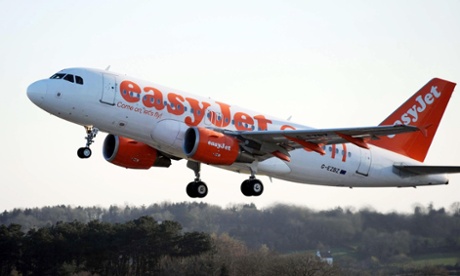
Airlines are helping to keep the market steady despite the continuing uncertainties over the outlook for Greece in the wake of anti-austerity party Syriza winning the weekend’s election.
Easyjet has jumped 69p to £18.25 after it reported a 4.1% rise in first quarter passenger numbers to 14.9m. Total revenues grew by £34m to £931m, helped by carrying a record number of business passengers. It intends to pay a dividend of 45.4p a share.
As a result it expected first half losses to fall from £53m last year to between £10m and £30m. Chief executive Carolyn McCall said:
We enjoyed a strong October across the network - particularly on UK leisure flights to beach destinations and on French domestic routes where we continued to build passenger numbers after a busy September.
Analyst Wyn Ellis at Numis said:
The first quarter trading statement is encouraging with the yield performance notably strong. We understand that consensus pretax profit for 2015 is £637m. Our forecast, which we are not changing today, is for pretax profit of £693m. We expect consensus upgrades.
In our opinion, investors should be encouraged by a positive outlook statement in which management points out that it sold record numbers of seats to business travellers in the first quarter and that easyJet is well positioned to continue to deliver strong returns and growth to shareholders.
Meanwhile British Airways owner International Airlines Group has climbed 12p to 561p after the board of Aer Lingus recommended the company’s €1.36bn bid.
Overall the FTSE 100 is currently down 8.56 points at 6841.84, still close to its four month highs.
Among the fallers Dixons Carphone is down 20.3p at 409.6p after Morgan Stanley cut its recommendation from equal weight to underweight. It said:
Whilst we anticipate strong earnings per share growth over the next couple of years, we do not think Dixons Carphone merits its current growth multiple
[It is] not a growth business. Dixons is trading from 25% less selling space than five years ago, Carphone from 18% fewer stores. Carphone continues to retrench in Continental Europe, and Dixons’ footage reduction in the UK is ongoing.
Structural pressures have not gone away. We continue to believe that Carphone Warehouse entered the merger primarily for defensive reasons, with the sudden demise of Phones 4U highlighting the pressures on independent mobile handset retailers. Dixons, too, remains reliant on supplier support, which could lessen as synergy benefits come through
The usual caveat applies. Carphone management has proved very adept at re-inventing its investment case over the years and created significant shareholder value through M&A activities. Whilst we believe that the current Dixons Carphone investment case does not merit the current share price, we cannot rule out further value-creating deals transforming the investment case, yet again, in the future.
Royal Mail is down 15.7p at 435.6p as RBC cut from sector perform to underperform.
In the FTSE 250 Britvic has bubbled up 29.5p to 675.5p after saying it was on track for the full year despite a 0.4% dip in first quarter revenue.