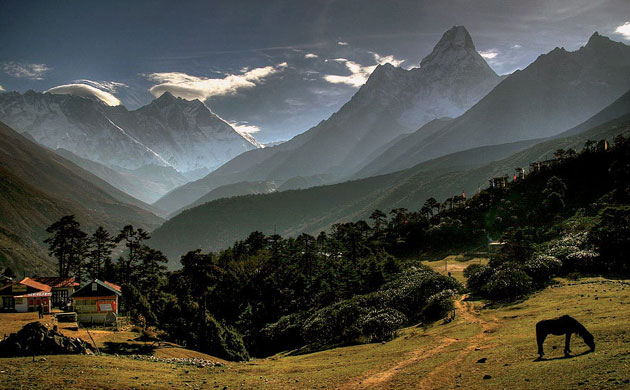
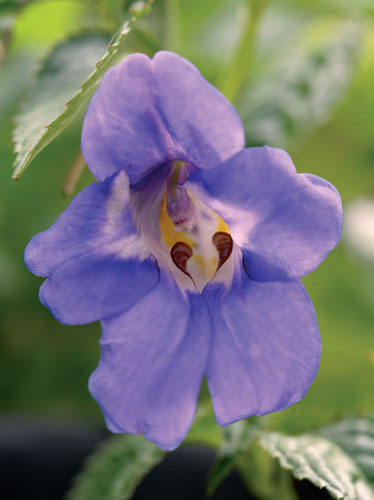
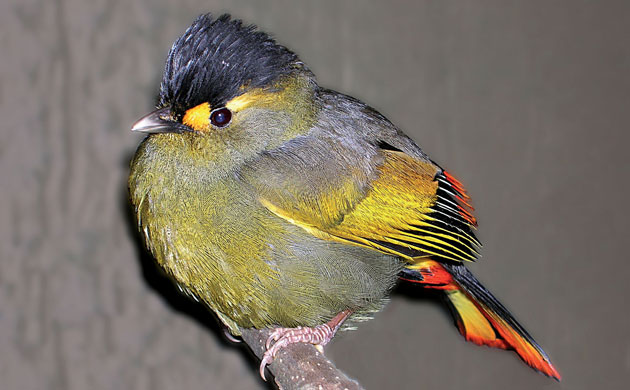
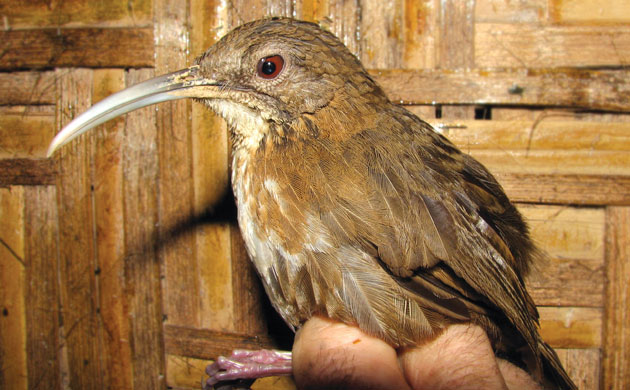
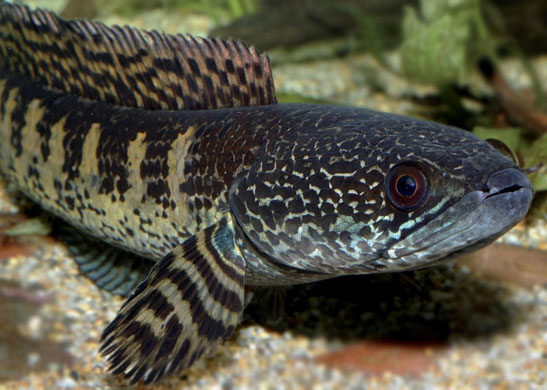
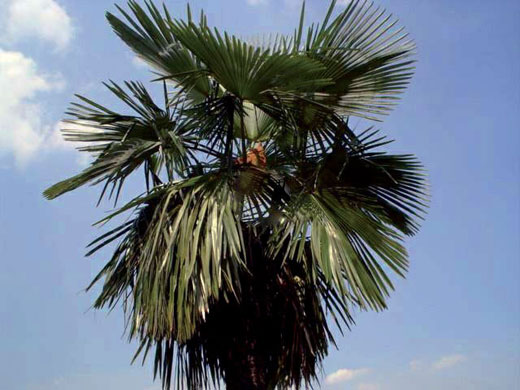
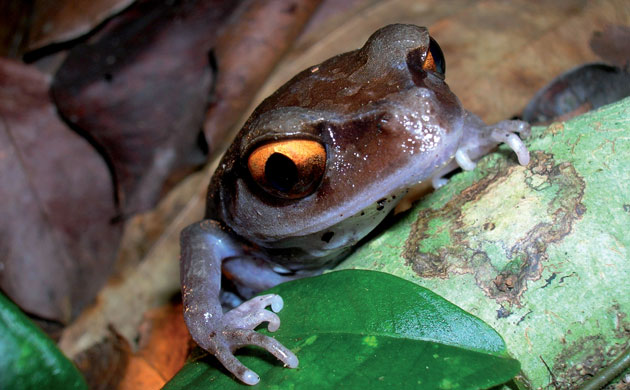
The Eastern Himalayas is a diverse region as it where two different continental plates meetsPhotograph: Murat Selam/WWF NepalImpatiens namchabarwensis. Named after the canyon in which it was found, an area of Tibet that began to be explored as recently as the mid-1990s, the rare plant can grow 60cm tall and flowers all year round. The colour of the flower seems to change with temperature and exposure. They sometimes appear truly blue when in a cool climate and change to purple when temperatures rise; a characteristic unique for this species among impatiensPhotograph: Elayne Takemoto/WWF NepalBugun liochicla (Liocichla bugunorum). The species predominantly inhabits open-canopied hill forests with dense shrubs and small trees, and so far is known to be restricted to 2 sq km at an altitude of between 2,000m and 2,350mPhotograph: Ramana Athreya/WWF Nepal
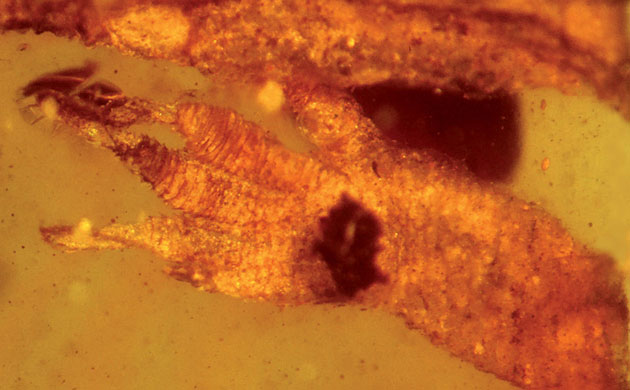
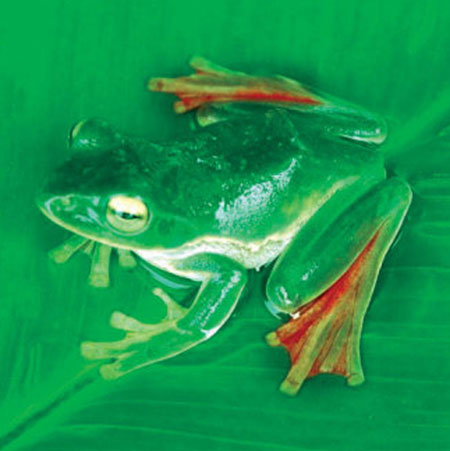
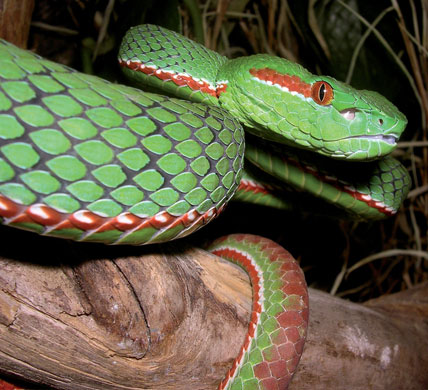
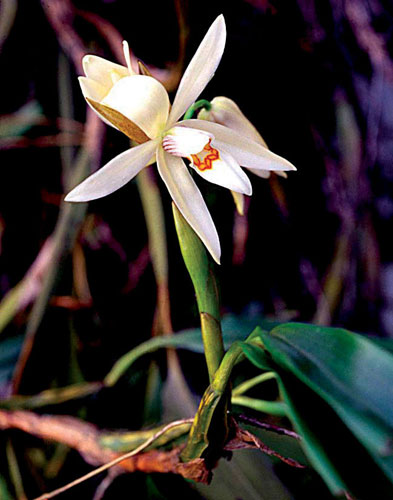
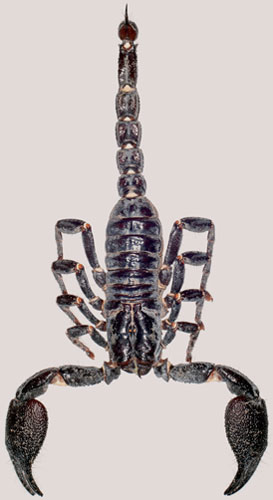
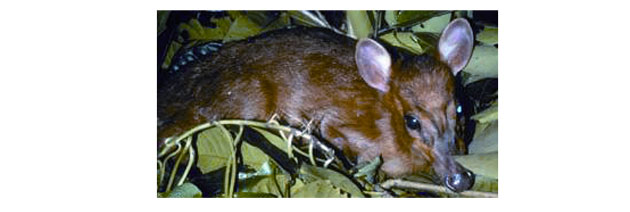
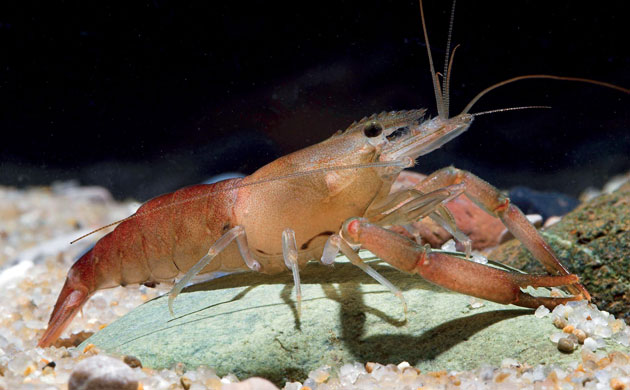
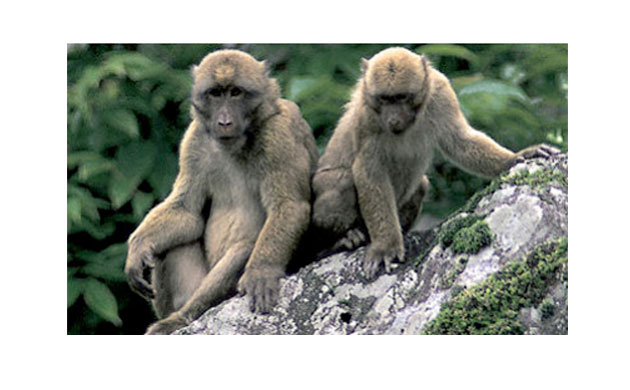
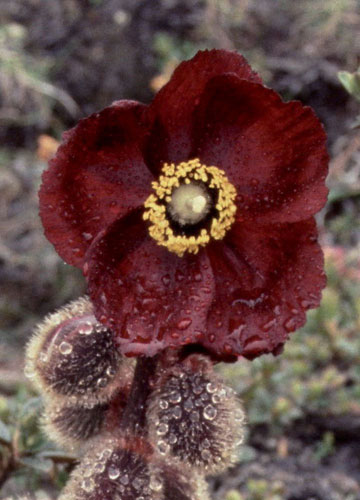
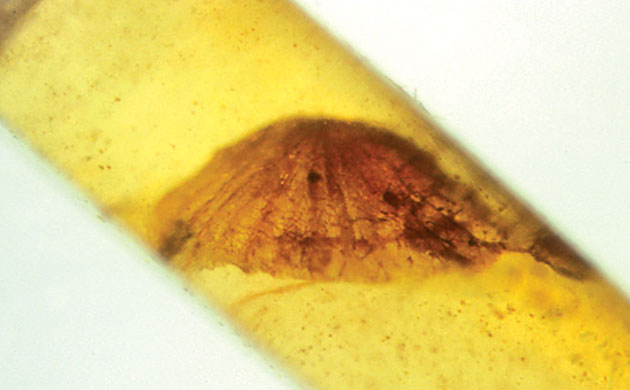
Cretacegekko burmae - a 100m-year-old gecko, preserved in cretaceous amber. The fossil remains from the amber include a plethora of plant and invertebrate remains but vertebrate fossils are very rarePhotograph: George Poinar/WWF NepalThe bright green, red-footed tree frog Rhacophorus suffry, a so-called 'flying frog' because long, webbed feet allow the species to glide when falling, was described in 2007 Photograph: Totul Bortamuli/WWF NepalA male Gumprecht's green pitviper (Trimeresurus gumprechti). Officially discovered in 2002, Gumprecht's green pitviper is venomous and capable of growing to 130cm in length. Scientists predict that larger specimens exist. The species is known to occur around Putao, at altitudes above 400m in the far north of Myanmar. There are some striking differences between the males and females of this species; females reach a greater size, with a thin, white or whitish-blue streak on the head, and deep yellow eyes; males are shorter, have a red stripe on the head, and bright red or deep red eyesPhotograph: Gernot Vogel /WWF NepalCoelogyne pantlingii orchid, found in SikkimPhotograph: Sudhizong Lucksom/WWF NepalHeterometrus nepalensis. Among the new finds are three species of scorpion, one of which was described from the Chitwan National Park in Nepal in 2004. This discovery was particularly significant as it was the first species of scorpion ever to be discovered in the country. The 8cm long, reddish-black, species has a smooth carapace, and a reddish-brown tail tip or telson that contains the venomPhotograph: Frantisek Kovarik /WWF NepalLeaf deer (Muntiacus putaoensis). The world's smallest deer species, a miniature muntjac, discovered in 1999. Standing 60-80cm tall and weighing just about 11kg, was first seen by a team of scientists undertaking field surveys in the Himalayan region of northern MyanmarPhotograph: WWF NepalMacrobrachium agwi – new species of shrimp. A recent shipment of freshwater prawns imported into Europe from Cooch Behar, Bengal, had among their number a surprise stowaway; a previously unknown species to science. With its tinted reddish-brown colour, the medium sized new species Macrobrachium agwi, was described in 2008Photograph: Werner Klotz/WWF NepalArunachal macaque (Macaca munzala). Described as a new species in 2005, the relatively large brown primate with a short tail was a significant discovery as, at the time, it represented the first new monkey species identified anywhere in the world in over a century. The newly described macaque species is stocky in build and has a darker face than other closely related species. It is the highest-dwelling macaque in the world, occurring between 1,600m and 3,500m about sea levelPhotograph: WWF NepalMeconopsis tibetica, described in 2006, is one of 12 new poppy species discoveries. A vast garden stretches across the Eastern Himalayas, a mysterious and alluring landscape that has yielded on average of 24 new plant discoveries every year for the past 10 yearsPhotograph: Margaret Thorne/WWF NepalNaung Mung scimitar-babbler (Jabouilleia naungmungensis). The medium-sized jungle bird reminiscent of a wren is dark brown, with a short tail, long legs, relatively large feet and a long curved bill. This long bill is used to forage and probe for food on the ground. The species was officially described as a new species in 2005Photograph: Christopher Milensky/WWF NepalOrange-spotted snakehead (Channa aurantimaculata), endemic to the forest streams, ponds, and swamps adjacent to the Brahmaputra river in the subtropical rainforest of northern Assam. The species is remarkably striking, with a vibrant pattern of purple and orange adorning the length of its body. Discovered in 2000, and measuring up to 40cm in length, the fish is also known as the 'orange-spotted snakehead', as its head looks like that of a snake. It is carnivorous and predatory, enjoying a diet of smaller fish and invertebratesPhotograph: Anders Lindersson/WWF NepalSaramati palm (Trachycarpus ukhrulensis). The species is the most recent addition to the Trachycarpus genus, and the most interesting yet according to some scientists. The palm was discovered in Assam, on the border with Myanmar. Growing to a height of 15m, the tree has a hairless trunk, 30cm in diameterPhotograph: Keshow Chandra Pradhan/ Michael Lorek/WWF NepalSmith's litter frog (Leptobrachium smithi), identified in 1999, one of five new frog discoveries in the Indian state of Assam, must certainly rank among the most extraordinary-looking frogs in the world. Measuring only a few centimetres, this small frog has a giant pair of piercing, bulging and vivid golden eyes. Smith's litter frog was reportedly discovered in the Mayeng Hill Reserve Forest and Garbhanga Reserve Forest, Kamru District, AssamPhotograph: Milivoje Krvavac/WWF NepalThe oldest known mushroom found in Cretaceous amber from Myanmar which includes a plethora of plant and invertebrate remainsPhotograph: George Poinar/WWF Nepal
Sign up to read this article
Read news from 100’s of titles, curated specifically for you.





.jpg?w=600)