It's treasure-finding time in the north, as well as being wondrously sunny. I can hardly see my laptop screen in the warm and blinding light, but will be extra vigilant for spelling errors.
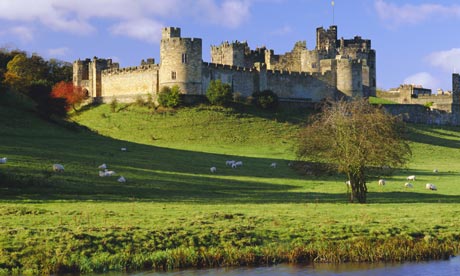
Anyway, cheerful news from Alnwick castle, that great compendium of bank holiday joys from the UK's biggest tree house to its only poison garden: the 'Sun King' cabinets are back from restoration, so Northumberland can gloat about having the world's most expensive furniture again.
The pair of lustrous pieces, one themed around a spaniel and the other a monkey, were commissioned for Versailles by Louis XIV at the height of his power. They were designed by Charles Le Brun and made at the Gobelins works by Domenico Cucci whose name is usually attached to them.
Looking after an item constructed from wood and hard stone marquetry with mercury gilded bronze mounts is no easy task, and restoration by the conservator Yannick Chastang has seen the cabinets leave Alnwick for a year and a half. For part of this time, one of them was shown back at its original home, Versailles, but the French refrained from hanging on to it.
Northumberland got the pair after the county's then Duke bought them in 1822 from a London dealer called Fogg. When Northumberland House in the capital was demolished in 1874 (though the family still has Syon Park out at Brentford), they came to Alnwick. The third Cucci cabinet in the set was auctioned in 2009 for over £4.5 million, but the north can rest easy. Alnwick's, now on show in the red drawing room which has also been restored, are not for sale.
Last Supper finds new home
In Leeds, meanwhile, the fine Victorian church of St Aidan's, famous for its vast mosaic by Frank Brangwyn, has come into its own more modest treasure, thanks to a skip in York.
A ceramic plaque of the Last Supper by the Austrian artist Josef Heu was found in this unlikely spot by Mike Pipes of Acomb, who saw a reference to Heu on St Aidan's website while Googling.
The church already has major works by the artist, a set of 14 stations of the cross and a large statue of Mary presenting the infant Christ to the world, known as The Redeemer. Pipes got in touch with the vicar Canon Alan Taylor, and the plaque was handed over and dedicated, appropriately, on Maundy Thursday.
The Brangwyn is specially worth seeking out, made of tiles because the artist feared a mural would not survive the grimey atmosphere of 1920s Leeds. Its commissioner, Robert Kitson, was a fascinating man; the cultured offspring of a Leeds engineering dynasty, he built the beautiful Casa Cuseni at Taormina in Sicily and was elected mayor of the town when the Germans were driven out in 1944.
When the Scots eyed Stockport
Salford university keeps finding out interesting things, the latest being a largely forgotten attempt by the Scots to move their border down to Cheshire.
Finds from a dig by the uni's archaeologists at Buckton castle in Stalybridge shed new light on negotiations which could have seen me and my family in kilts had things turned out differently.
The three-year excavation has just finished and concluded that the castle served a brief but vital role in the chaos after the mid-12th century civil war between King Stephen and his stroppy cousin the Empress Matilda. The finds suggest that it was built by Ranulf, Earl of Chester, as a bricks and mortar way of countering Stephen's desperate ceding of Cumbria and Lancashire to the Scots on paper, in return for military help.
Brian Grimsditch from Salford's centre for applied archaeology says: "This was a time when the British Isles were in complete anarchy. As a result local rulers like the Earl of Chester had to protect their lands and Buckton Castle is a great example of this process in action." The dig shows it was flung up and only briefly occupied, the Scots having got the message and moved back to Gretna Green.