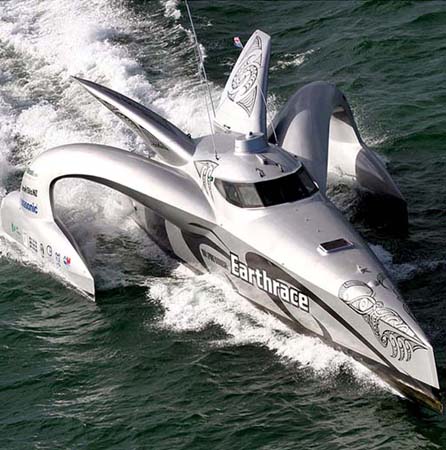
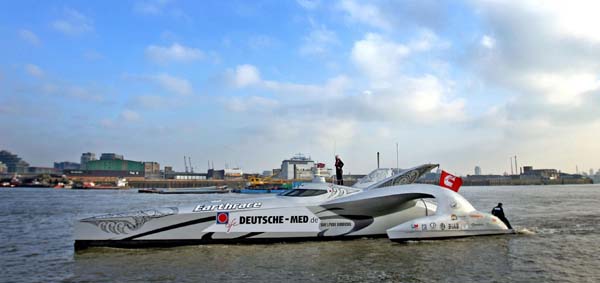
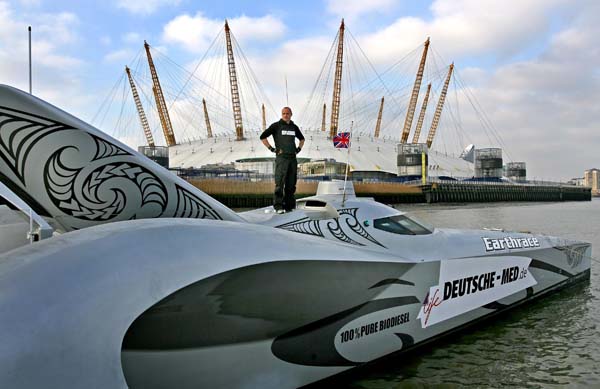
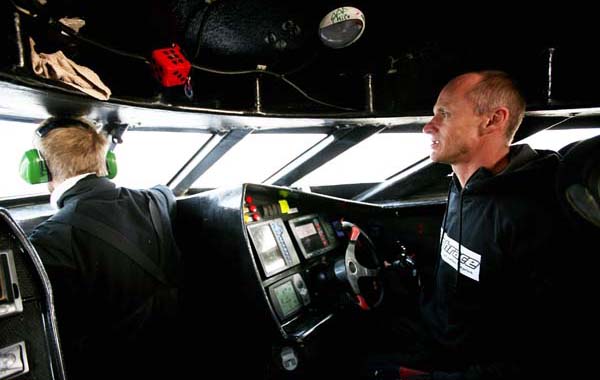
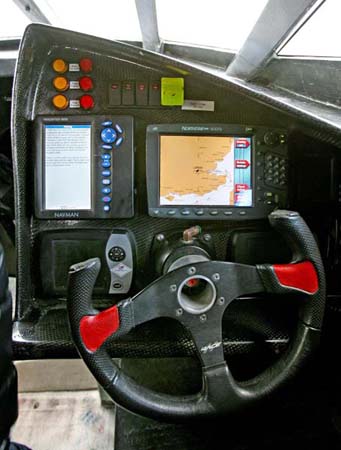
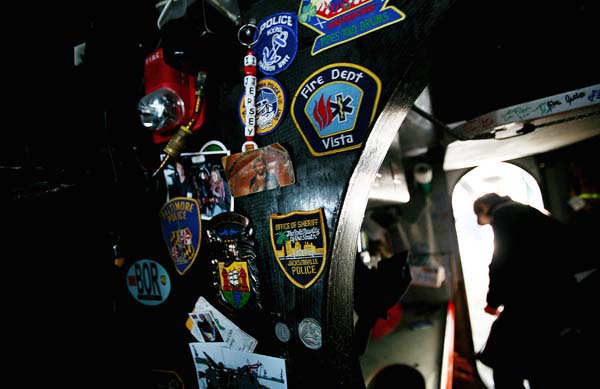
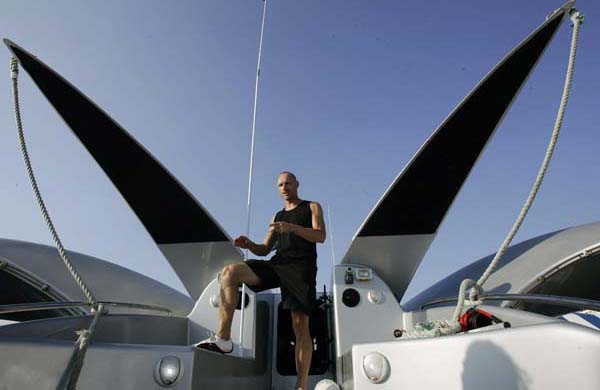
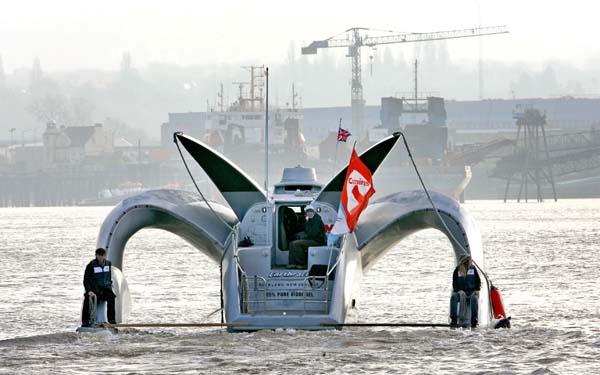
Earthrace is an ecoboat that is aiming to break the round-the-world speed record powered exclusively by biofuel. The boat will set off in March 2008 from Valencia, Spain, with the aim of promoting awareness of the environment and the sustainable use of resourcesPhotograph: HO/EPAThe boat, which has a net zero carbon footprint, has been at the 02 Dock in Greenwich, south-east London, while it prepares to launchPhotograph: Anthony Devlin/PAThe top speed of Earthrace is around 40 knots (46mph). During the race, the boat will attempt to do 20-25 knots continutally for 65 days. The challenge is to keep the boat running smoothly and efficiently for a sustained period Photograph: HO/EPA
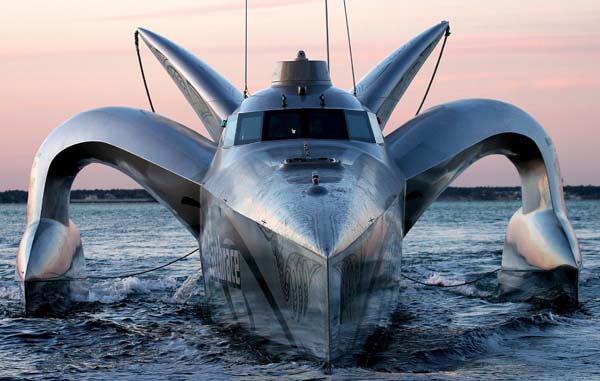
Earthrace runs a crew of four to five people but can race with up to six. Pete Bethune from New Zealand will skipper the boat westwards from Valencia through the Panama canal, on towards Singapore and back again through Suez - a round trip of 26,000 milesPhotograph: Anthony Devlin/PABethune wants to complete the voyage in 65 days, and must negotiate the perils of gun-toting pirates in the Caribbean, floating logs off Borneo and towering 12m high seas in the Pacific - some of the problems faced on the craft's first failed record attempt this springPhotograph: Graeme Robertson/GuardianThe £3m boat is made from carbon fibre and is powered by two 540 horsepower engines which emit a deafening 85 decibels at cruising speed of 40 knotsPhotograph: Anthony Devlin/PAThe boat - a trimaran - is built for speed, with a chisel-shaped bow, weighed down by fuel, that cuts into the waves. The boat "submarines" through waves, rather than over them, at depths of up to seven metresPhotograph: Graeme Robertson/GuardianEarthrace was built in New Zealand and uses non-toxic paint, hemp composite in the flooring, biodegradable lubricants and hydraulic fluid, and pumps out bilge water through a special filter to prevent any petroleum products from going into the seaPhotograph: Robert Sullivan/AFPThe boat will run exclusively on biofuel, a diesel fuel substitute from renewable sources such as canola and soya beanPhotograph: Anthony Devlin/PA
Sign up to read this article
Read news from 100’s of titles, curated specifically for you.