The easiest way to tell a Norman from a later gothic building is to look at the doorways. The Normans, for all their ingenuity, never thought to use the pointed arch. The were probably unaware that the robust corners on a pointed arch could bear the weight of a heavy stone roof – and stuck with semicircular arches, often decorated with zigzag shapes. If you see one of these horseshoe shapes around an opening, you are likely to be looking at a building built in the 11th and 12th centuries.
Illustration: Emma Kelly
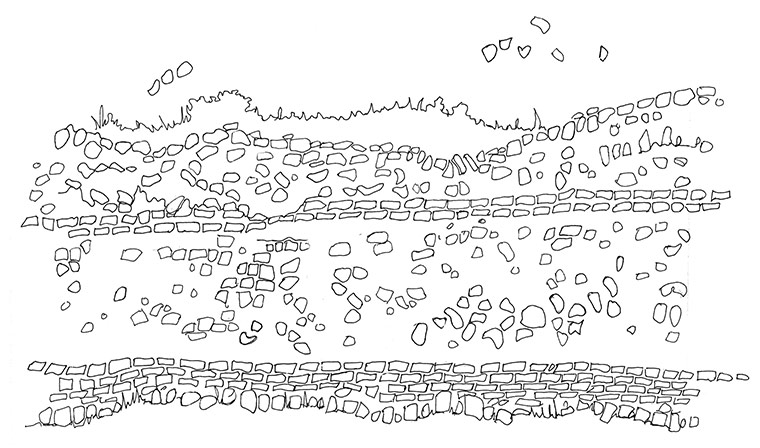
Brickmasonry knowhow left Britain with the Romans in the early fifth century, so to Saxon builders trained on timber and stone, slender but durable Roman bricks were like gold dust. If you see very thin bricks recycled within stone or flint walls, such as in the nave of St Alban’s Abbey, it is likely to have been built during Britain’s brickless age, which lasted well into the 14th century.
Illustration: Emma Kelly
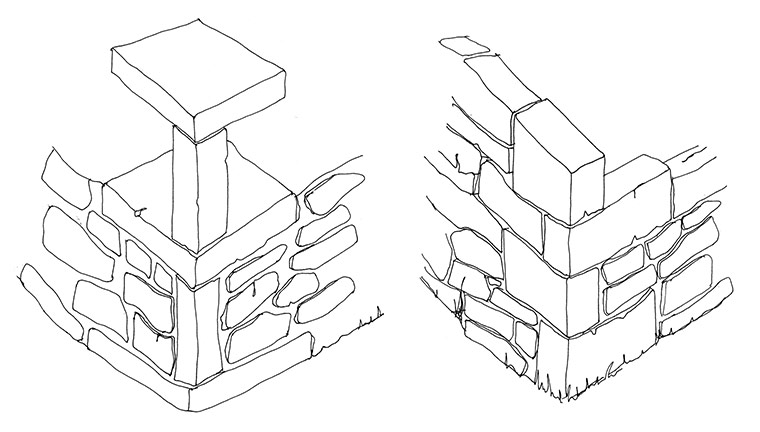
An easy way to distinguish a Norman from a Saxon structure is to look at the corners of the building. While the Saxons employed a pattern known as “long and short work”, in which horizontal stones alternated with vertical ones, the Normans would lay staggered horizontal stones on top of one another.
Illustration: Emma Kelly
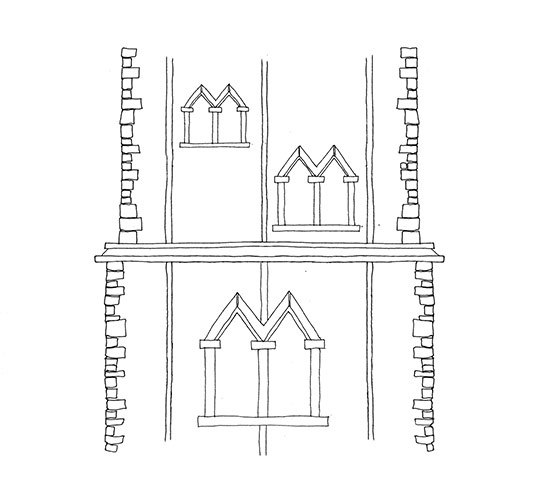
The Saxons had a foible for windows with a triangular peak at the top. They are usually tiny and narrow, allowing very little daylight to creep into the inside of the building.
Illustration: Emma Kelly
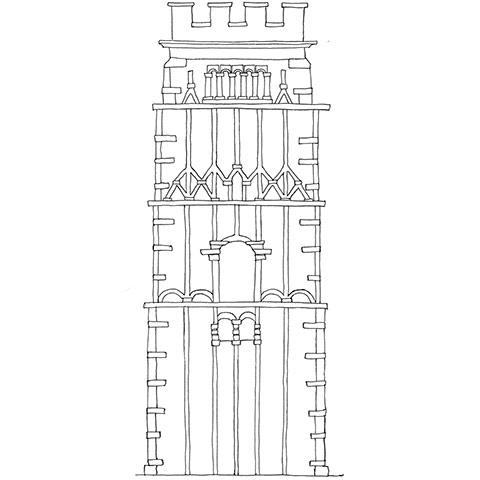
A pilaster strip is a slightly projecting vertical column built into the face of an exterior wall, typical of Anglo-Saxon stonework.
Illustration: Emma Kelly
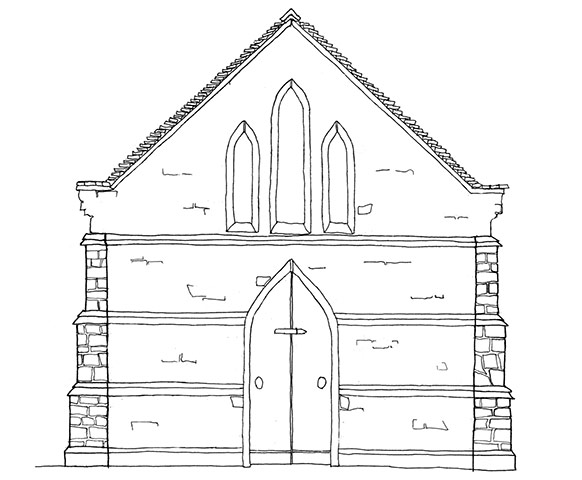
A crucial architectural device designed to reinforce the walls of large buildings from the outside. A clasping buttress hugs the corner of a building. Attached buttresses were commonly used on Norman buildings, including castles, but the flying buttress was later developed to allow construction of clerestories, (high windows over the nave) in gothic churches, which let in more light.
Illustration: Emma Kelly
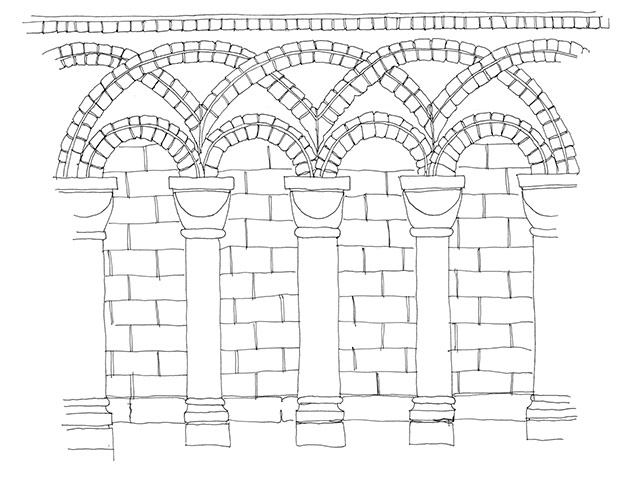
A blind arch, also known as a blank arch, is an arch without an actual opening; an arcade is a series of arches. Blind arcading does not usually carry any structural weight and is, above all, a decorative feature.
Illustration: Emma Kelly
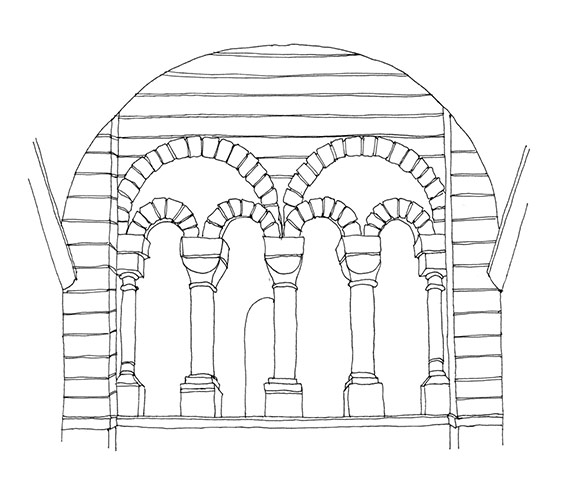
In Saxon architecture, adjacent window units are usually divided by thin columns known as mullions. If the shaft is rounded, and often swollen in the middle like a vase, it’s called a baluster shaft. A typical example of windows mullioned with baluster shafts can be found on the tower of All Saints’ church, Earls Barton.
Illustration: Emma Kelly