Early humans could have hibernated to survive harsh winters like some modern animals do, researchers have suggested.
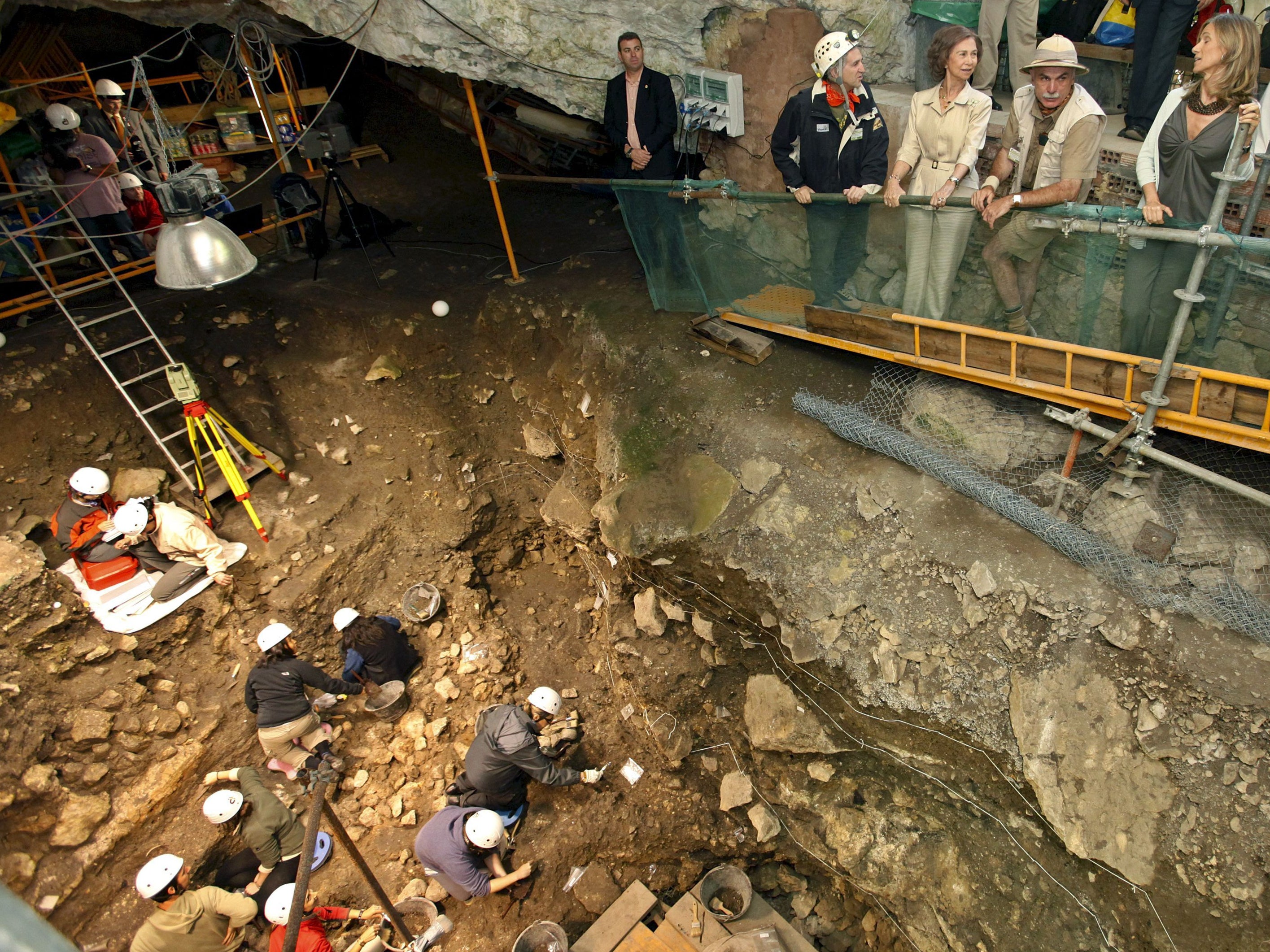
Scientists came to the conclusion after examining fossilised human remains found in a cave burial chamber known as Sima de los Huesos – or the “Pit of Bones” – at the Atapuerca archaeological site near Burgos in northern Spain.
Using microscopes and CT scanning, the academics discovered that the bones, which are roughly 430,000 years old, had lesions and other bone damage similar to those seen in animals that hibernate.
By slowing their metabolism, it is thought that early human species could have slept for months to weather freezing winters, a time when food supplies would have been extremely scarce.
The researchers – Juan-Luis Arsuaga, who heads the Atapuerca Foundation, and Antonis Bartsiokas, of Democritus University of Thrace in Greece – acknowledge that the “notion that humans can undergo a hypometabolic state analogous to hibernation may sound like science fiction”.
However, in a paper published in the December issue of the journal L’Anthropologie, they point out that “primitive mammals and primates” like bush babies and lorises hibernate, which suggests that “the genetic basis and physiology for such a hypometabolism could be preserved in many mammalian species, including humans”.
Speaking to The Guardian, Patrick Randolph-Quinney, a forensic anthropologist at Northumbria University, Newcastle, said: “It is a very interesting argument and it will certainly stimulate debate.
“However, there are other explanations for the variations seen in the bones found in Sima and these have to be addressed fully before we can come to any realistic conclusions. That has not been done yet, I believe.”
The Sima de los Huesos site has been excavated annually since 1983 and 5,500 human skeletal remains have been unearthed there to date, according to the Atapuerca Foundation website.
The bones, which are believed to have been thrown to the bottom of the cave shaft deliberately, have yielded many clues about early human evolution in Europe.