Dying at home rather than in hospital, elderly Japanese 'go to the afterlife quietly'
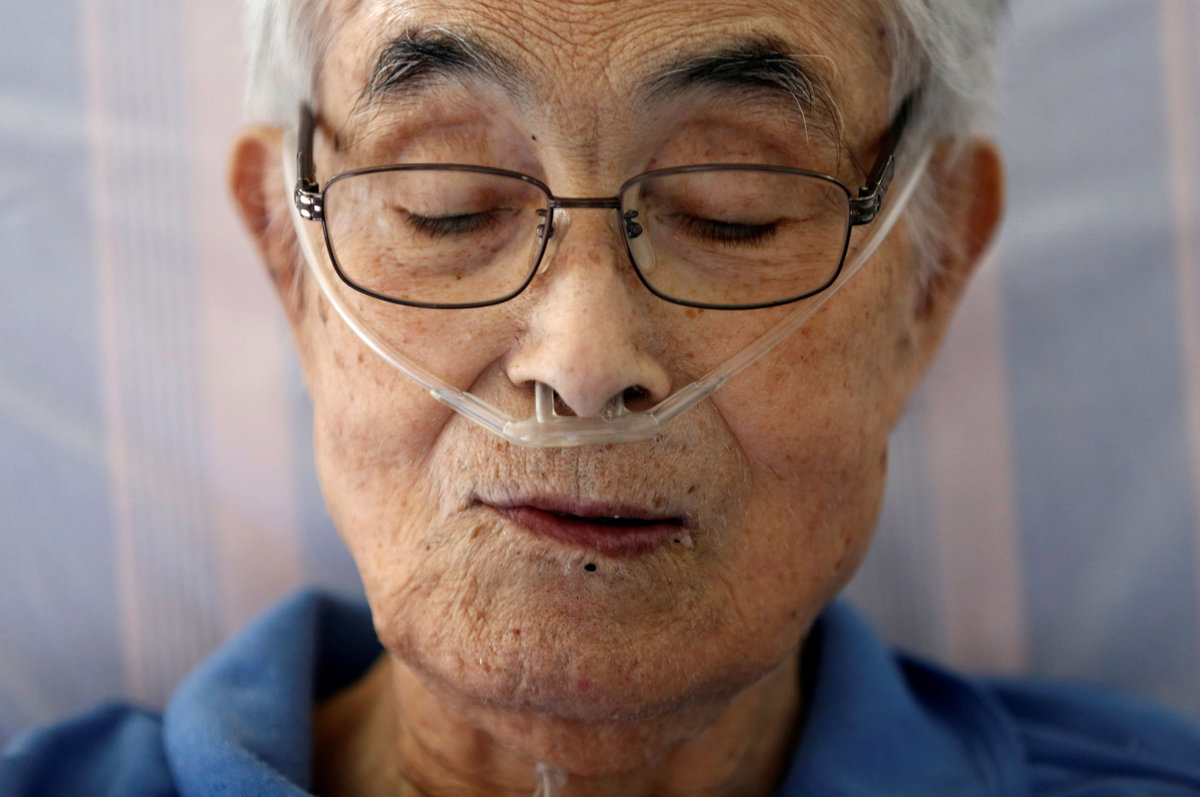
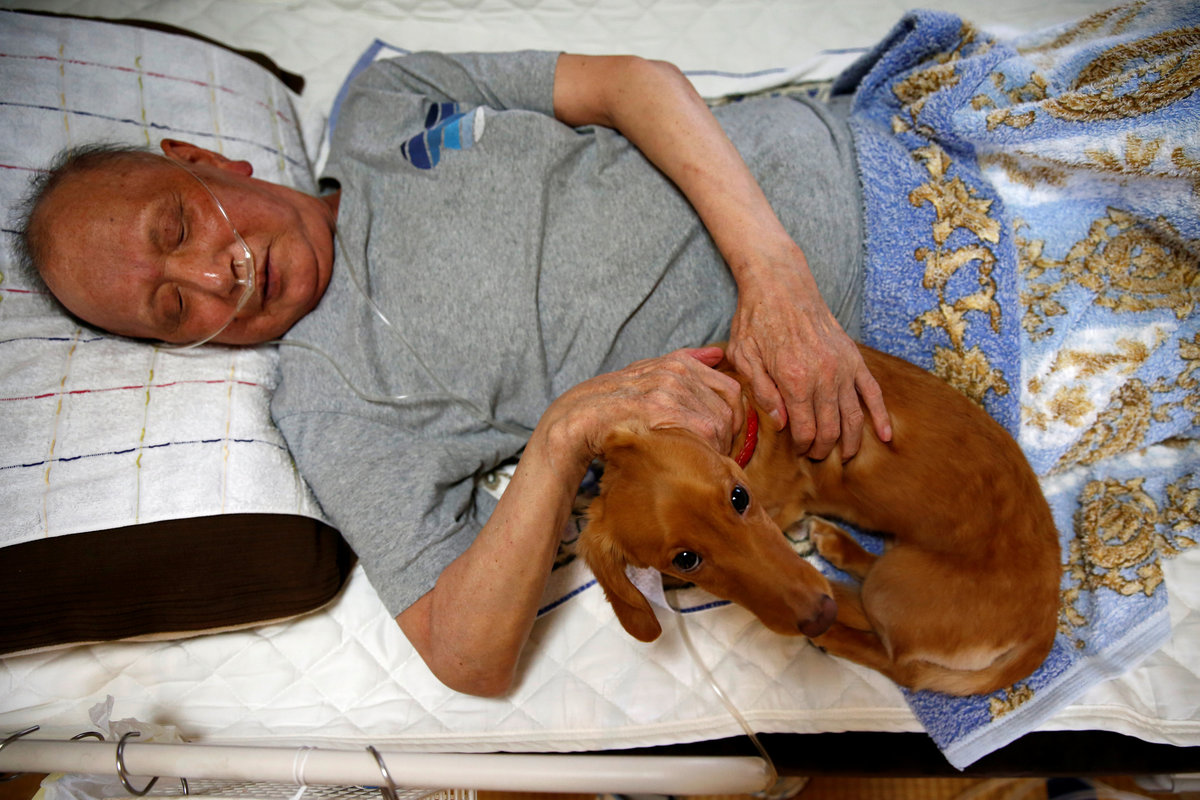
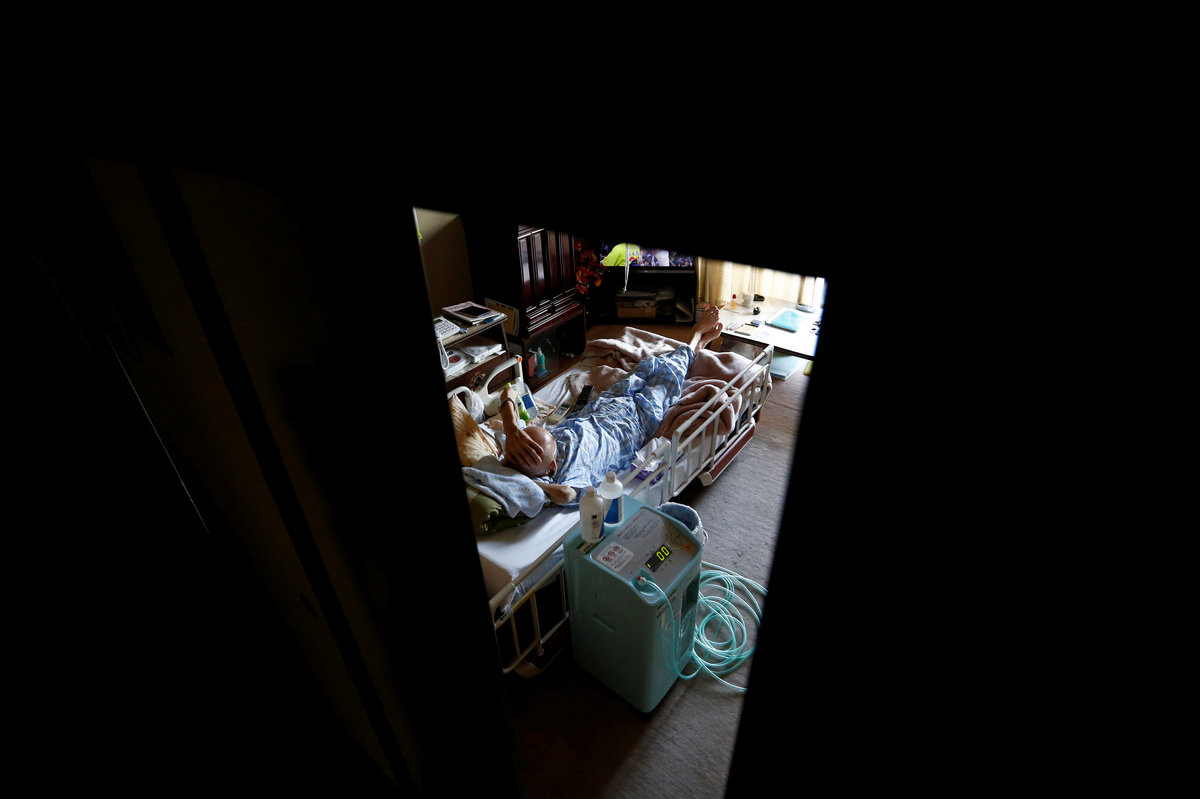
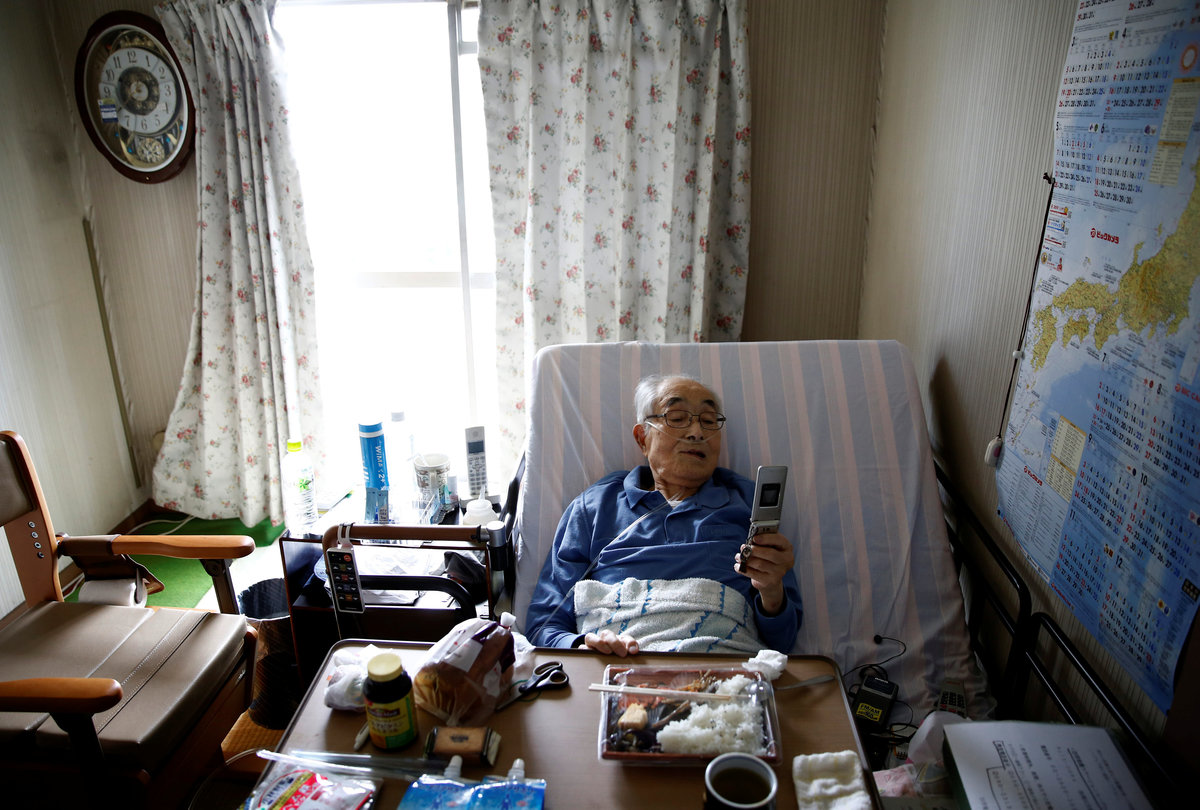
Katsuo Saito, 89, who has leukaemia, uses an oxygen tube as he rests at his house in Tokyo, Japan, September 8, 2017. REUTERS/Kim Kyung-Hoon
(This version of the November 21 story corrects paragraph 11 to show data is from Yamato Clinic, not OECD)
TOKYO (Reuters) - After he was diagnosed with leukemia in July, Katsuo Saito decided not to treat it and opted for palliative care. He had a hard time finding a bed at a hospice or hospital, so he spent most of his remaining weeks at home.
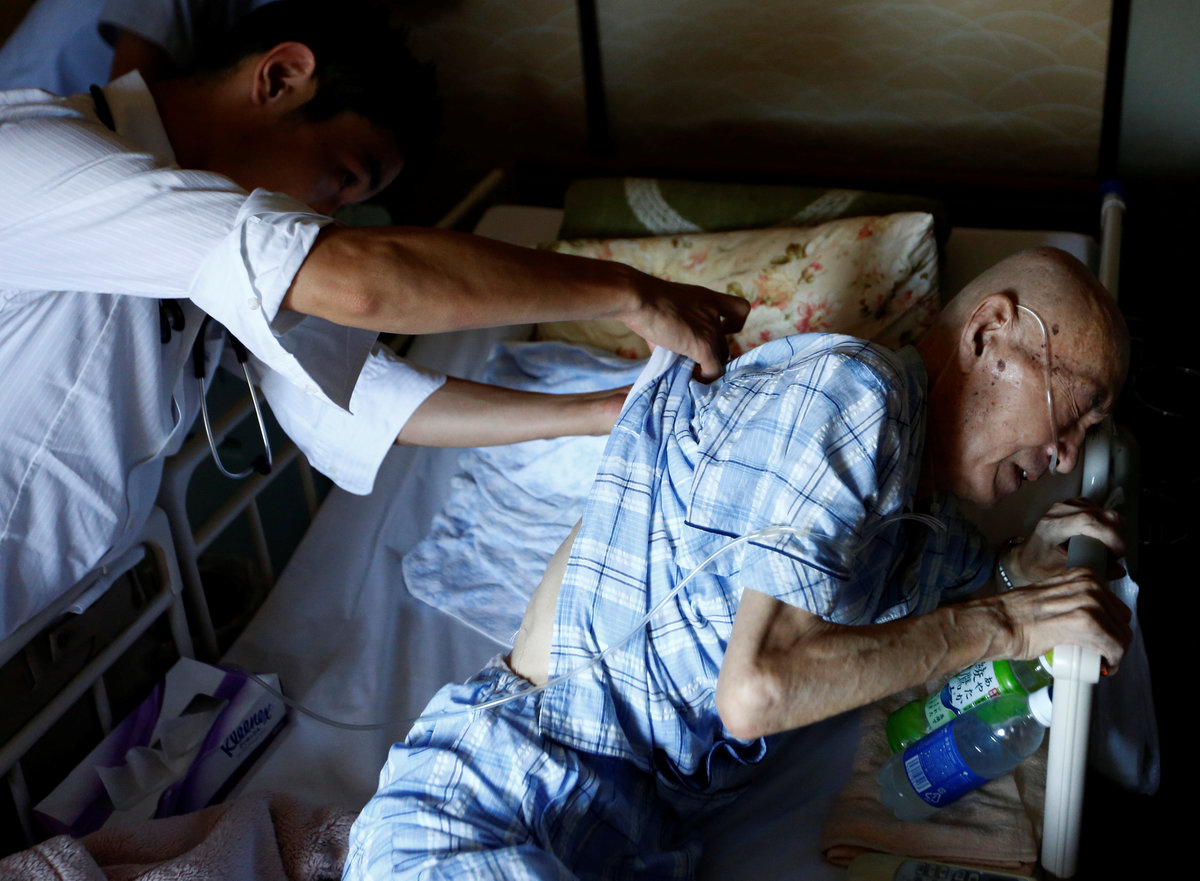
Yuu Yasui, doctor and founder of Yamato Clinic, examines Yasuhiro Sato, who has terminal lung cancer, at his house in Tokyo, Japan, July 11, 2017. REUTERS/Kim Kyung-Hoon
"There are about 20 people on the waiting lists," Saito, 89, told Reuters from his fifth-floor apartment in Tokyo where he lived alone.
Many Japanese are reluctant to die at home because they feel hospitals are safer and they don't want to burden family members with caring for them.
But dying at home may prove an acceptable option as hospital beds become ever scarcer in an aging society where one in four are over 65 and health officials predict a shortfall of more than 470,000 hospital beds by 2030.
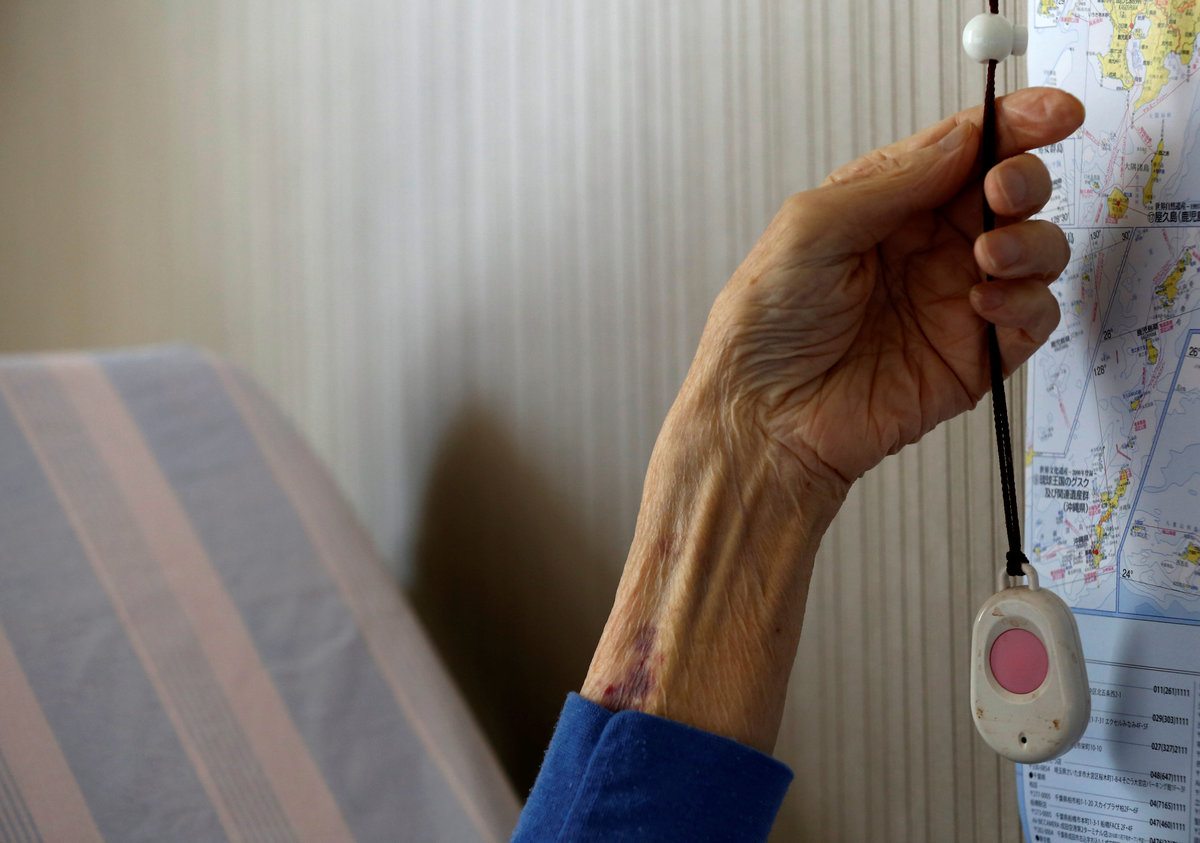
Katsuo Saito, 89, who has leukaemia, holds a personal alarm button which can send an alert to a security company monitoring the aged in Tokyo, Japan, September 8, 2017. REUTERS/Kim Kyung-Hoon
"I think it's good to have a doctor supporting people who choose to spend their final days, and naturally face death, in a place they spent their days living," said physician Yuu Yasui.
Yasui, who works at the Yamato Clinic, which has overseen more than 500 home deaths since 2013, hopes to offer hospice care at home for more of the terminally ill.
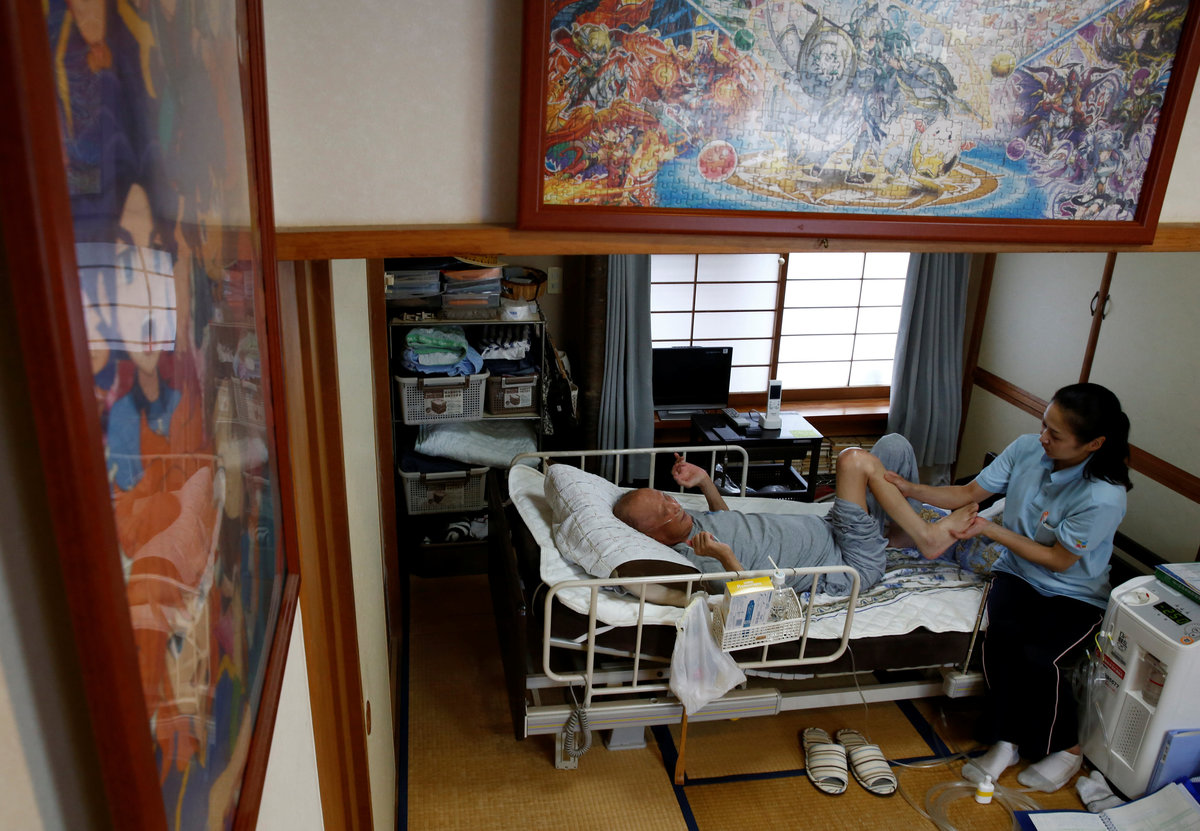
Mitsuru Niinuma, 69, chose to stay at home in order to spend more time with his grandson and his beloved dachshund, Rin.
Mitsuru Niinuma, 69, who has terminal lung cancer, is massaged by a therapist in his room which was decorated with puzzles, put together by Niinuma's grandson in Tokyo, Japan, July 19, 2017. REUTERS/Kim Kyung-Hoon
"Home care allows people to use their abilities to their fullest for as long as possible," he said. "That's not so easy in a hospital. This aspect is really nice."
Link to picture essay http://reut.rs/2zQ7OhQ
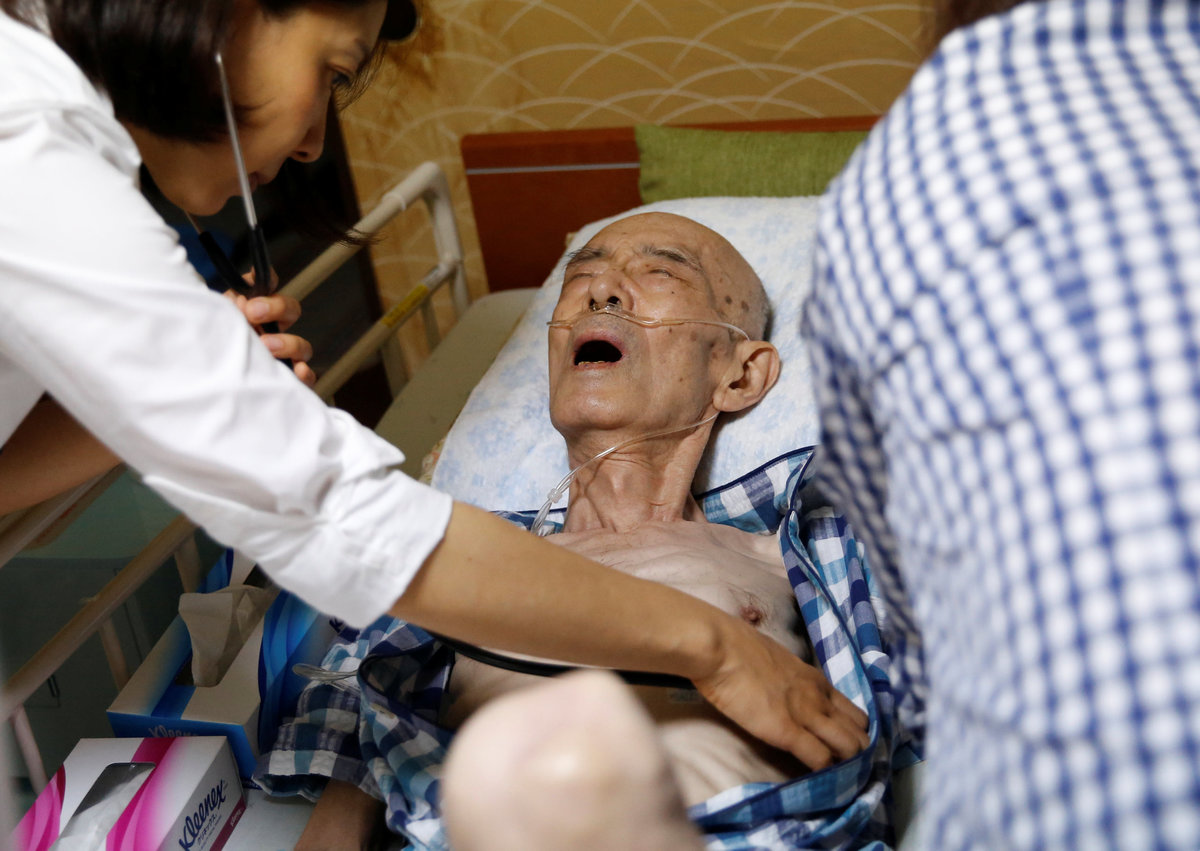
Yamato Clinic's doctor Shima Onodera examines Yasuhiro Sato, who has terminal lung cancer, the day before his death at his house in Tokyo, Japan, September 12, 2017. REUTERS/Toru Hanai
RISING COSTS
Rising health care costs as the population ages have fueled apprehension that Japan will eventually cap the number of hospital beds, although a health ministry official who declined to be identified called that scenario unlikely.
The bed shortage stems partly from long hospital stays, which ran 16.5 days on average in 2015, versus six days in Britain, a study by the Organisation for Economic Cooperation and Development (OECD) showed.
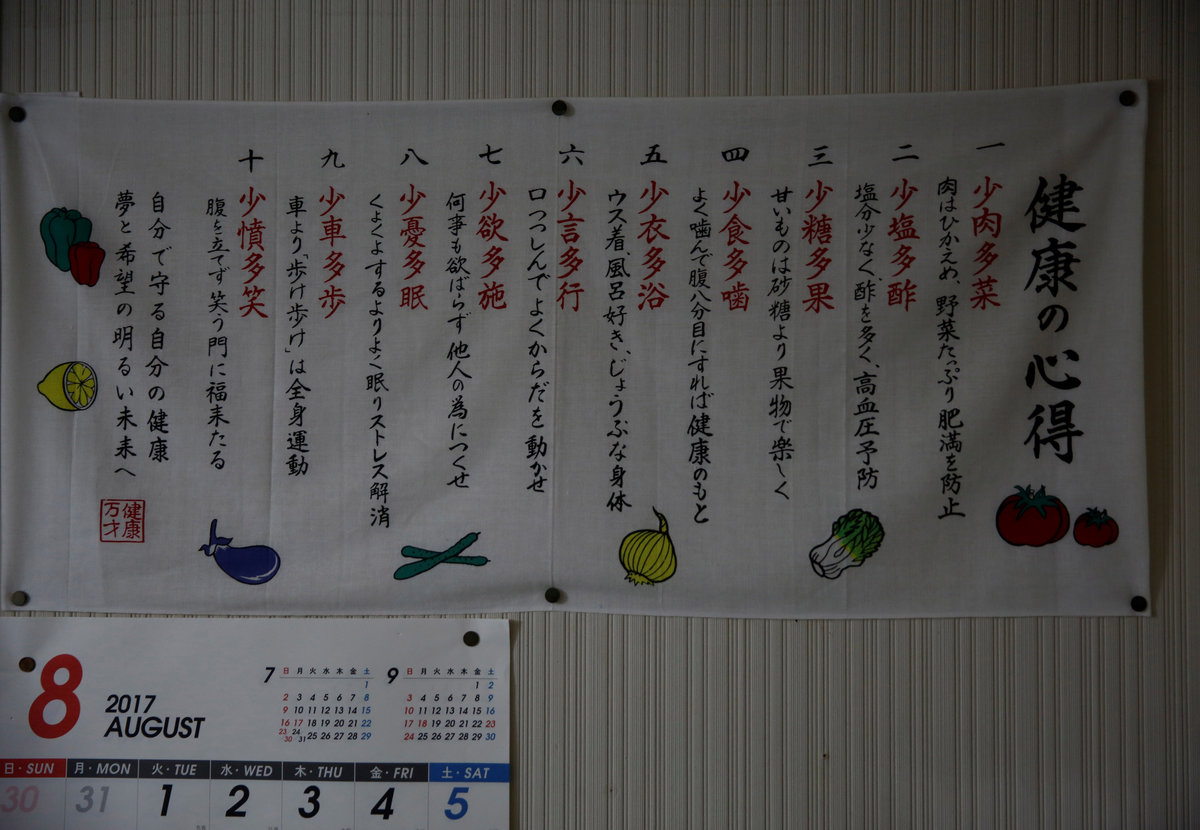
A banner featuring tips for staying healthy hangs on the wall of Katsuo Saito's room in Tokyo, Japan, September 7, 2017. REUTERS/Kim Kyung-Hoon
More than 80 percent of Japanese prefer to die in hospital, according to the Yamato Clinic.
Leukemia patient Saito finally found a hospice spot inSeptember. Two days after he moved in, he died.
National insurance provides individual hospital rooms only in exceptional circumstances, so they are out of reach for those like pensioner Yasuhiro Sato, 75, a victim of terminal lung cancer.
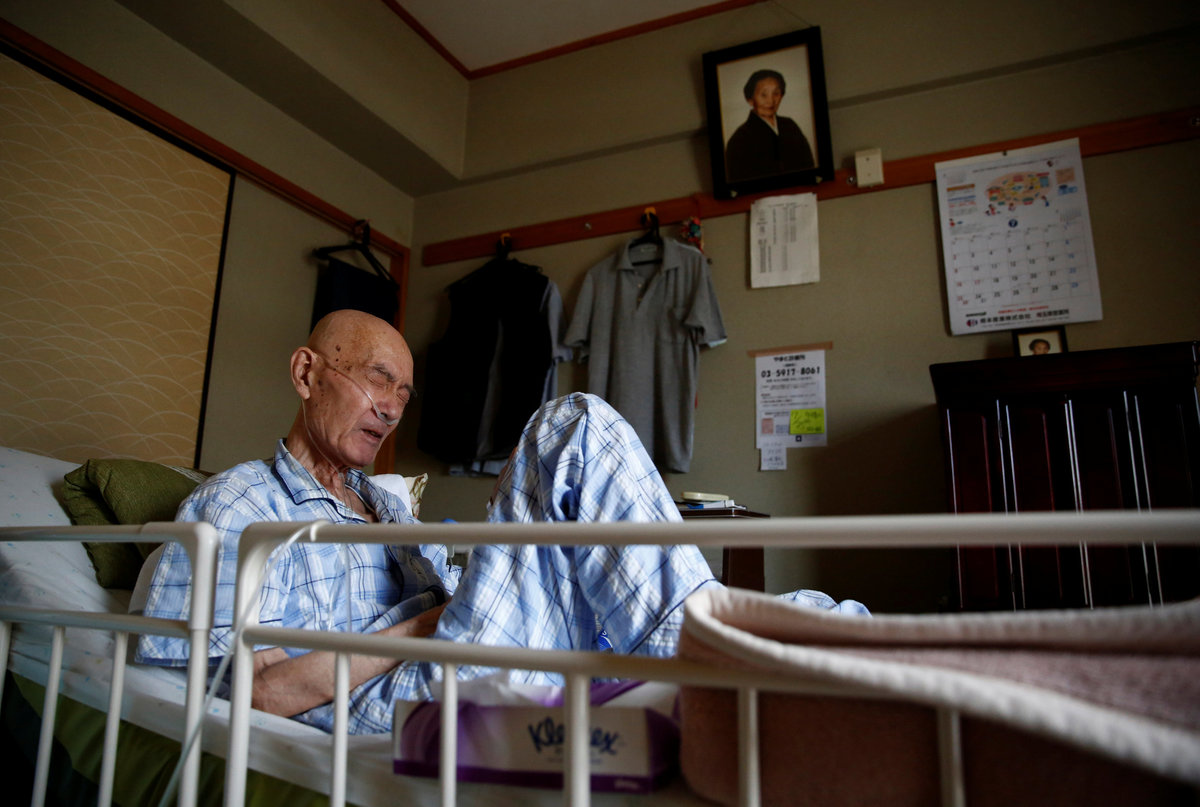
Yasuhiro Sato, 75, and has terminal lung cancer, grimaces with pain in his bed in Tokyo, Japan, July 19, 2017. A portrait of his grandmother hangs on the wall. REUTERS/Kim Kyung-Hoon
"Somebody rich, like a politician or a singer, they solve everything through money. They can stay in private rooms," Sato said in an interview at his Tokyo apartment in July.
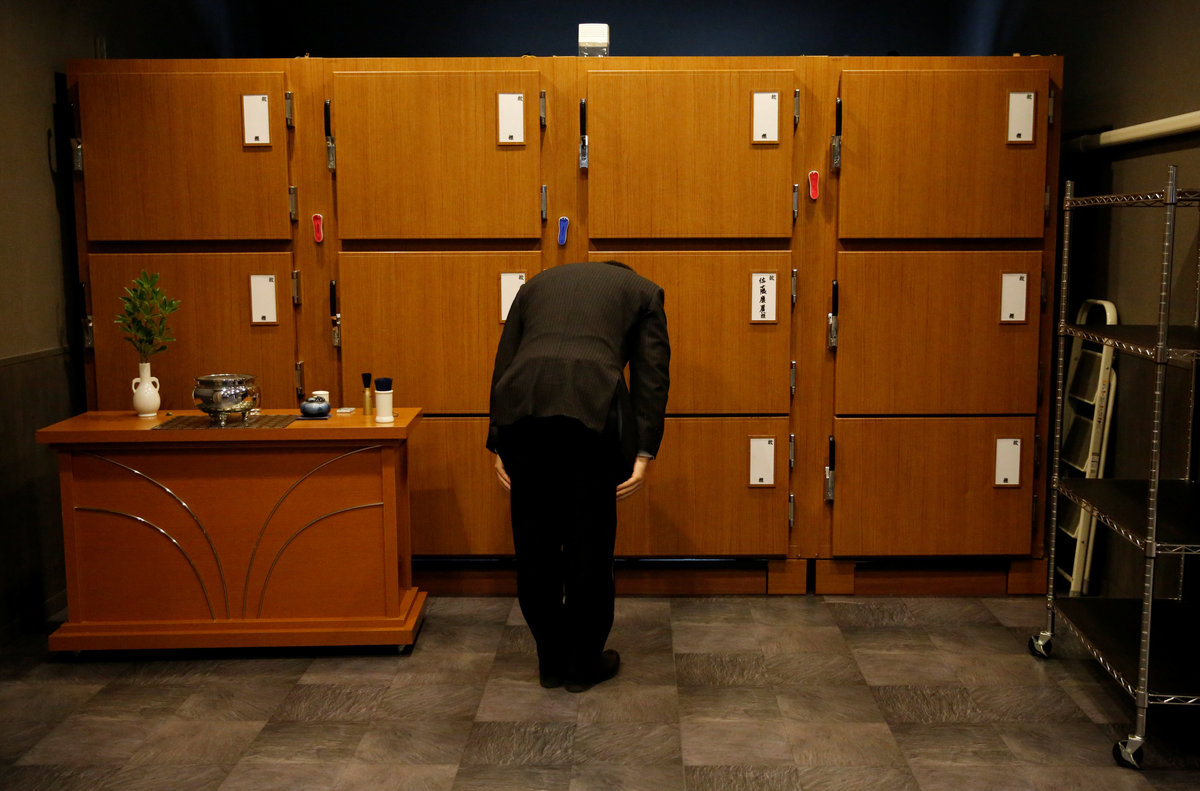
With no close family or friends, he lived a solitary life, except for caregivers' visits. When Sato died on Sept. 13, the only other people in his apartment were doctors, aides and undertakers.
"It's okay. I'm not a burden to anybody," he said. "I will go to the afterlife quietly. Alone."
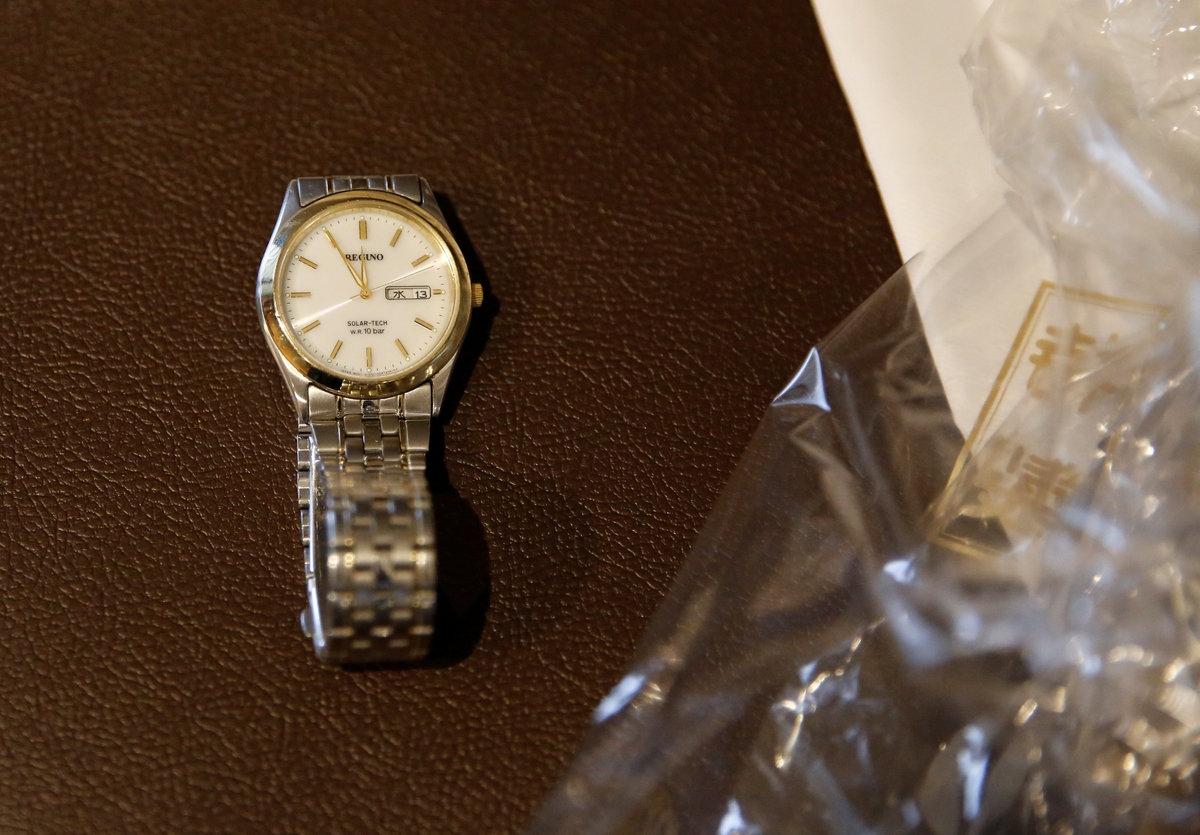
A watch that Yasuhiro Sato wore until his death is placed on a table after he died of lung cancer at his house in Tokyo, Japan, September 13, 2017. REUTERS/Toru HanaiMitsuru Niinuma, 69, who has terminal lung cancer, pats his pet dog Rin on his bed at his home in Tokyo, Japan, July 19, 2017. REUTERS/Kim Kyung-Hoon
(Reporting by Megumi Lim and Kim Kyung-Hoon; Writing by Elaine Lies; Editing by Malcolm Foster and Clarence Fernandez)
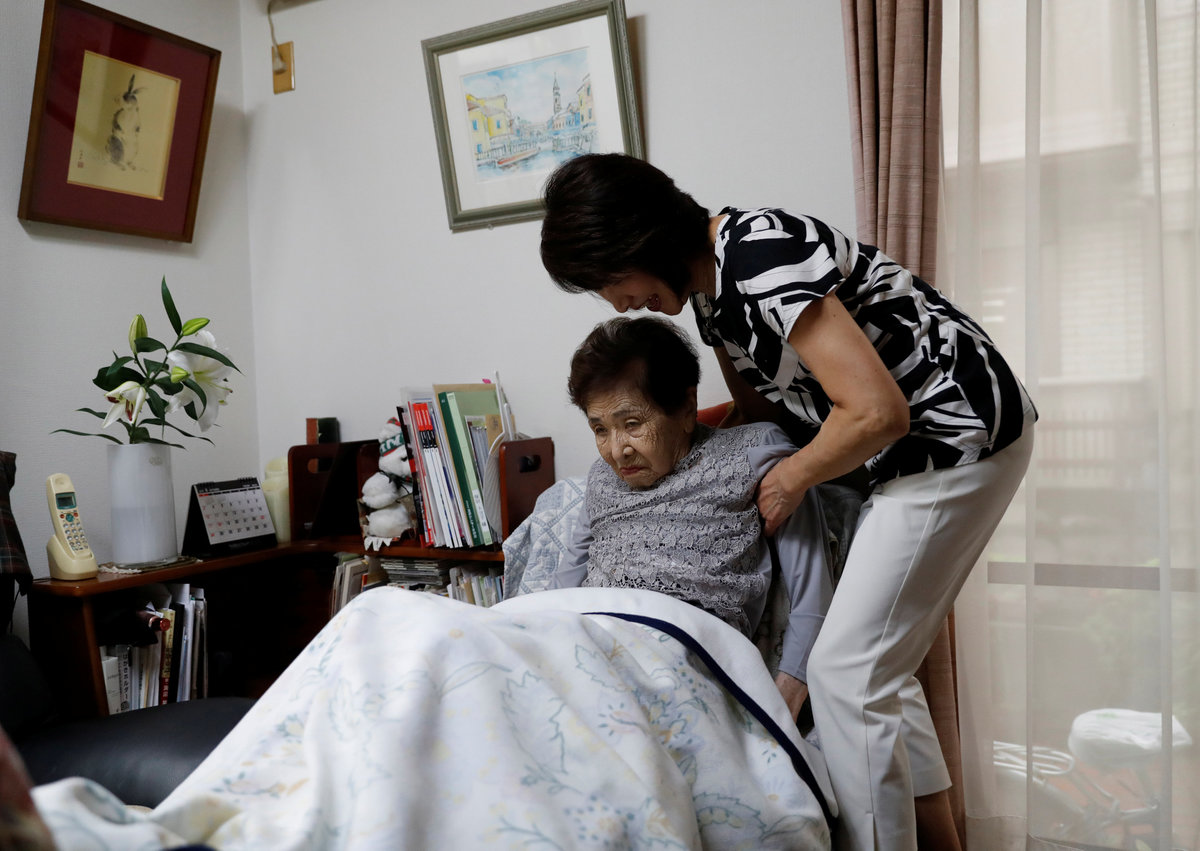
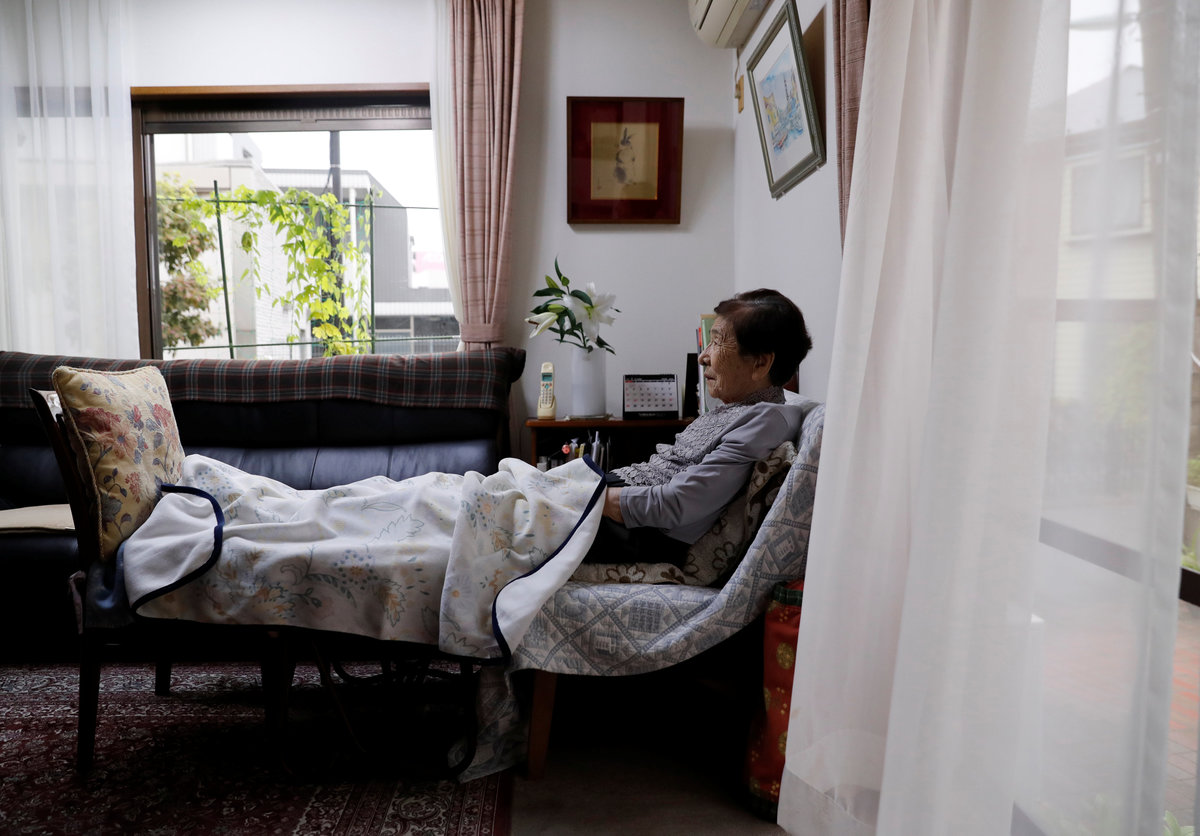
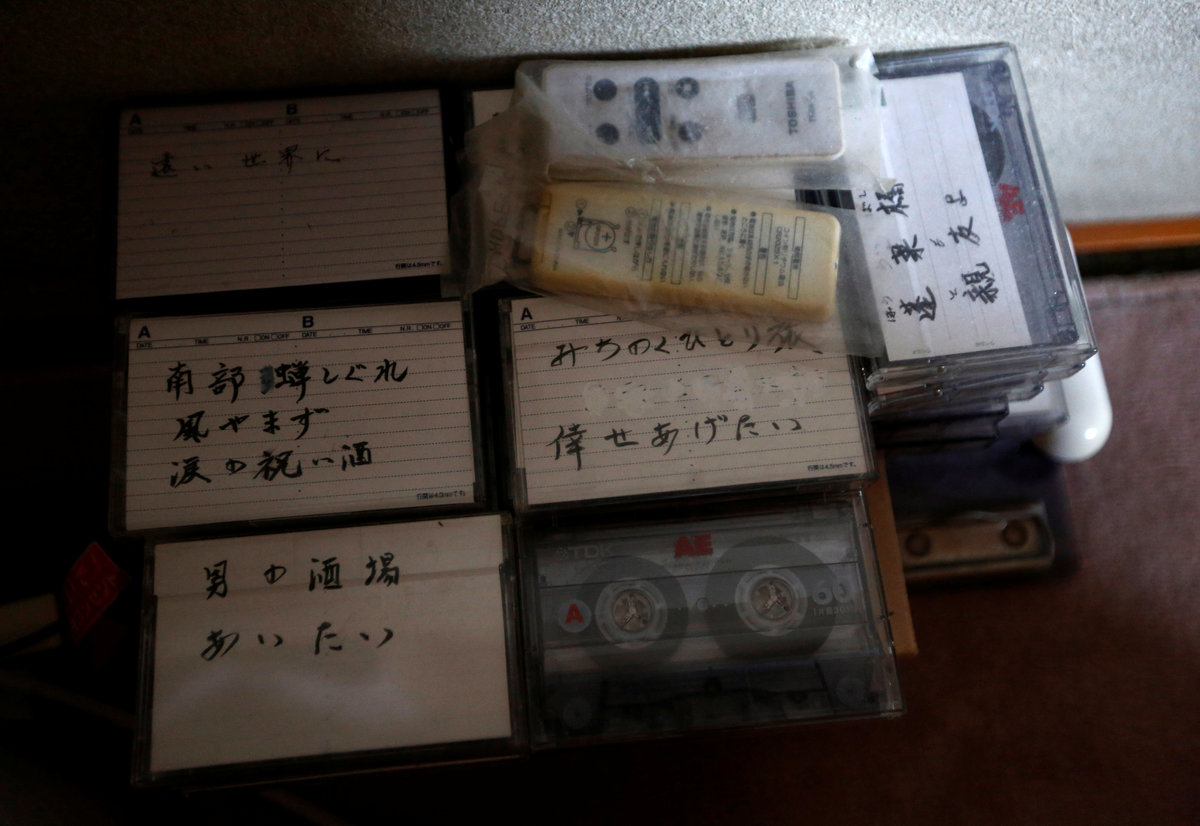
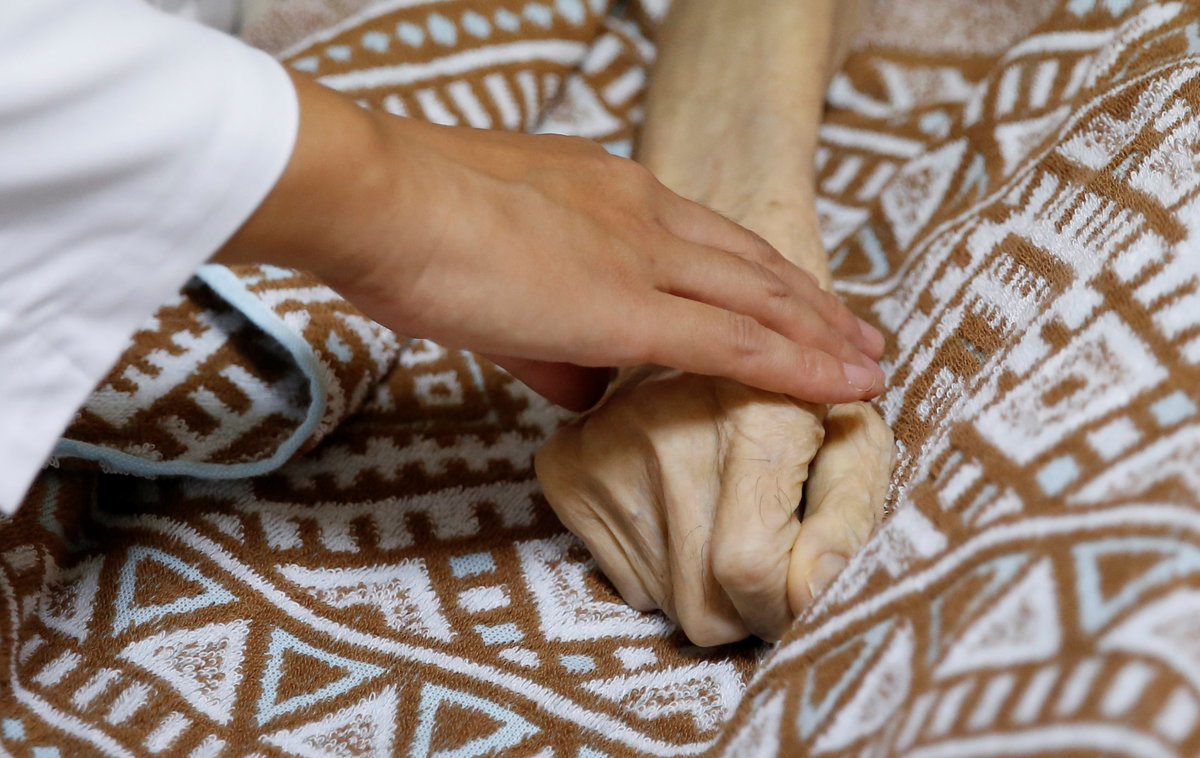
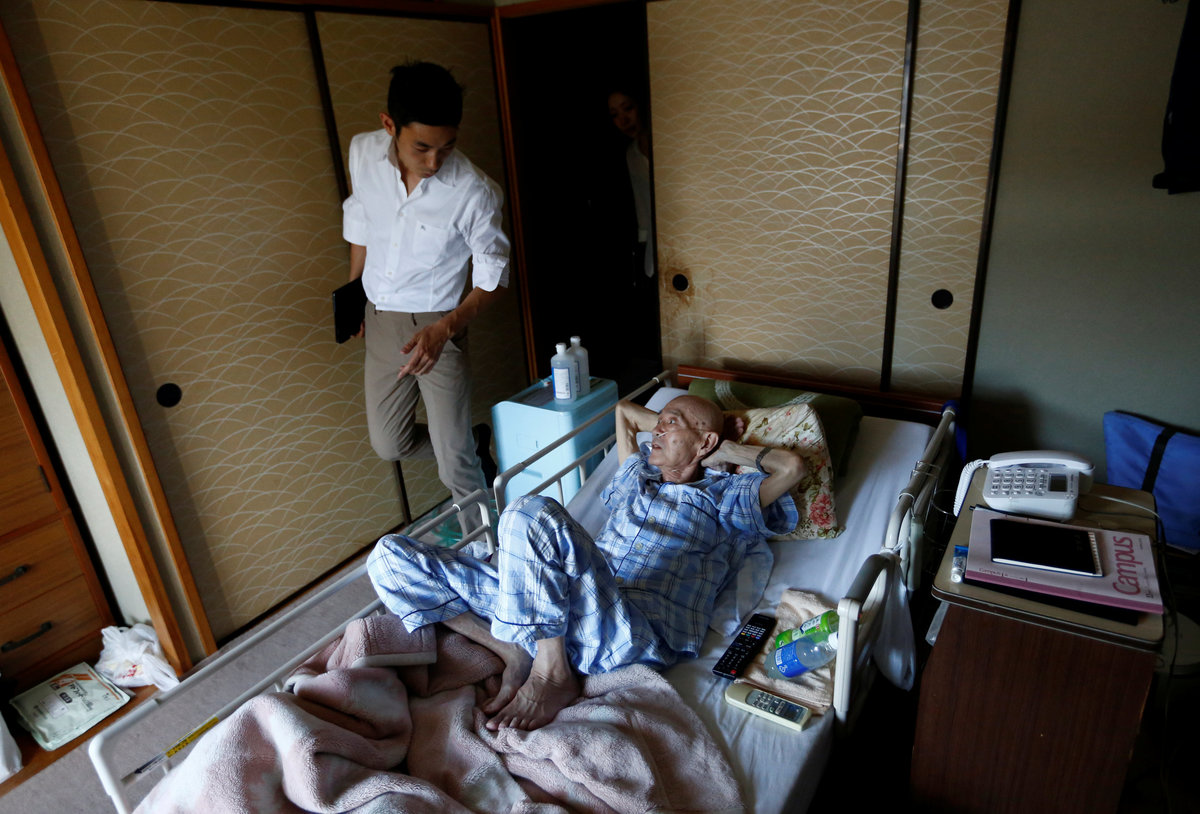
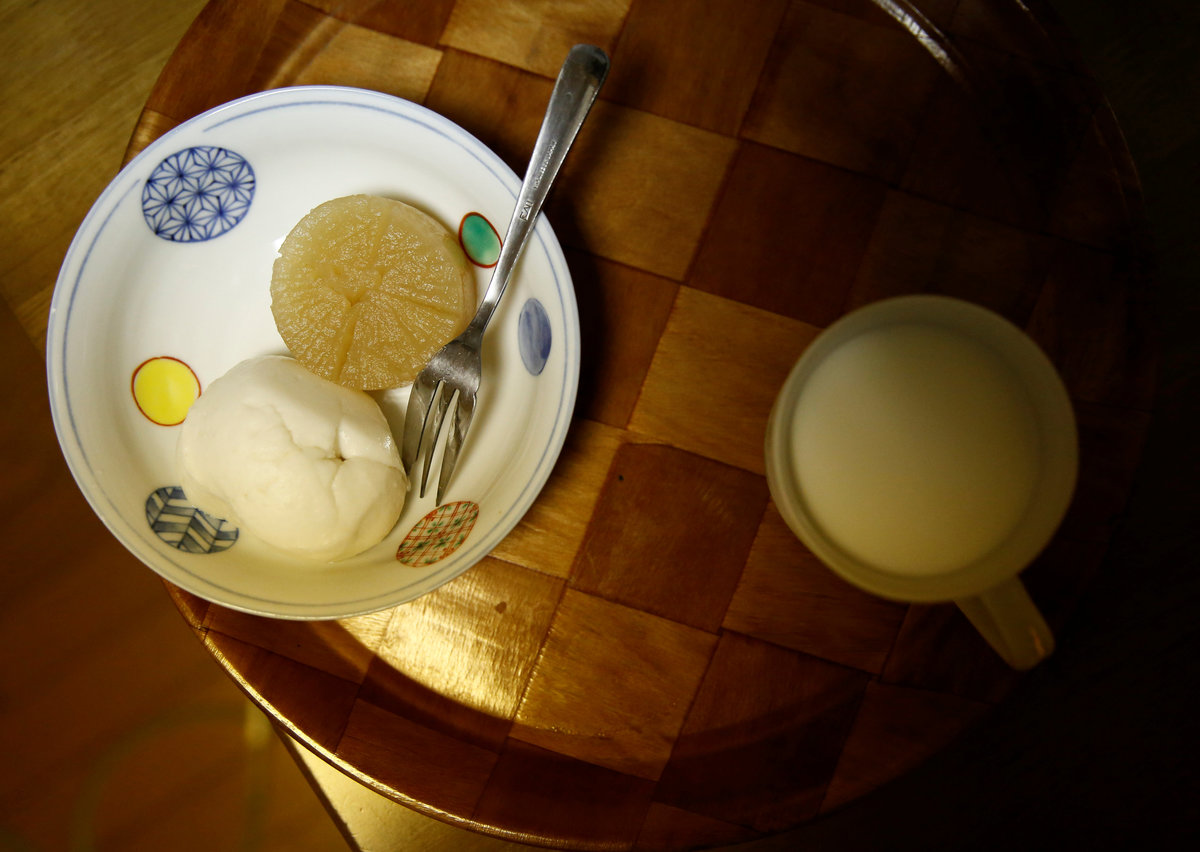
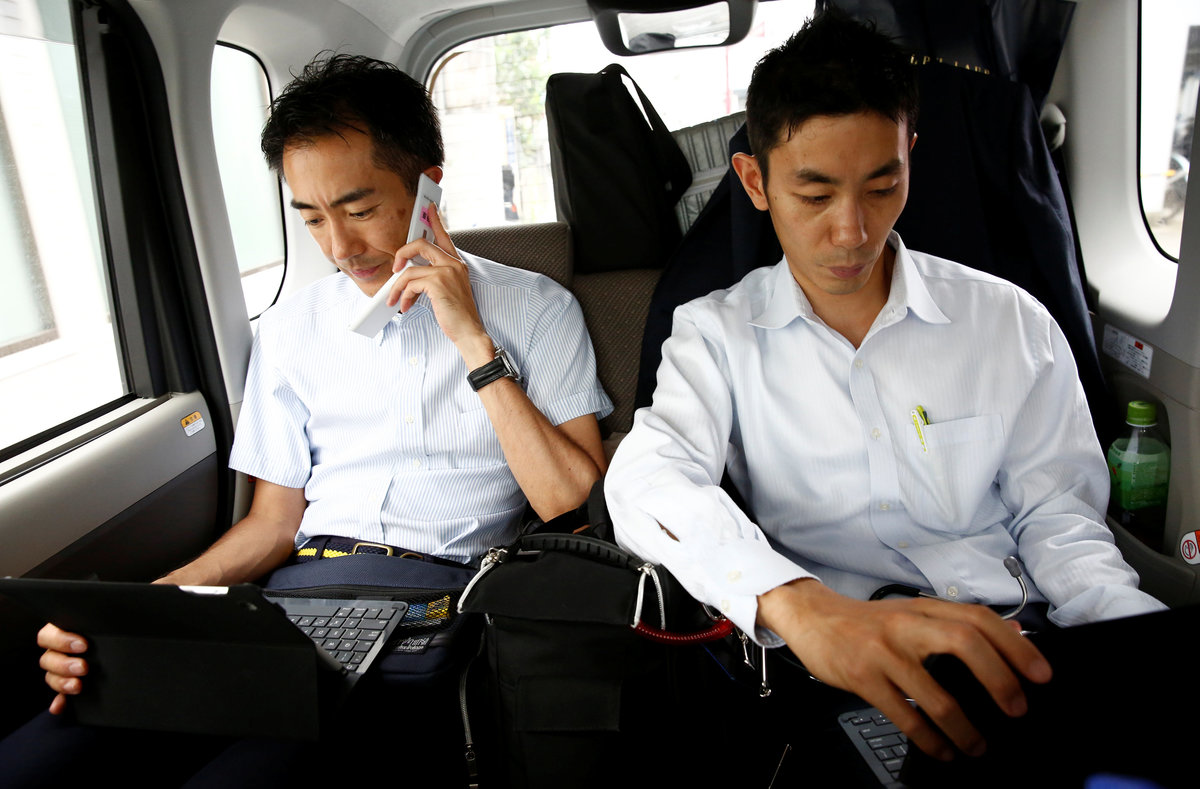
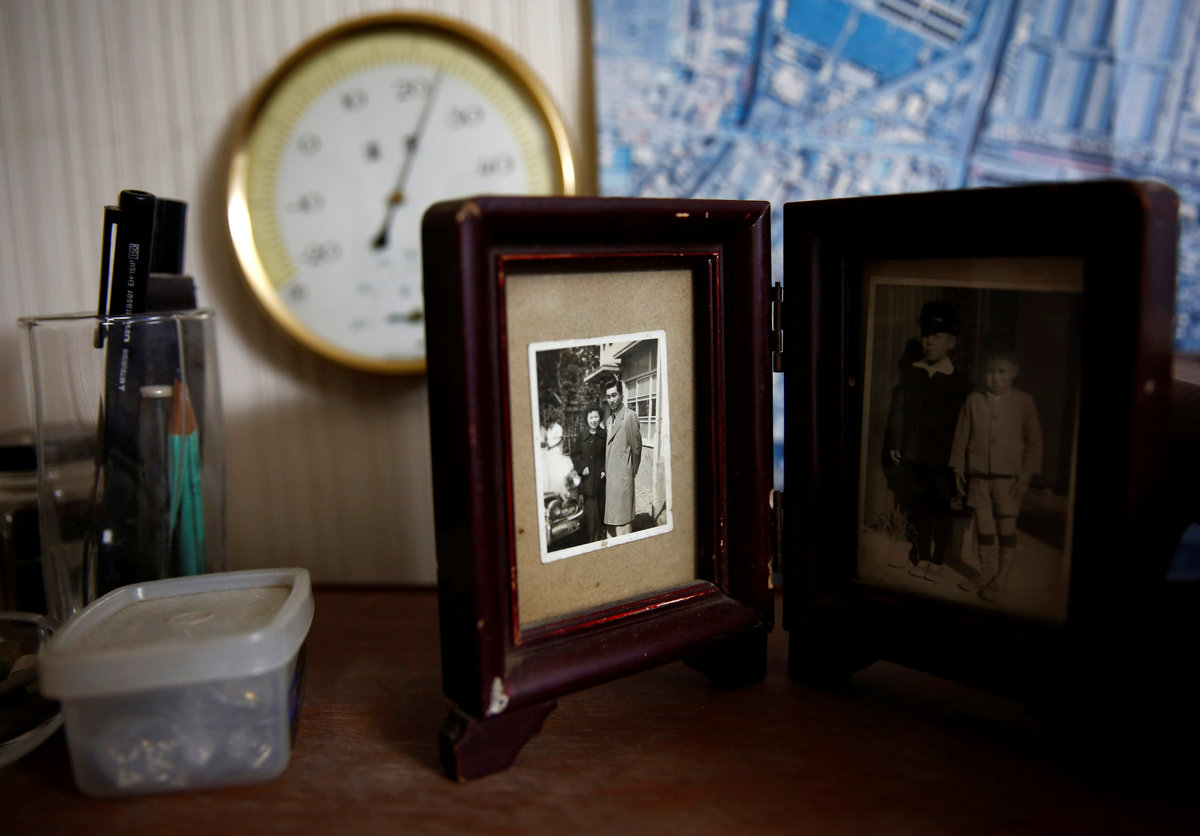
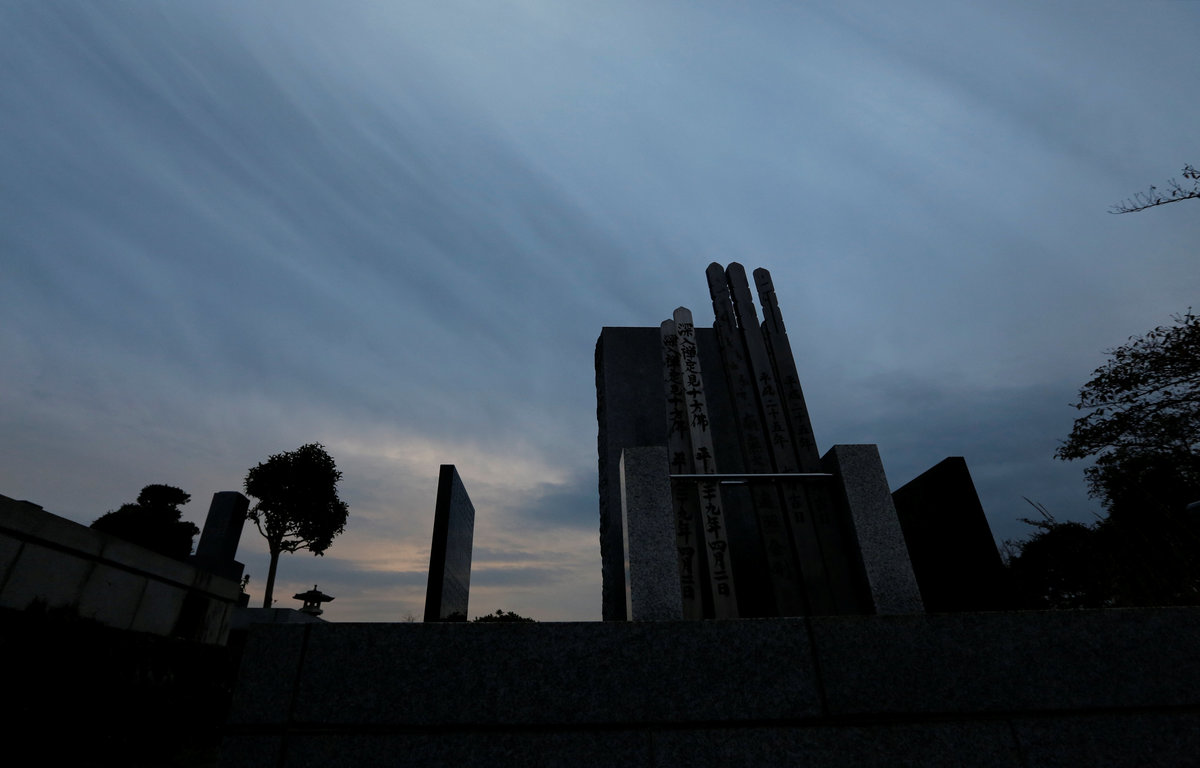
Yasuhiro Sato, 75, who has terminal lung cancer, rests on a bed at his home in Tokyo, Japan, July 11, 2017. REUTERS/Kim Kyung-HoonYasuda Toyoko (95), who has stomach cancer and dementia, is helped by her daughter in Tokyo, Japan, September 6, 2017. Yasuda is being taken care of at her daughter Terada's home. Terada said she decided to take care of her mother because she believed being in hospital weakened her and worsened her dementia. REUTERS/Kim Kyung-Hoon Yasuda Toyoko (95), who has stomach cancer and dementia, watches television in the living room of her daughter's house in Tokyo, Japan, September 6, 2017. Yasuda is being taken care of at her daughter Terada's home. Terada said she decided to take care of her mother because she believed being in hospital weakened her mother and worsened her dementia. REUTERS/Kim Kyung-Hoon Audio tapes with recordings of Yasuhiro Sato singing karaoke are placed in a corner of Sato's room in Tokyo, Japan, July 11, 2017. Singing karaoke was Sato's hobby when he was healthy. REUTERS/Kim Kyung-Hoon Yamato Clinic's doctor Sayaka Ogasawara touches Yasuhiro Sato's hand as she confirms Sato's death at his house in Tokyo, Japan, September 13, 2017. REUTERS/Toru Hanai Yuu Yasui, doctor and founder of Yamato Clinic, visits Yasuhiro Sato, who has terminal lung cancer, at his house in Tokyo, Japan, July 11, 2017. REUTERS/Kim Kyung-HoonYasuhiro Sato's breakfast sits on a tray at his home in Tokyo, Japan, July 19, 2017. Sato has terminal lung cancer. REUTERS/Kim Kyung-HoonKatsuo Saito, 89, who has leukaemia, uses his mobile phone in his bed at his home in Tokyo, Japan, September 8, 2017. REUTERS/Kim Kyung-HoonDoctor and founder of Yamato Clinic, Yuu Yasui (R), works whilst on his way to visit a patient with his assistants in Tokyo, Japan, July 4, 2017. REUTERS/Kim Kyung-HoonKatsuo Saito's old family photographs are displayed in his room in Tokyo, Japan, September 7, 2017. REUTERS/Kim Kyung-HoonAn undertaker from a funeral company bows to Yasuhiro Sato's casket after placing the casket in the morgue in Tokyo, Japan, September 13, 2017. REUTERS/Toru Hanai Graves for those who don't have family members including Yasuhiro Sato, who died from lung cancer at his home, are pictured in Ogose town, Saitama Prefecture, Japan, October 24, 2017. REUTERS/Toru Hanai
Sign up to read this article
Read news from 100's of titles, curated specifically for you.