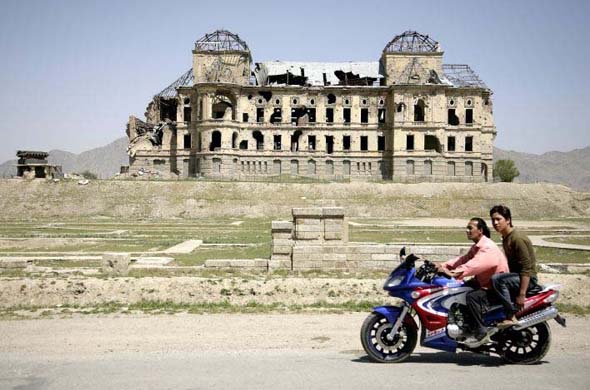
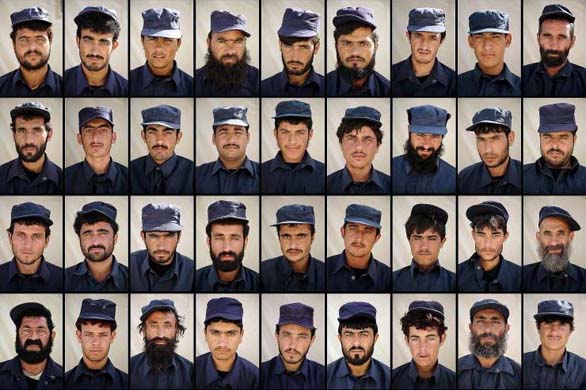
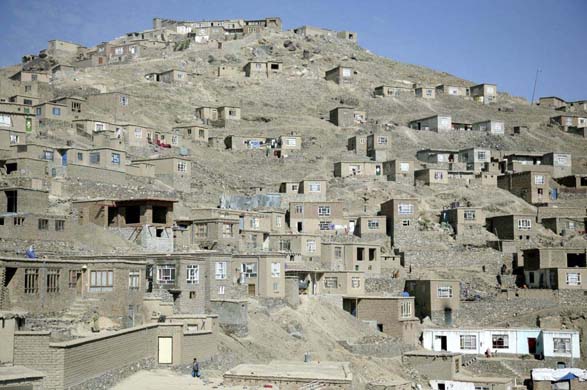
Very little remains of the royal palace of Dar-ul-Aman. The former residence of the kings of Afghanistan is now only a ghostly reminder of how the city used to be. The palace - originally intended to house Afghanistan's parliament - is close to Kabul Museum, which has also been plundered but is now being renovated Photograph: Hans Stakelbeek /Hans StakelbeekThese are the faces of the future law enforcers of Afghanistan, members of the Afghan National Auxiliary Police. The men undertake a two-week course with the Dutch military's Provincial Reconstruction Team to train as assistant police officers. Officially, police officers must be under the age of 35, but a few are older Photograph: Hans Stakelbeek / FMAX/Hans StakelbeekNew houses in Kabul, built for a swelling population that has grown from one million to more than three million. People move to the city because they feel safer there and there are more opportunities to make a livingPhotograph: Hans Stakelbeek/Hans Stakelbeek
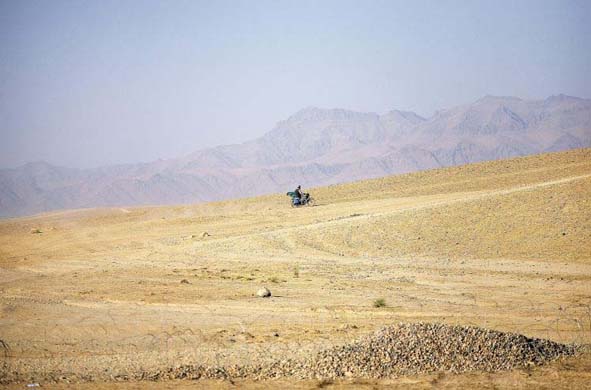
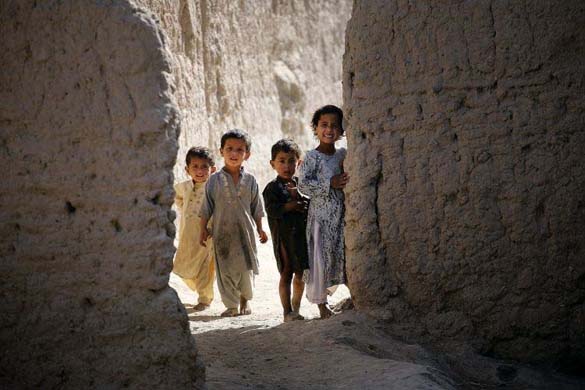
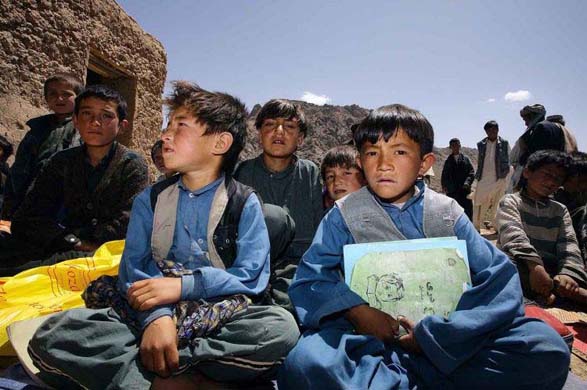
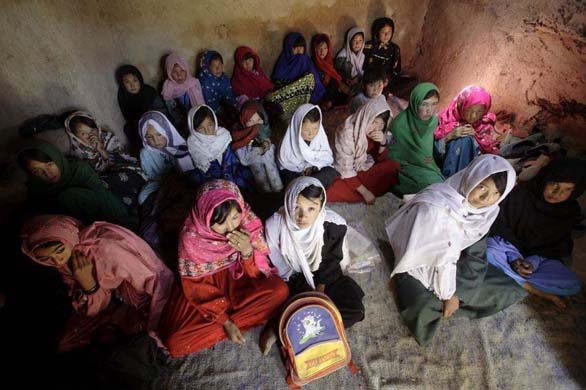
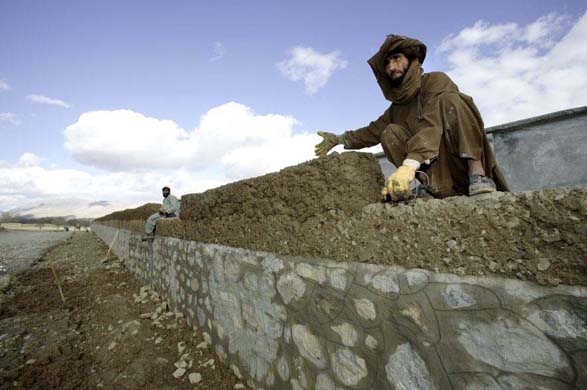
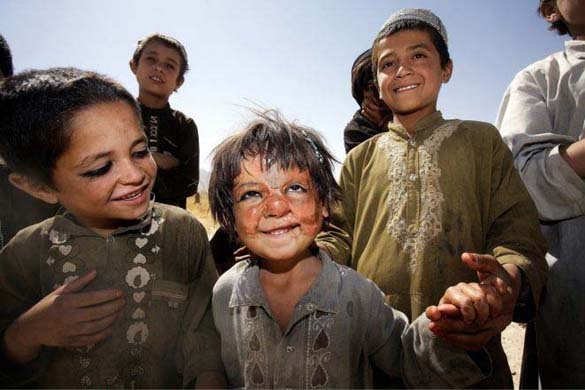
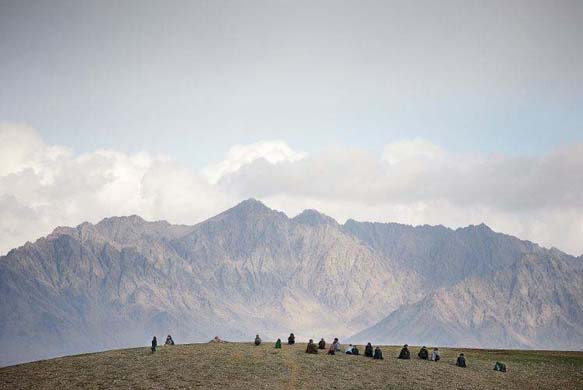
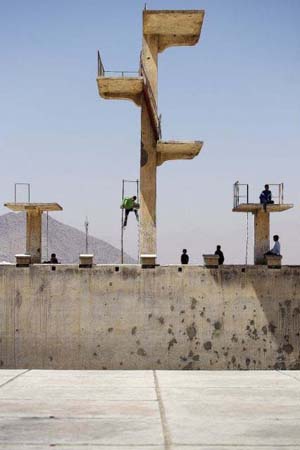
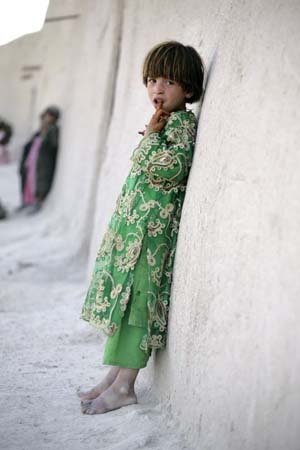
The majority of Afghans cannot afford a car. They use their bikes to cross the desert, and even a bike is a luxury itemPhotograph: Hans Stakelbeek/Hans StakelbeekGroups of young children often gather in the streets of AfghanistanPhotograph: Hans Stakelbeek/Hans StakelbeekAfghanistan is a country of children and young people: 44% of the population is under 14. They now have better prospects because they can go to school againPhotograph: Hans Stakelbeek/Hans StakelbeekA girls' school in Uruzgan. Under the Taliban regime girls were banned from attending school. That has changed although some are still not used to the ideaPhotograph: Hans Stakelbeek /Hans StakelbeekSecurity is also important for schools. Here a wall is being built around a school to keep intruders outPhotograph: Hans Stakelbeek/Hans StakelbeekThis girl looks happy here, but expectations are that as she grows, her burn scars won't, which could prove fatal. There is no hospital in Uruzgan, one of the poorest provinces in Afghanistan Photograph: Hans Stakelbeek/Hans StakelbeekMany people spend their time doing nothing, because there isn’t much to do. 40% of the population is unemployedPhotograph: Hans Stakelbeek/Hans StakelbeekThe swimming pool on Swimming Pool Hill in Kabul. People now use the hill as a vantage point to admire the view over the city and as a play area for their children. The Russians built the pool in the 1980s - probably to keep watch on the Mujahedin, who were closing in on the city. It never contained water, because the Russians never managed to pump any so high. In the 1990s, the Taliban pushed blindfolded criminals and homosexuals from the top diving boardPhotograph: Hans Stakelbeek/Hans StakelbeekA young girl on a street in a village near the town of Deh Rawood, in the Uruzgan province of Afghanistan. Almost every child here walks around barefoot Photograph: Hans Stakelbeek/Hans Stakelbeek
Sign up to read this article
Read news from 100’s of titles, curated specifically for you.