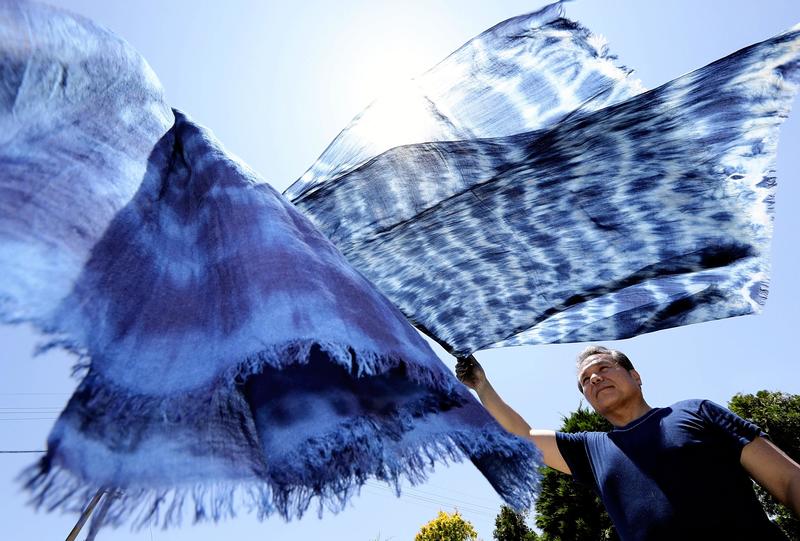
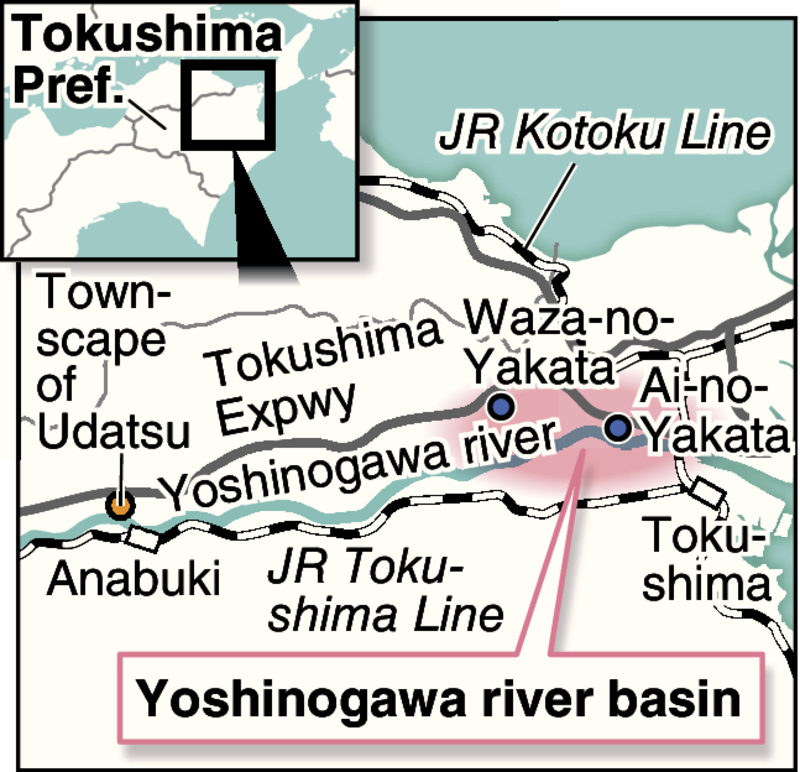
AIZUMI, Tokushima -- Indigo blue is the color used in the emblem of the 2020 Tokyo Olympics and Paralympics. The Yoshinogawa river basin in Tokushima Prefecture is a major production area of natural dyes that create deep shades of the color, which has been dubbed "Japan Blue." In the area, indigo plants are cultivated and their leaves are fermented to produce dye. There is a movement to promote the whole industry and the products it produces to the world as "Awa Ai" (Awa is the old name for Tokushima Prefecture, and Ai means indigo).
Live and let dye
A pure white tenugui Japanese towel was soaked in a brown-colored dye solution. When it was removed and spread out, the cloth turned blue before my eyes. Ranshu Yano, a 56-year-old dyer in the town of Aizumi, Tokushima Prefecture, said, "Besides blue, it contains red and brown pigments, so it develops into a deep shade of blue."
The origin of the color is the dried and fermented leaves of Japanese indigo plants, or Polygonaceae. Yano adds beech ash and sake to a jar and makes a dye solution with the traditional fermenting technique using natural lye.
"It takes time because it is alive," he said.
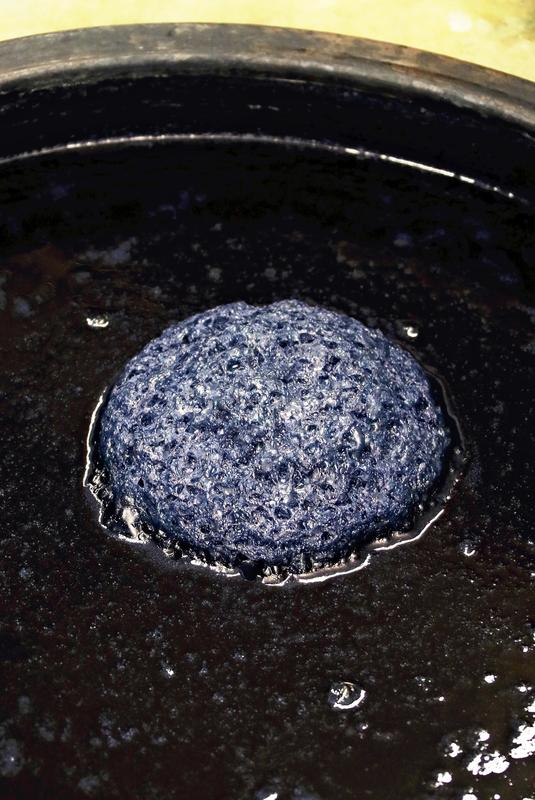
When they were mixed with a bamboo stick, a cluster of bubbles appeared on the surface. "The bubbles look like hydrangea flowers. [The dye] is in good health," he added.
Cultivation decline
As the Yoshinogawa river basin often floods during typhoons in autumn, it is common for indigo plant seeds to be sown in March and for the leaves to be harvested from July to September.
In the Edo period (1603-1867), when cotton suitable for indigo dyeing was widely used, the Tokushima domain encouraged the cultivation of indigo and the production of the dried and fermented leaves.
However, after the Meiji era (1868-1912), cheap indigo dye was imported from India. With the spread of chemical dyes, Tokushima's indigo industry declined. The decreasing demand for kimonos, the main product dyed in the indigo industry, also made matters worse. In fiscal 2017, the cultivation area for indigo fell to 16.4 hectares, one-thousandth of the area cultivated during the Meiji era. Due to the aging of the population, there are only five indigo masters in the prefecture who grow indigo plants and process them into dye.
2020 effect
Against this backdrop, the Tokyo Olympic and Paralympic Games' official emblems featuring checkered patterns in indigo blue were selected in 2016.
Yano's factory, which often handles kimono fabrics, received an increasing number of inquiries from private individuals requesting shirts and swaddling clothes to be dyed. The company also received orders from foreign brands to dye cotton fabrics for dresses.
The prefecture held its first "Awa Ai" event in Paris last October in an attempt to boost sales.
"I explained that dye solution that can no longer be used is poured into fields as a fertilizer. It seemed to resonate with the locals who have a strong desire for ethical consumption that takes health and the environment into consideration," said Tatsuya Mima, 42, of the prefectural government's tourism policy section.
Some young people are inheriting the tradition, such as Kenta Watanabe, 33, from Yamagata Prefecture. When he was working in Tokyo, he said he was fascinated by the vivid colors he saw in a magazine. He studied about Awa indigo for three years from 2012 in the town of Kamiita, which borders Aizumi, and continues to live there.
Last year, he set up a studio called "Watanabe's" that does everything from the cultivation of indigo plants and making dye solution, to processing dyed products.
He also accepts interns from the United States and Singapore and has received orders from European customers.
"I want to create products that resonate with young people, while promoting their appeal and preserving tradition," Watanabe said.
-- How to get there
The "Ai-no-Yakata" (house of indigo), where visitors can learn about Awa indigo, is a 30-minute bus ride from JR Tokushima Station. It is about 5 minutes by car from the Aizumi Interchange (IC) on the Tokushima Expressway. The "Waza-no-Yakata" (house of art) in Kamiita also provides indigo dyeing experience (reservation required). It is a 10-minute drive from the Donari IC. For more information, call Ai-no-Yakata at (088) 692-6317, or Waza-no-Yakata at (088) 637-6555.
--Extend your trip
Township of Udatsu
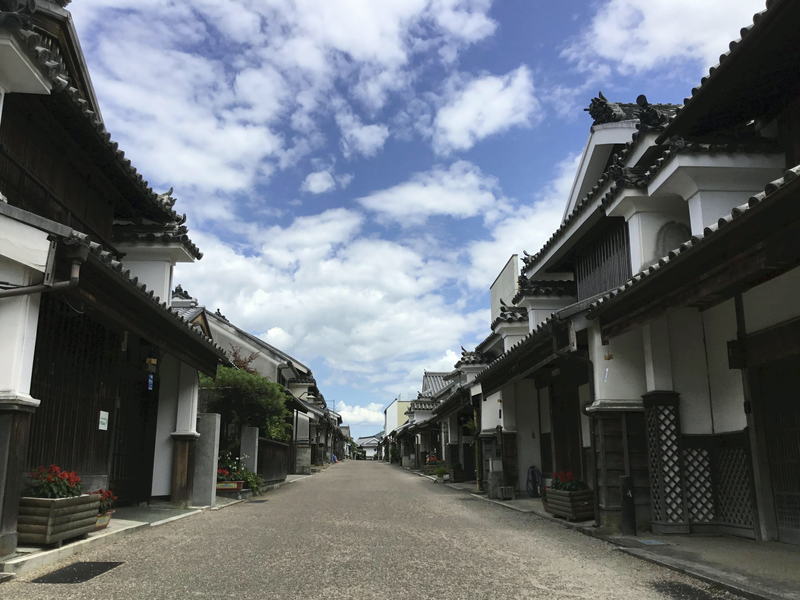
In the Wakimachi district of Mima, Tokushima Prefecture, which developed as a distribution center of Awa ai in the Edo period, merchant houses dating from the Edo period to the Meiji era remain. Many of the buildings have "Udatsu" walls that protrude from the second floor of buildings to prevent fires from spreading. The Udatsu, which were expensive to install, acted as a symbol of a homeowner's wealth.
The townscape and local indigo industry were recognized as part of the nation's heritage site in May. Wakimachi has also been designated as a national Important Preservation Districts for Groups of Traditional Buildings.
Read more from The Japan News at https://japannews.yomiuri.co.jp/