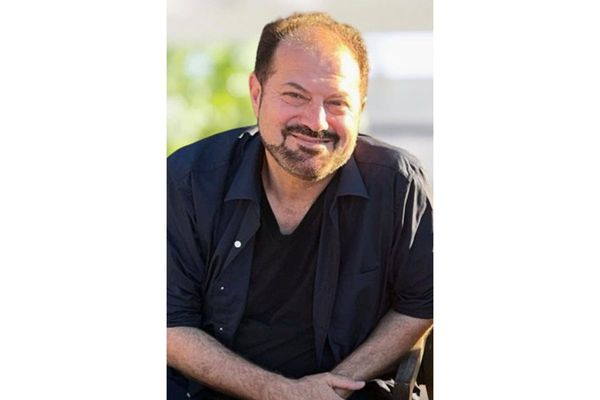
Dougie Campbell knows all too well the horrifying experiences that refugees go through.
Witnessing relatives murdered by terrorists, women running from predatory traffickers, respected doctors and academics forced to flee their homeland for their lives.
The Dumfries and Galloway councillor came across many shocking cases both in his previous job as a police chief inspector and while working as a volunteer case worker with the Scottish Refugee Council.
“I’ll never forget a middle-aged man who came to see me because he was disabled and required specialist footwear,” said Councillor Campbell.
“He had been trying for weeks to get a grant from the Home Office and showed me his only pair of shoes held together with masking tape.
“He was a politician in his country and to watch him crying there in front of me was heartbreaking.
“There were many stories like this and this voluntary role really opened my eyes to what it must feel like to flee from your life and place yourself at the mercy of another country’s system.”
Councillor Campbell, who represents the Dee and Glenkens ward, has been a strong voice for refugees in this region and he recently secured a pledge from the council that Afghan refugees fleeing the Taliban will be given shelter and support in Dumfries and Galloway.
It was agreed at the council’s communities committee that Dumfries and Galloway will welcome 20 Afghan refugees, four of whom have already made arrangements to be resettled here.
This move comes 14 years after Councillor Campbell first had any connection with refugees in his last job as a police chief inspector based in Drumchapel, Glasgow.
He said: “There was a significant number of asylum seekers and refugees spread across the area and it was very apparent to me that life was very difficult for these communities in terms of housing provision, welfare benefits and incidents of racism.”
Having seen how tough life was for asylum seekers and refugees, Dougie volunteered to support them after he retired from the police in 2010.
“I initially was trained as a mentor to support an asylum seeker given refugee status to help him integrate into life in Glasgow,” said Dougie.
“He was Somalian and had fled the country due to attacks on his family by Al Shabaab terrorists.
“I decided to introduce him through our regular meetings to what was available to him and his family in Glasgow and further afield – places they could visit for free – Kelvingrove Art Galleries, museums, public parks etc.
“His son was football-daft but had never been to a football match so I bought tickets and took them to a cup semi-final at Hampden.
“Through this and our conversations, I was able to make integration smoother and was able to assist the family in finding permanent housing.
“Due to Home Office housing contracts asylum seekers who have been given refugee status have to leave their accommodation and often can become effectively homeless.“
The refugee Dougie mentored was learning to speak English at college – but really struggled picking up the Glasgow slang in his daily life.
“He would say hello to someone at the bus stop but sometimes didn’t recognise what they said in reply,” explained Dougie.
“I got him a wee book on Glaswegian and Scots dialect which he carried around with him.
“I don’t think you can underestimate just how difficult it must be for people coming here from across the world to learn a new language, culture and way of life so the mentoring programme was a great service and hugely rewarding.”
Taking up an additional role at the Scottish Refugee Council offices as a case worker, Dougie would assist asylum seekers each day desperately seeking help in an unknown country.
Most were unable to speak English and Dougie would have to use a telephone translation service to find out their problems.

He said: “It was often problems with access to their benefits. At that time, it was not much more than £30 per week to live on – no cash but a card which they would present in supermarkets.
“There were accommodation problems and other issues such as access to health and social services.
“This opened my eyes because many of the people I saw were in dire straits and I learned not to take people for granted.
“I saw young Chinese women trafficked into the UK, former doctors, academics, lawyers and judges who had to flee their country.
“I met people who had just arrived and had no money to buy food. We had a mini foodbank in the office and would often make sure people who left the office had something to eat.”
Dougie had become vice-chairman of the board of directors at the Scottish Refugee Council before he left to move to Dumfries and Galloway.
Dougie said: “From my experience, our new Scots will enrich our communities and will invariably go on to contribute to the fabric, wellbeing and prosperity of Dumfries and Galloway.”