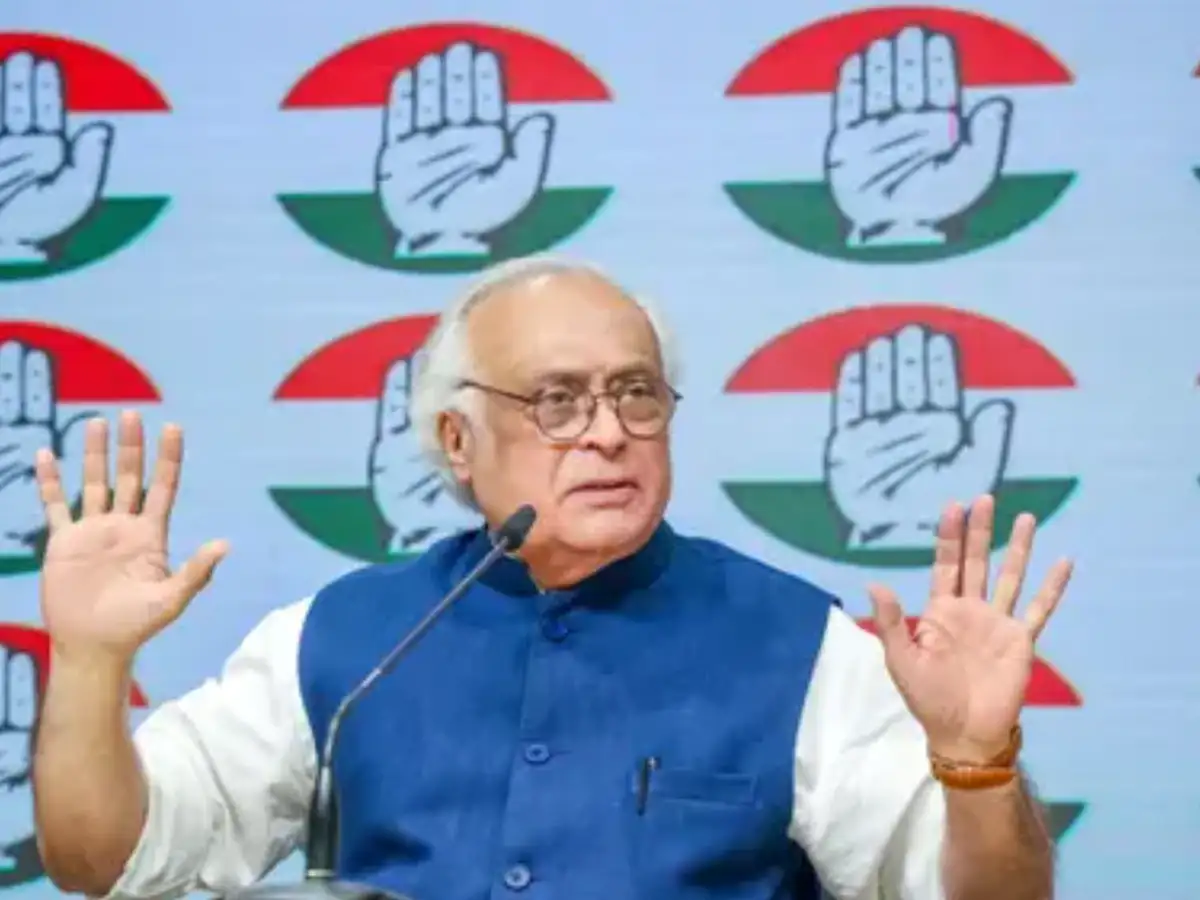
New Delhi: Congress leader Jairam Ramesh on Friday hit back at Finance Minister Nirmala Sitharaman after she accused him of spreading "canards" over the Taxation and Other Laws (Amendment) Bill, and said government assurances or tweets are no substitute for statutory safeguards.
In a long post on X, Ramesh said the finance minister's response to his "so-called canards" hinges on five "dubious claims".
Also Read: Congress issues whip to MPs ahead of key Parliament business
He said the claim that Merchant Discount Rate (MDR) applies only to merchants and not to customers is misleading.
"MDR is charged to merchants but it is inevitable that they pass transaction costs on to consumers through higher prices or differential pricing -- just as they do with credit and debit card payments. Moreover, 'merchants' include medium and small businesses, kirana stores, and even street vendors, the very backbone of UPI adoption," the Congress general secretary in-charge communications.
On the claim that it will support banks and fintechs to invest more in infrastructure, innovation, and security, Ramesh said UPI was built as a public digital good, and the government has a responsibility to protect it.
Also Read: E20 policy imposed under Trump's pressure to facilitate US ethanol imports: Arvind Kejriwal
"Zero MDR was critical to its success, enabling small shops and roadside vendors to make and receive payments without transaction charges. Better alternatives are also on the table. The RBI has the capacity to support the UPI ecosystem without charging merchants or consumers. Why is this option not being considered," he asked.
On the Steering Committee yet to decide on MDR, the Congress leader said policy-making is not just for the present but also for the future.
"The Bill removes the statutory guarantee of zero-MDR under Section 10A. It leaves future charges to government notification. Government assurances or tweets are no substitute for statutory safeguards, especially when earlier assurances on retaining zero-MDR are now being reversed," Ramesh said.
He further said that the timing raises legitimate concerns.
The amendment comes shortly after the U.S. Trade Representative's 2026 National Trade Estimate Report criticised India's UPI and RuPay ecosystem, as well as Brazil's Pix, since they take up market share from Visa and MasterCard, Ramesh said.
"While Brazil has continued to back Pix as a strategic public digital infrastructure, the Modi Government is now weakening statutory protections for UPI," he alleged.
Ramesh pointed out that Google Pay and Walmart-controlled PhonePe together process over 80 per cent of UPI transactions.
"At a time when foreign-controlled platforms already dominate the ecosystem, India should be strengthening and not weakening its public digital infrastructure," he said.