The Drumcree March is set to take place in Northern Ireland this weekend.
Every Sunday before the anniversary of the Battle of the Boyne on 12 July, members of the protestant Orange Order don bowler hats, orange sashes and white gloves and march through Portadown bearing flags and standards honouring their history.
Although the town is predominantly loyalist, the annual parade is the subject of no little controversy because it is seen as a provocation by nationalist Catholics, who favour a united Ireland and oppose the Orangemen's desire for the country to remain part of the UK.
The occasion celebrates the Glorious Revolution of 1688 and the subsequent defeat of Catholic King James II by William of Orange at the Boyne in 1690 - events that gave rise to the Protestant Ascendancy of the late 17th century.
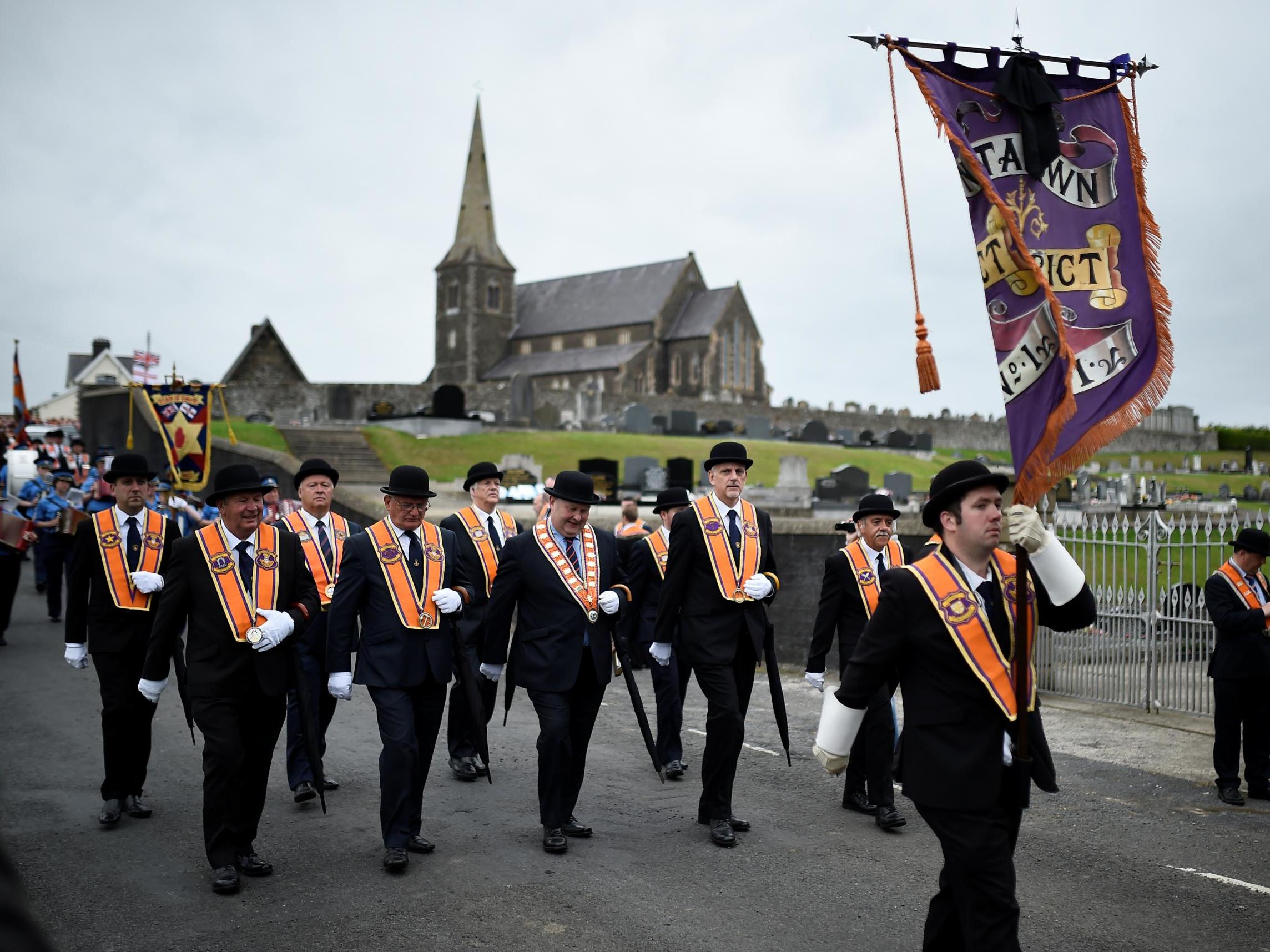
The Boyne itself is observed in Portadown through The Twelfth, a morning procession from Cocraine Orange Hall to the town centre on that date.
The Drumcree March, following a circular route to Dumcree Parish Church from Carlton Street Hall via Obins Street, has been held since 1807 and the order regard any attempt to stop it as an affront to their traditions.
But the Garvaghy Road return leg originally used has been ruled out of bounds since 1998, when three young boys - brothers Jason, Mark and Richard Quinn - were killed after their home was hit by a petrol bomb.
The Orange Order has of late put pressure on the Democratic Unionist Party (DUP), now in a confidence and supply agreement with prime minister Theresa May'sConservative government, to use its influence to reopen Garvaghy Road to the marchers.
The DUP's leader, Arlene Foster, is herself a member of the order and led a Boyne memorial march in Cowdenbeath, Scotland, on Saturday 30 June, an event requiring a heavy police presence in Fife.
Given that the cross-party Parades Commission determine the route, the chance of their being able to force the decision is unlikely but locals nevertheless fear the DUP risk reopening old wounds.
The parade has been marred by violence since the 1800s, however, with matters truly came to a head during the Troubles of the 1970s and 1980s, leading to the banning of the procession from Obins Street in 1986.
The UK government invested heavily in security at the time, deploying additional troops to quell sectarian unrest inspired by inflammatory marches.
In 1995, Catholic residents succeeded in blocking the march with a sit-down protest, leading to a standoff with 1,000 policemen and further clashes.
The following year, police barricades at Garvaghy Road drew another standoff, with busloads of Orangemen arriving from across the country to support their fellow protestants. The shooting of Catholic taxi driver Michael McGoldrick by members of the loyalist paramilitary group the Mid Ulster Brigade further exacerbated tensions.
Catholic neighbourhoods were blocked in 1997 by security forces and 60 families evacuated from their homes in response to death threats issued by the Loyalist Volunteer Force.
This would be the last time the Orangemen would be allowed to march down Garvaghy Road due to the killing of the Quinn Brothers on 12 July 1998.
Peace has largely held sway since 2001 but talks to end the tensions definitively have so far failed to materialise.