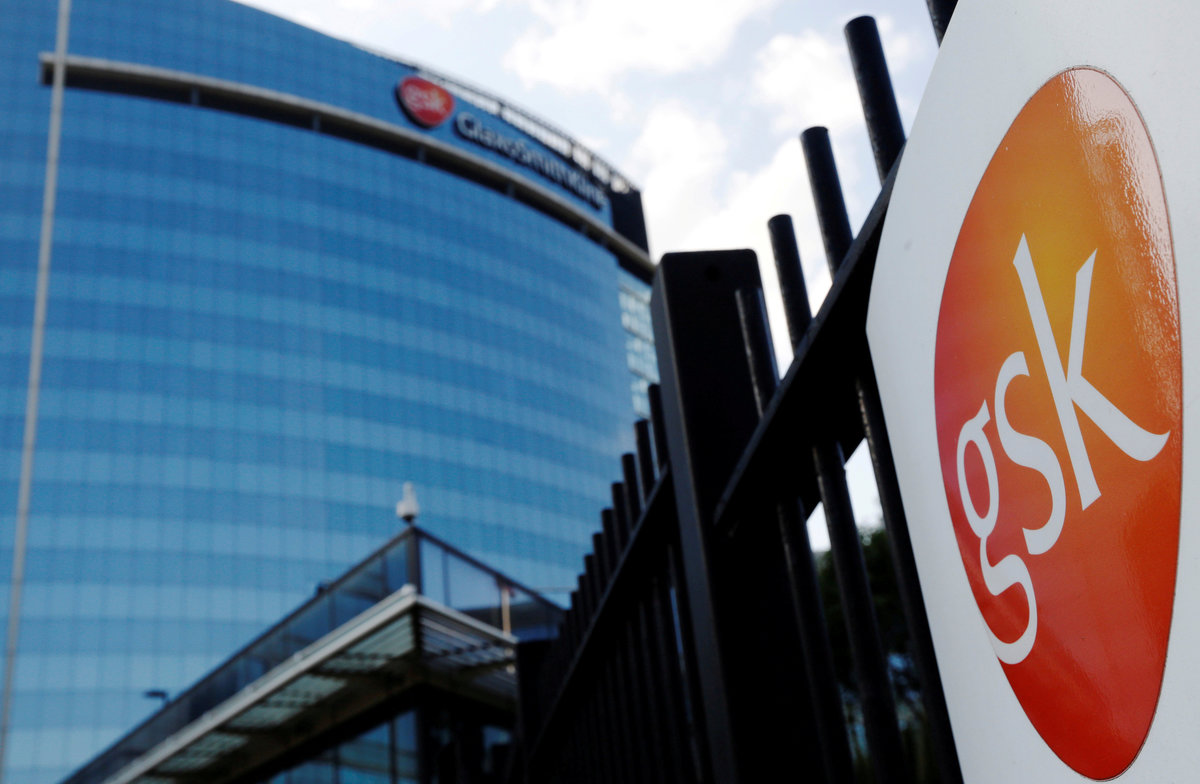
LONDON (Reuters) - Britain's pharmaceutical industry needs at least two years' transition to cope with the impact of the country leaving the European Union, the chief executive of GlaxoSmithKline said on Wednesday.
Emma Walmsley, who leads Britain's largest drugmaker and employs 17,000 UK staff, said she was "encouraged by the more pragmatic approach" from ministers, but warned the industry needed time to adjust to the coming disruption.
"Our main focus is to make sure that we are given a sufficiently long transition period, that is really the thing that matters in our sector," she told reporters after quarterly results. "The absolute minimum for us - minimum - is two years."
Britain is scheduled to exit the EU in March 2019.
Although the impact of Brexit on GSK's overall business is likely to be limited as Britain accounts for only 4 percent of sales, the UK pharma trade association has warned being outside the EU could undermine future investment, research and jobs.
Drugmakers, which account for a quarter of all UK business research spending, are particularly affected by Brexit because of the highly regulated nature of their business and the fact that drugs are currently overseen centrally by the European Medicines Agency (EMA).
Companies want to remain within the European regulatory system as far as possible, even as the London-based EMA prepares to relocate to another city inside the EU as a result of Brexit.
"We would like it to be as much mutual recognition as possible to minimize any duplication," Walmsley said.
Earlier this month, health minister Jeremy Hunt and business minister Greg Clark offered some comfort to pharmaceutical companies by stating they wanted to continue to work closely with the EMA after Brexit.
Whether that is a practical proposition remains to be seen.
EMA Executive Director Guido Rasi told Reuters in April that while a working relationship between Britain and the EMA was theoretically possible, it would be up to EU governments to decide whether to offer such a deal.
Being isolated from the EU system could put British patients at the back of the queue for new drugs if companies decide to prioritize Europe, a market of hundreds of millions of people, over Britain, where the commercial opportunity is far smaller.
(Reporting by Ben Hirschler; Editing by Adrian Croft)