AHMEDABAD: This is the hard truth and possibly a dangerous one too. During the Covid-19 pandemic, our increased consumption of antibiotics followed by its excretion into our civic systems, has also accelerated formation of drug resistant bacteria in our ambient water bodies — lakes, sewage systems and even the Sabarmati river. And what worries scientists is human interaction with them at the riverfront, slums along lakes and even waste water farming downstream.
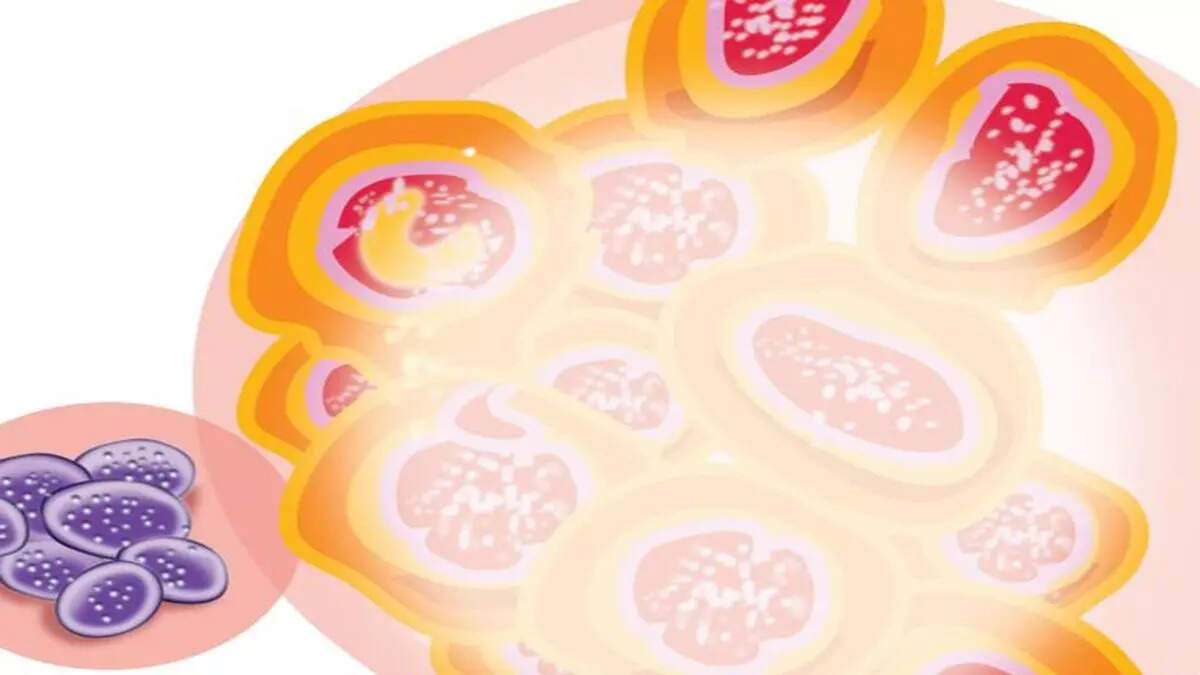
Simply put, between two years — 2018 and 2020 — the presence of drug-resistant Escherichia coli (E. coli) or gut bacteria on two locations on Sabarmati river increased from 22% to 46%. In the two lakes that were sampled for the same period the presence of drug-resistant bacteria increased from 13% to 43% , while in one of the sewage treatment plants, the drug- resistant bacteria increased from 10% to 26%.
It was for the first time that such a study, led by IIT-Gn’s discipline of earth science and environmental scientists, from eight prestigious national and international institutes showed how drug-resistance among excreted human gut bacteria like E coli increased between 2018 and 2020.
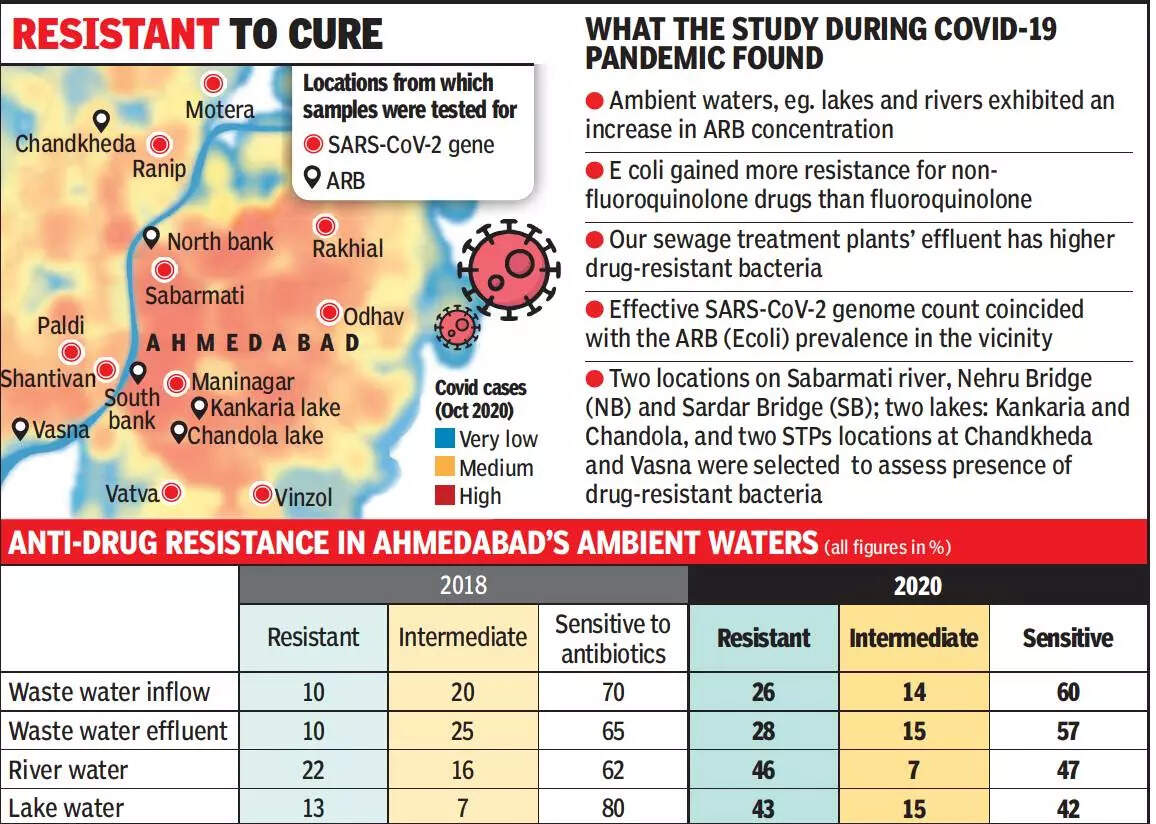
Each E coli isolate was tested for susceptibility to six antibiotics — kanamycin, tetracycline, norfloxacin, ciprofloxacin, levofloxacin, and sulfamethoxazole. The sampled locations included two locations on Sabarmati river at Nehru Bridge and Sardar Bridge, Kankaria and Chandola lakes and two sewage treatment plants at Chandkheda and Vasna.
“There is an urgent need to have a policy and mechanism in place to ensure controlled antibiotic prescriptions followed by safe disposal of antibiotics and medicines from individual homes,” said professor and cluster head, School of Engineering, UPES, Dehradun, Manish Kumar. He also emphasized that many municipal sewerage treatment plants, including in Ahmedabad, is not equipped to eliminate pathogens.
The study involved environmental engineers Kiran Dhangar, Alok Kumar Thakur, Bhagwana Ram, Tushara Chaminda, Pradeep Sharma, Abhay Kumar, Nirav Raval, Vaibhab Srivastava, Jörg Rinklebe Keisuke, Kuroda, Christian Sonne and Damia Barcelo from IIT-Gn, University of Ruhuna, Galle, Sri Lanka, Graphic Era Deemed University, Dehradun, NCERT, New Delhi, Encore Insoltech, Randesan, Gandhinagar and international institutes like the University of Wuppertal, University of Sejong, Korea, Toyama Prefectural University, Imizu Japan, Arctic Research Centre (ARC), Frederiksborgvej, Denmark, Institute of Environmental Assessment and Water Research Barcelona, and Institute for Water Research, Spain.