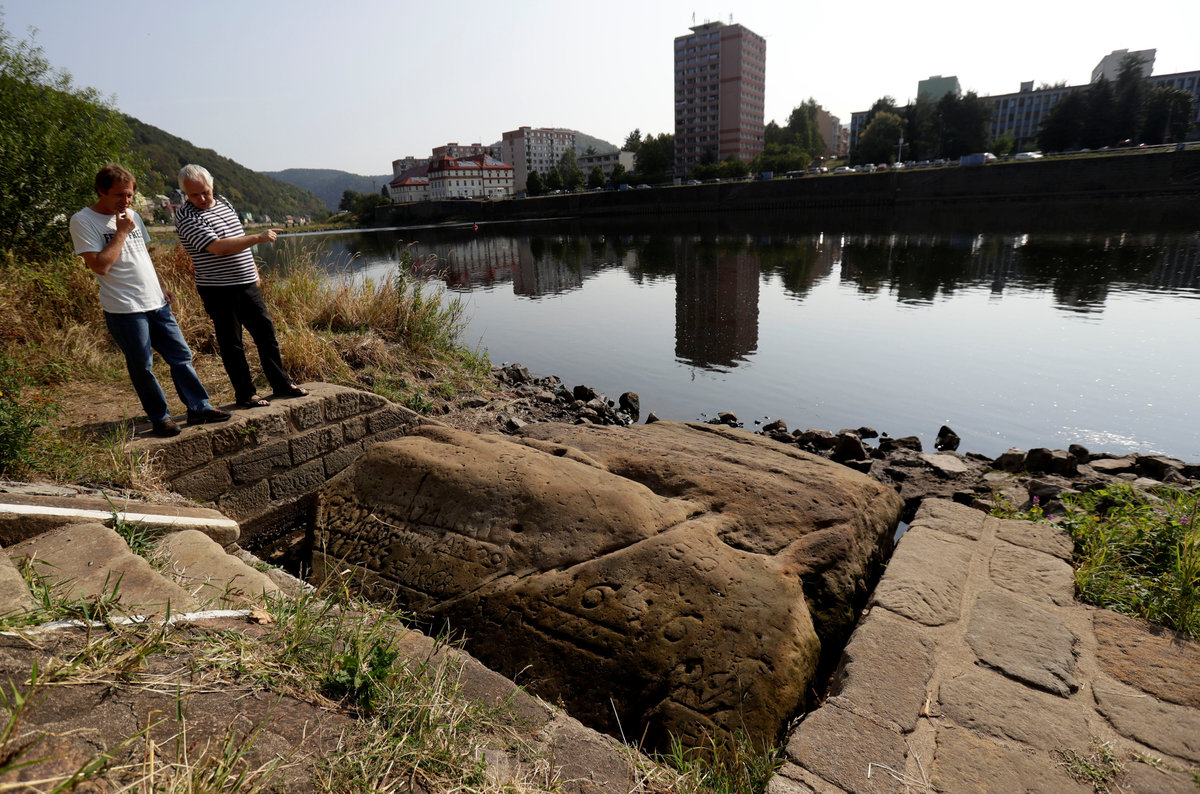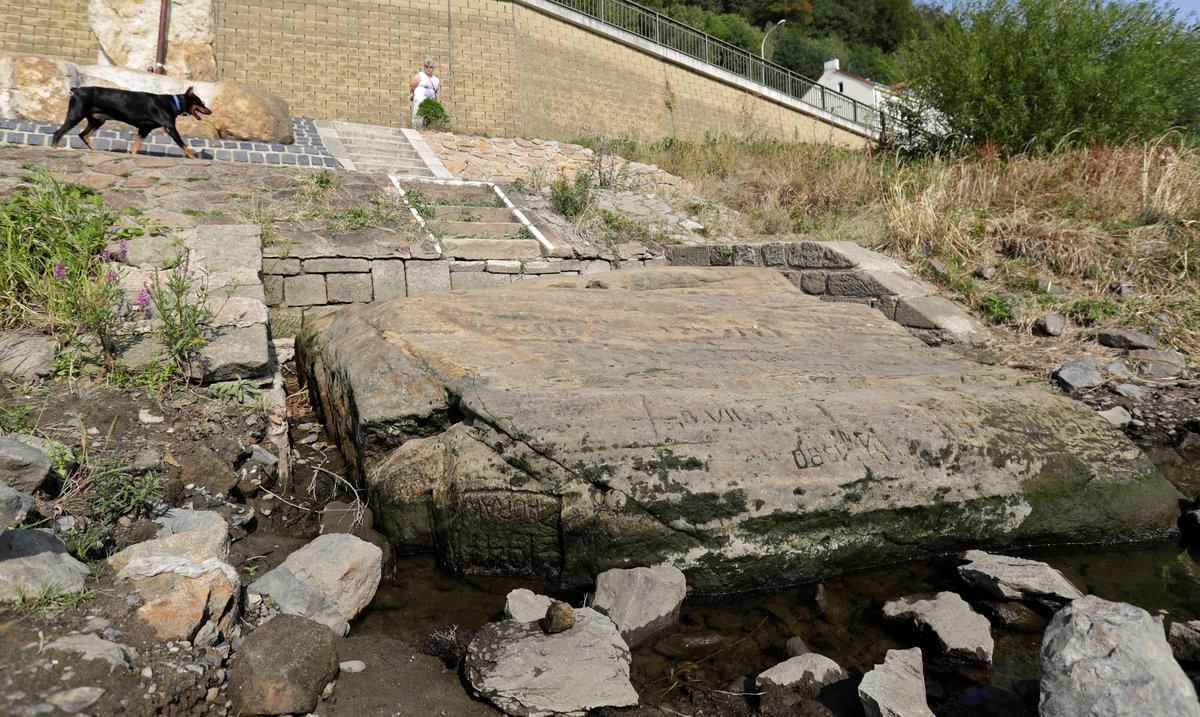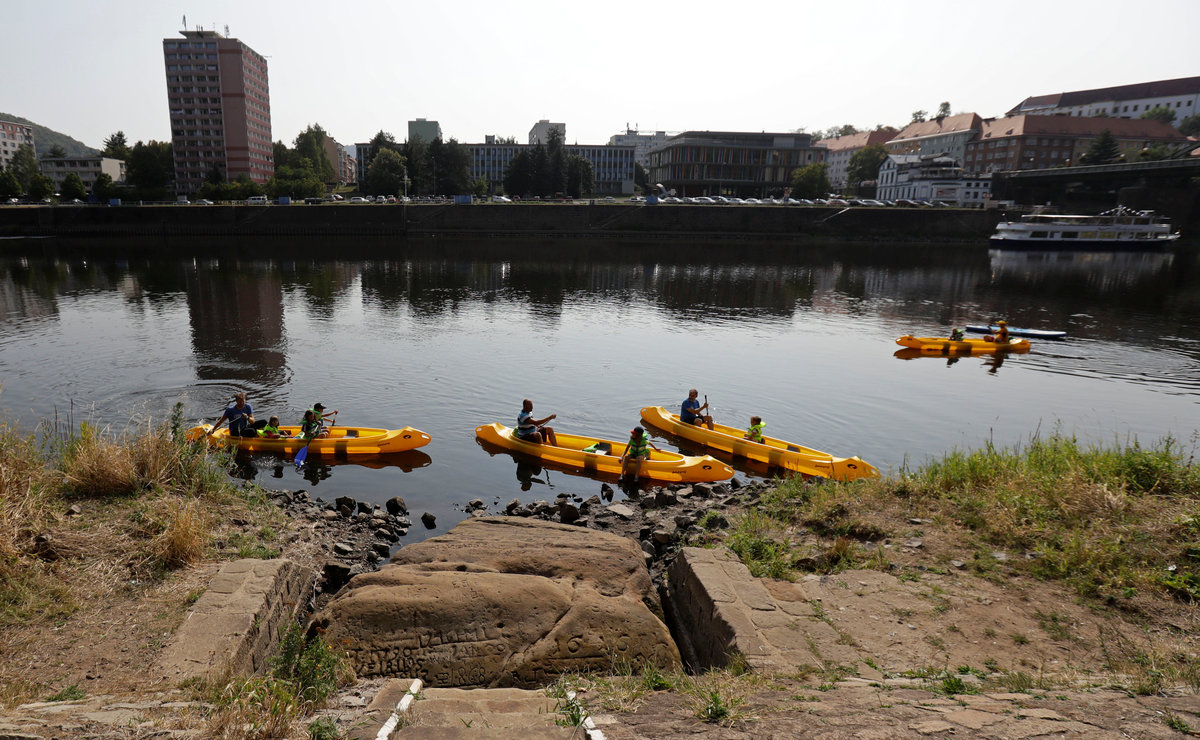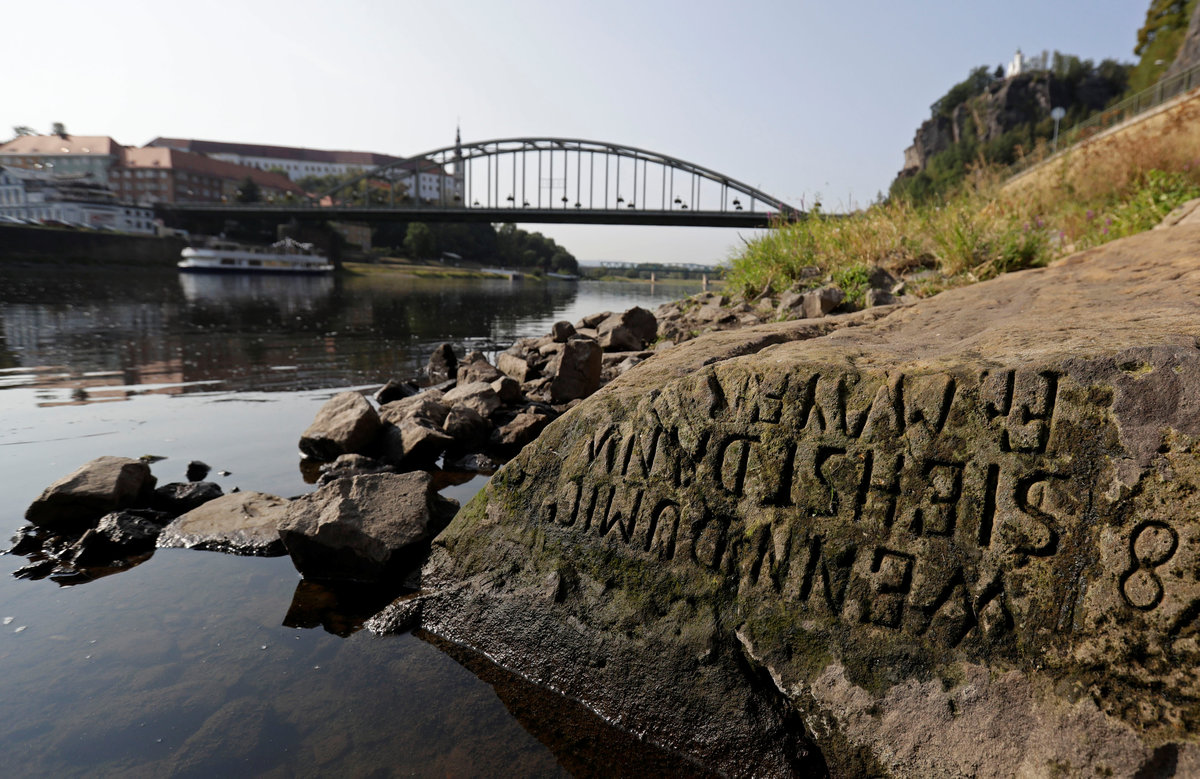
DECIN, Czech Republic (Reuters) - Ancient ominous warnings carved on usually submerged boulders along the Elbe River had for centuries driven fear into the hearts of Czechs, but their reappearance during this year's drought is just a reminder of how tough people had it.
The so-called Hunger Stones can only be seen above the water surface during droughts, and used to presage bad harvests, interrupted river navigation and consequent famine. Now, the messages appear weeks after weather and crop forecasts.
In Decin, just over 100 km (60 miles) north of Prague and not far from the German border, a boulder that is central Europe's oldest hydrological marker is fully exposed after the water level in the river dropped to 115 cm.
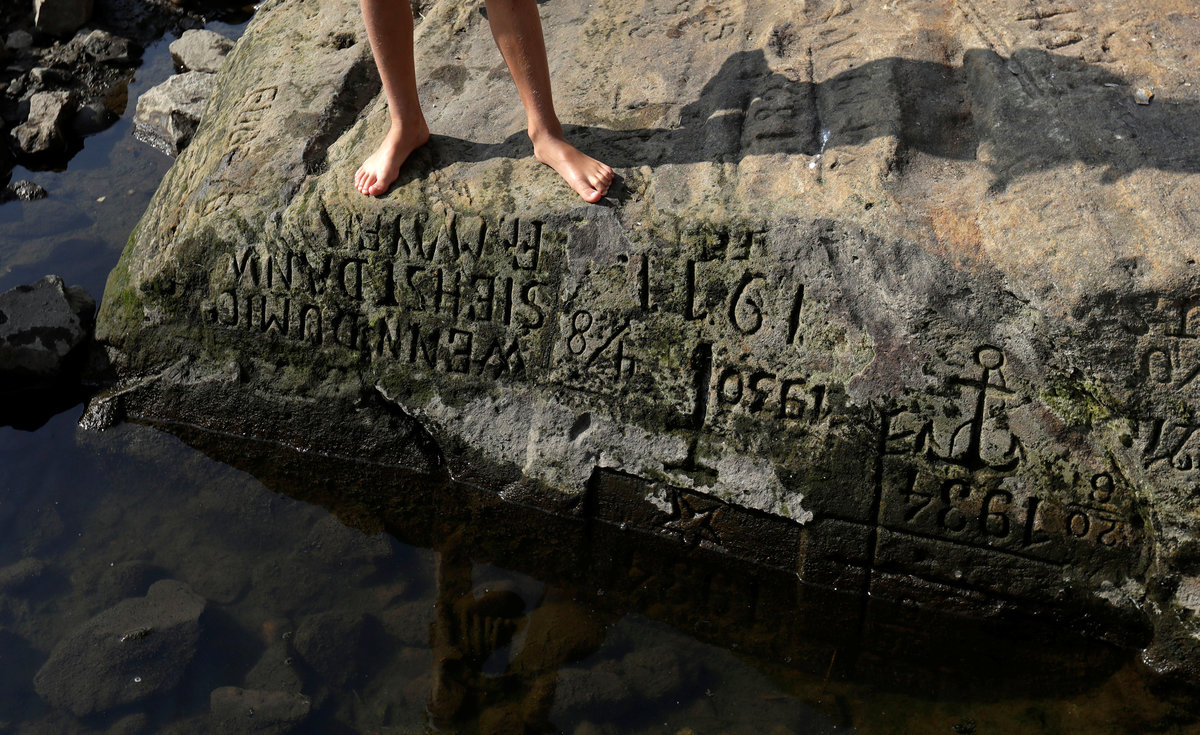
The rock, sitting below Tyrs Bridge, is marked in Czech and German, with one message from pub owner Franz Mayer in 1904 saying: "If you see me, weep."
The oldest visible marking on the stone is from 1616.
"With time, when drought came again, more people left messages," said Vlastimil Pazourek, director of the Regional Museum in Decin. "This stone is a calling card for what has happened in the region."
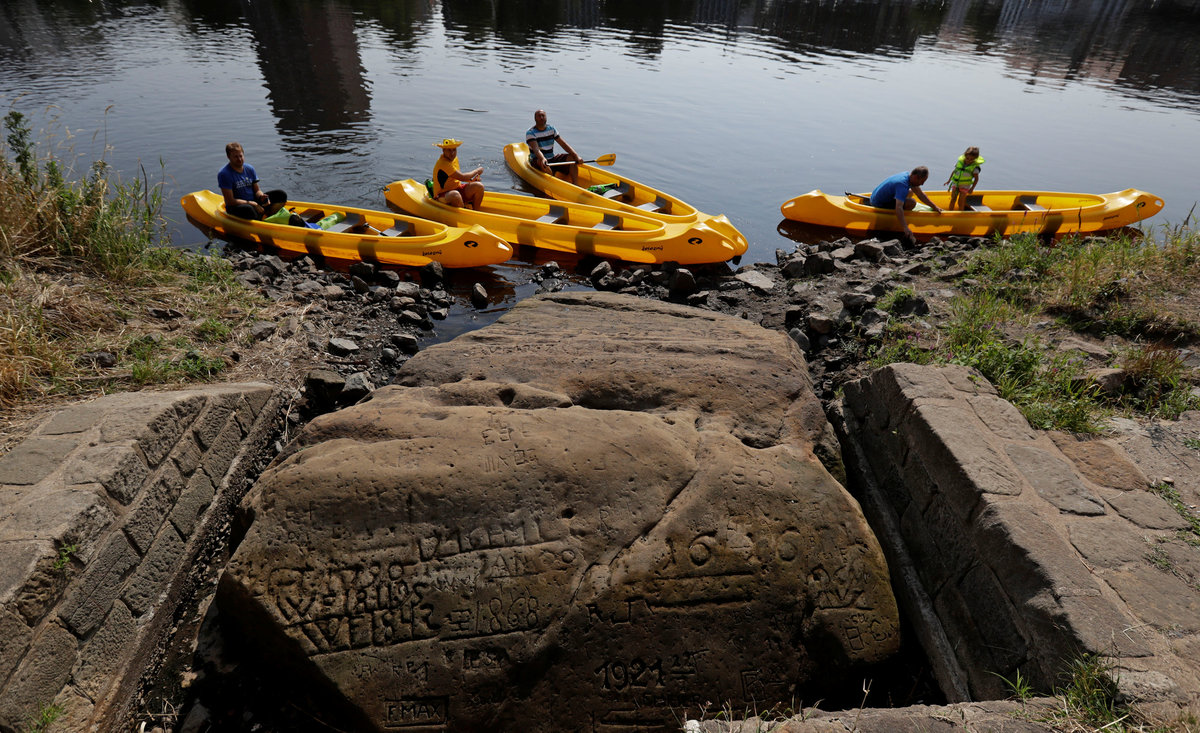
As time went by, the doom and gloom gave way to a more humorous and entrepreneurial approach.
The 1904 message was answered in a poem in the 1930s by the owner of a local pump factory with: "Don't cry, girl, don't fret. When it's dry, just spray your field wet."
This year's drought and a heatwave scorched fields in northern and eastern Europe hitting farmers hard, but it is only likely to cut the European Union’s wheat export surplus, meaning the bloc will have to consume more of its own grains, analysts say. [nL5N1V128S]
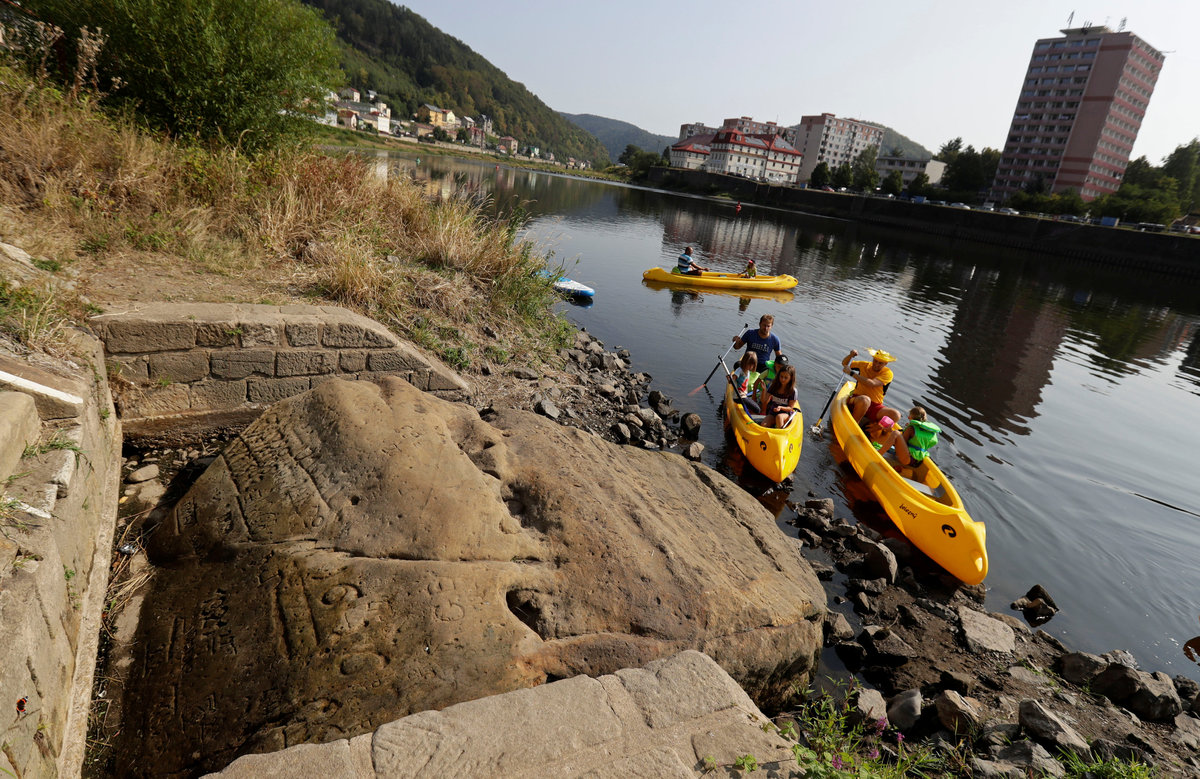
The Decin boulder emerges when the water drops below 160 cm, and the current low level is preventing commercial and passenger boats from sailing. Most goods nowadays are brought by truck or rail, however.
(Reporting by Jason Hovet, editing by Andrei Khalip)