Drones and other tech advances are reshaping how viewers from around the world experience the Winter Olympics.
Why it matters: New camera angles can pull the audience into the athlete's perspective, making the sheer intensity and speed of events like skiing and bobsled easier to grasp.
Driving the news: One of the most obvious tech advances at this year's games has been the extensive use of drones by the Olympic Broadcasting Services, the group that provides camera feeds to NBC and other broadcasters around the world.
- "The drone coverage has been game-changing because it puts viewers in the athlete's perspective," NBC Olympics coordinating director Michael Sheehan told Axios.
- "Traditional sports coverage relies on wide, perpendicular shots," he said. But, drones are able to offer different angles and "you get a real sense of how fast they're moving."
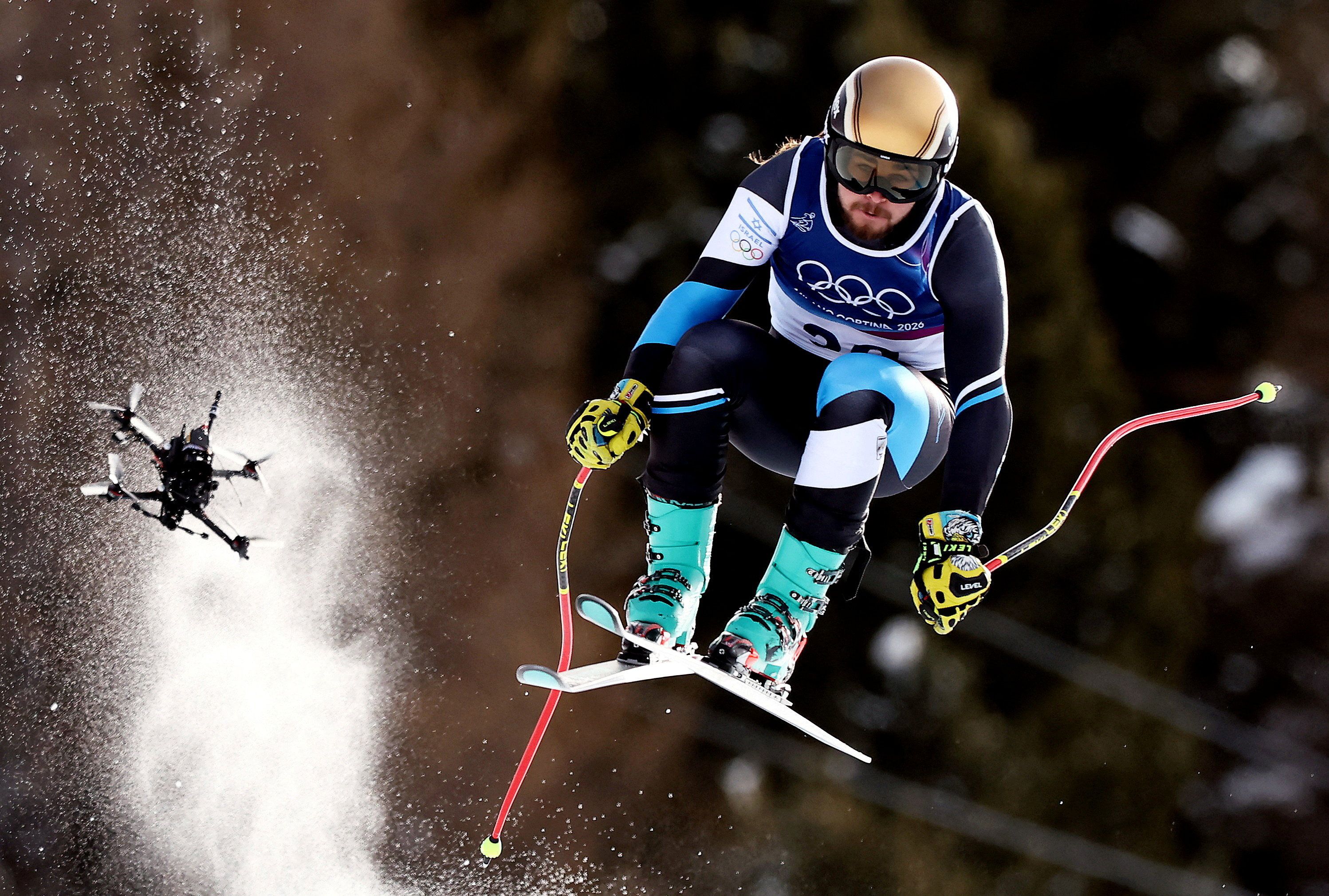
How it works: OBS has more than two dozen drones in use for these Olympics, with the flying cameras being used indoors and outdoors — basically at all sports other than ice hockey and curling, OBS CEO Yiannis Exarchos told reporters on Tuesday.
- Pilots with deep knowledge of the sports control the drones, using goggles that allow them to see what the drones see.
- How closely drones follow athletes varies by sport, but the drones always fly behind the athlete and never above or in front of them.
Between the lines: Drones have been used to film at the Olympics as far back as the 2014 games in Sochi, Russia, but not in the field of play.
- The adoption of drones for these games follows a long period of testing at other events, as well as consultation with athletes and the international sport governing bodies.
- In some cases, the pilot is a former top athlete, such as Jonas Sandell, a former ski jumper who is filming the sport at these Olympics.
- "It makes a difference that Jonas is there," Exarchos said. "There's a special touch in the movements and what he chooses to see and show."
The big picture: New technology for capturing the games isn't limited to the drones. Like in Paris two years ago, Samsung smartphones were used to cover the Opening Ceremony.
- In Paris, the smartphones were used on the boats that carried athletes along the Seine River, giving each team's vessel a dedicated camera.
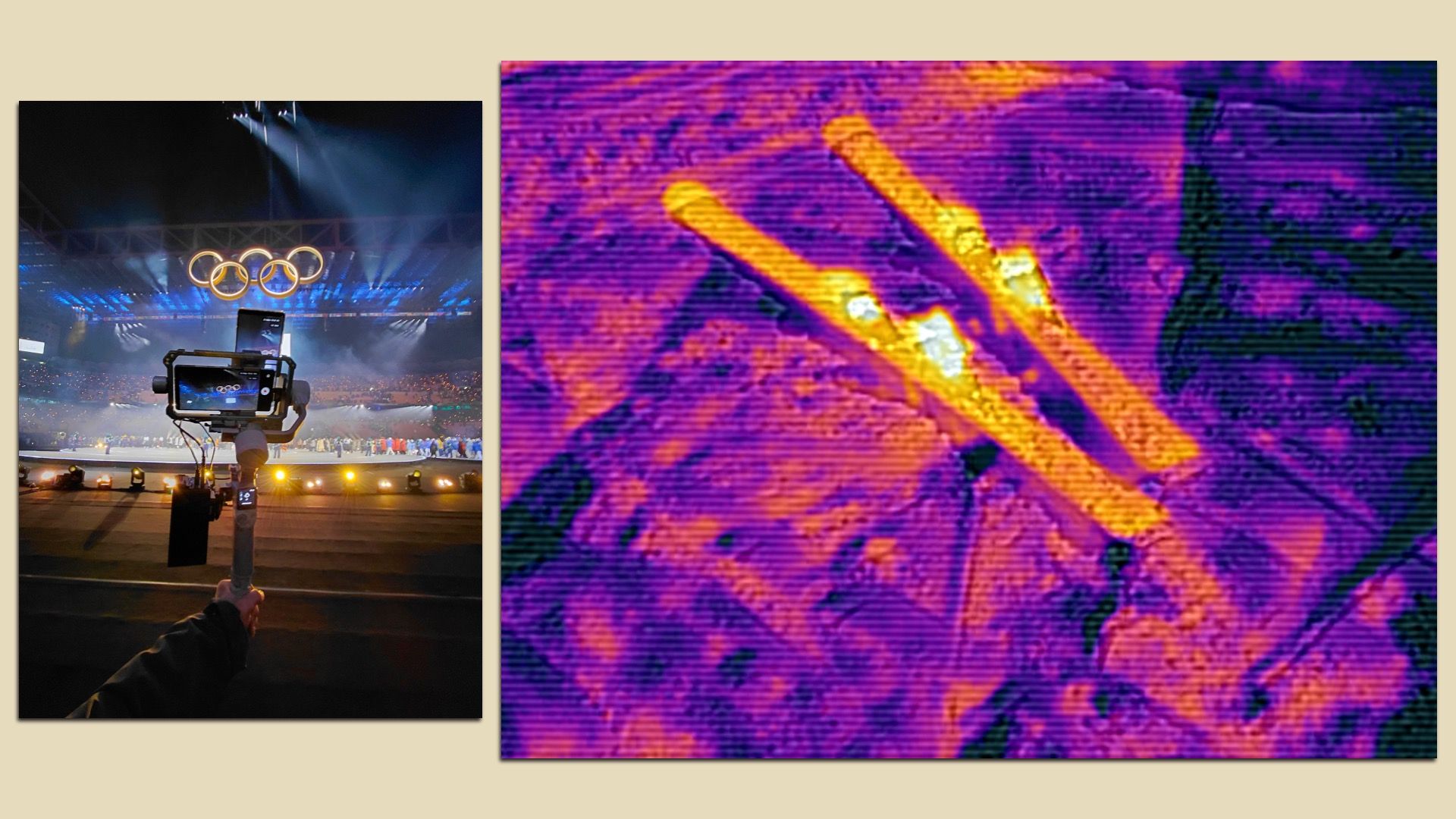
- The use in Milan was more subtle, with Galaxy S25 smartphones augmenting traditional views to capture behind-the-scenes footage such as athletes entering the stadium and TV crews in the broadcast studio.
- Plus, people are just more natural in front of a phone, Samsung vice president Sophia Kim told Axios. "People can be more natural and be themselves and really enjoy life because we are all always in front of the mobile camera anyway."
Getty Images, meanwhile, is using two new types of cameras — infrared and thermal — to visualize the games better. A collection of thermal images, dubbed "Winter Heat," shows where the hotspots are even in the cold of the Italian mountains.
- One picture, for example, showed how hot skis get during a downhill run.
- "We're using imaging techniques and technologies to reveal unique dimensions of the Games that we haven't tried before, even some that aren't visible to the human eye," Getty senior director of sport content Paul Gilham told Axios.
Editor's note: A quote in this story was updated to clarify drones are not in front of athletes.