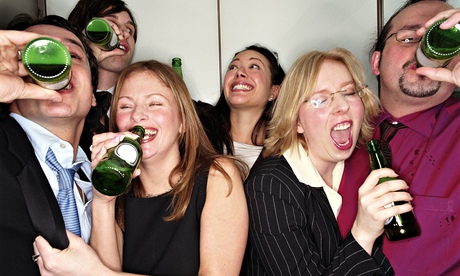
‘Never trust a bastard who doesn’t drink.” Those who live by this adage may be entering treacherous times. New figures from the Office of National Statistics on adult drinking habits in 2013 say that the UK is becoming increasingly teetotal. One in five adults doesn’t drink at all, including one third of Londoners. Then there’s the age divide. Only one in 50 young adults reported binge drinking in 2013, down by more than two thirds from 2005. Young people aged 16-24 who don’t drink at all had risen from 19% in 2005 to 27% in 2013, suggesting that tons of young people were letting older people do the binge drinking for them.
This was a surprise. Recently, there was a debate about alcohol sponsorship in sport and I wrote something along the lines of: “Young people drink – that’s what they do.” Now, it seems 27% don’t and the young are acting old, and the old are acting young, in a plot twist straight out of an alcohol-themed episode of The Twilight Zone.
I read this information soberly, in both senses of the word. Gravely, because it worried me in some irrational way that young adults weren’t drinking enough. And just soberly, full stop, because I do everything fairly soberly these days. I didn’t give up alcohol – I just seem to have become trapped in some sick cosmic joke where alcohol is giving me up. With age, my tolerance for alcohol has crashed. I’m still game, I still try my best, but I can’t hack it anymore, and it pains me. I miss Drunk Me – the sad cow.
The other night, my partner and I visited a favourite restaurant for an early Valentine effort and, as we shared a bottle of wine, we talked about what we used to do there – grandly ordering bottle after bottle, staggering in a confused blur to the loos, freaking out the waiting staff by being overly friendly, gassing the other diners with our crazed chain-smoking. Now that was a night out. There’s this other strange element to not drinking much any more, bordering on shame. I probably should be more ashamed of past escapades, but it’s the near sobriety that really unnerves me. I think it’s fear of the T-word (teetotaller). For many older people, cigarettes and alcohol remain classic signifiers of a Good Time. Although I gave up fags, I still feel Braveheart-level kinship with people who carried on smoking. Teetotalism feels like even more of an admission of defeat – you may as well write: “I’m a raging bore with no personality” on a Post-it note and stick it to your forehead.
Maybe that’s the difference with young adults choosing not to drink today – unlike teetotallers of the past, they’re not quite so burdened with the pressure to live up (or down) to hedonistic expectations. Obviously, there are plenty of young adults still drinking heavily, some to very dangerous degrees, becoming seriously ill, even dying. Moreover, there may be all sorts of complications behind those statistics – curbs on underage drinking, alcohol prices, different cultures, fibbing about intake.
However, maybe there also isn’t quite the same “never trust a bastard who doesn’t drink” bottom line. Young teetotallers have managed to normalise their alcohol-free world. It’s the older binge drinkers and barely-drinkers who are left feeling that they should be explaining themselves. But still there’s this nagging feeling that something isn’t quite right. Are you OK out there, young non-drinkers – having a good enough time, because “yoof” is the time to do it?
Although I’m increasingly (tediously) sober on the outside, the ludicrous drunk within still feels strangely sorry for the young teetotallers, though I respect the state of their livers.
Why can’t a woman change her looks?
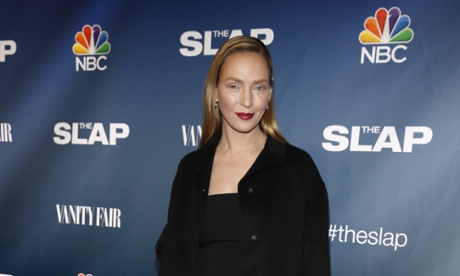
Most would be aware of the increasing frequency of full-on media rumpuses caused by female celebrities who have the audacity to appear “LSD” in public, as in “looking slightly different”. The leading LSD crime against humanity was committed by actress Renée Zellweger, proving that whatever a woman chooses to do, or not to do, with her own face is everyone’s business before it’s her own.
Now we have another actress, Uma Thurman, who, instead of looking gorgeous in her normal way, decided to appear on a red carpet looking gorgeous in a different way. Rocking a Tilda Swinton-esque look of bright red lips and scant eye makeup, Thurman resembled a beauteous Martian.
At which point, the furore began – how dare Thurman appear in public looking slightly different? Who does she think she is? Thurman was punished for her mistake with umpteen musings on what plastic surgery procedures she’d been having. There were photos of her face with little diagrams and arrows, “proving” what plastic surgery might have recently occurred. People stopped short of claiming to have witnessed a kicking, screaming Thurman being held down in the back of a limo while collagen was forcibly injected into her face with a giant syringe, but only just.
Later, Thurman explained in an interview how she’d just had a whim to let her makeup artist put on her slap in a different way. By this point, Thurman no longer looked slightly different, but she definitely looked startled.
However, some of us thought, there it is again, the same old fame-cycle. Female celebrity looks slightly different, the world explodes, female celebrity explains, the world is placated, until the next time. Once again, it’s clear that not only is this particular fame cycle weird and nasty – it’s also female-only.
Go West, young man. If you want to look like a fool
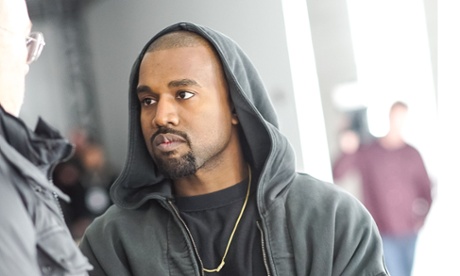
The Kanye West Grammys stage invasion just keeps on giving. Arguably, West had already been generous enough, providing ad hoc entertainment by storming on stage, babbling nonsense, just as Beck was receiving his award. However, West has since come out with even more twaddle, explaining that “voices” told him to do it. Great, not worrying at all! Especially as it’s a porkie pie, isn’t it Kanye? Come on, own up.
Doubtless the only “voices” West would have been hearing were of people around him, saying:“What’s that buffoon doing now?”; “It’s Taylor Swift all over again!” and: “Where’s a Taser when you need one?” Clearly West’s prime motivation wasn’t to make a point about Beyoncé, or black artists not being rewarded. Instead, it’s all to do with him being a veteran stage-invading brat, who can’t bear not being the centre of attention.
Beck later praised West as a great artist he wished to emulate. Basically, Beck took the bejesus out of him, in a passive-aggressive fashion, a process, actor Ted Danson once memorably referred to on these very pages as “nice-ing someone to death”. In the circumstances, a classy and deadly response. Well played, Beck.