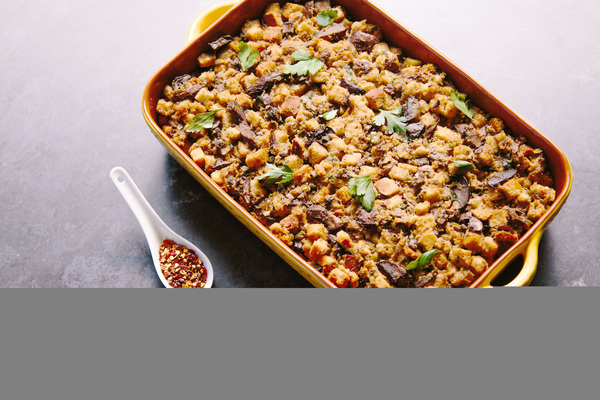
To stuff or not to stuff is not the only Thanksgiving dilemma. What about the kind of stuffing itself? Should it be sweet or spicy; meaty or vegetarian; made with day-old Italian bread or dry brioche or wild rice?
There is no one correct answer because there is no one correct combination for a stuffing _ almost anything goes. The common holy trinity is onion, celery and sage but even that changes from cuisine to region. A Cajun style calls for onions, green peppers and celery while in the southwest it is onions, corm kernels and chilies.
It doesn't have to be strictly onions either, since they can be substituted with any member of their family such as shallots, scallions or leeks. They are then cooked with dry mix-ins such as sausage, mushroom, apple or butternut squash, or creamy purees made with celery root or spinach.
Fresh parsley, sage, rosemary, thyme, tarragon or oregano are added to emit an herb perfume while walnuts, pecans, hazelnuts or almonds add a nutty texture.
The base of any stuffing is the bread. Dry white bread or cornbread are usually the staples but multigrain, sour dough, potato, rye and cinnamon-raisin bread work just as well. It's important to use dry bread because this way the cubes will absorb the stock, or whatever else liquid is used, and turkey juices better. Also, when dry, the bread cubes retain their shape better and won't turn into one big mush when mixed with the stock. Creative cooks sometimes dispense with the bread altogether and replace it with wild or arborio rice, and some even use tortilla corn chips.
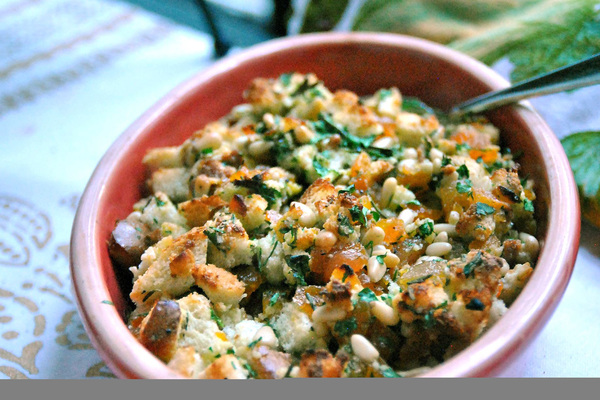
Much as dried bread is crucial, it also is important that you don't choke on a overly dry stuffing. Even though water would suffice, vegetable or chicken broth adds an additional layer of flavor in the dressing. For a richer taste and creamy bread mixture, whip eggs with half-and-half or heavy cream.
A basic stuffing is prepared by sauteing onion and celery, and then mixing them with parsley, cornbread, beaten eggs and chicken or vegetable broth, before being baked. But why not elevate it in the flavor pyramid by spicing or sweetening it up.
Add some kick to a mushroom stuffing with garam masala (a blend of cloves, cinnamon, cumin, cardamom, dried red chilies, mace, nutmeg and fennel) or harissa paste (chilies, garlic, caraway, cumin and coriander). It's best to add the spice blend after sauteeing the onions and celery together so that the aroma lingers even after the stuffing is baked.
Likewise, a stuffing can be sweetened by adding dried apricots or cranberries with crystallized ginger and orange juice. Or mixing the onion-celery mixture with diced apples, golden raisins and crushed fennel seeds or dried cherries, pecans and fresh sage.
Since mix and match is the name of the game for any stuffing, other worthy combinations are pancetta, chestnuts and Parmesan; chorizo, apples, almonds, lemon zest and oregano; halved grape tomatoes, Kalamata olives and red pepper flakes; smoked oyster, crumbled bacon, sherry vinegar and thyme; and collard greens, currants and pine nuts.
With interplay of flavors like that, when the turkey gets a round of applause, don't forget to give the stuffing a standing ovation.