There was a time when dreams lived quietly.
They took shape slowly, in the back of notebooks, in conversations after midnight, in long walks without destination. They were private, sometimes irrational, often inconsistent. But that was part of their power — they didn’t owe anyone anything. A dream could exist simply because it stirred something in you.
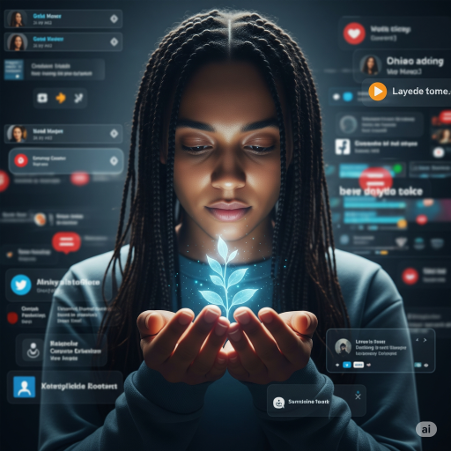
Somewhere along the way, this changed. Not abruptly, but gradually, as everything around us began to demand visibility. Social platforms encouraged sharing. Productivity culture nudged us to do more with less. Every hobby, every interest, every half-formed desire became a candidate for documentation, monetization, exposure. And so we adapted, turning our inner worlds into content.
What once lived in silence now asks, “Will this post well?”
How Did We Get Here?
It didn’t happen out of malice. Most of us shared our dreams at first out of excitement, or the innocent hope of connection. We posted a poem we wrote, a photo of a painting still drying on the floor, an idea for a project that had no structure but felt electric in our hands.
At first, it felt good to let others in — to say, “This matters to me,” and hear, “It matters to me too.” But over time, the line between sharing and performing began to blur. Every dream became a potential project. Every spark of interest was framed as a future side hustle. Even rest — the thing we once did to recover from doing — became something to measure, post about, optimize.
In this new ecosystem, it’s not enough to love something. You must also prove its worth.
What Dreams Used to Be — And What They’ve Become
|
Once a dream was... |
Now it must be... |
|
A quiet instinct |
A documented intention |
|
A private wish |
A content strategy |
|
Something irrational or vague |
Sharable, monetizable, scalable |
|
A space for joy or escape |
A personal brand |
|
Allowed to fail or fade |
Expected to deliver and impress |
The shift is subtle, but deep. We’ve traded softness for structure, and in doing so, we often lose the very thing that made the dream feel alive in the first place.
When a Dream Should Stay Yours
- You feel pressure to share it before you feel clear about it
- It loses energy every time you try to explain it
- You imagine feedback before you imagine the outcome
- You’re more excited to post about the process than to live it
- You feel anxious if it doesn't “lead somewhere”
- You miss how it felt before it had an audience
If you recognize these signs, it doesn’t mean the dream is broken. It means it’s tender. And maybe it needs protection, not promotion.
Back to the Quiet
Somewhere between digital exhaustion and the erosion of mystery, a quiet shift is happening.
Across Australia, it's taking root not in headlines, but in habits: in Melbourne’s northern suburbs, people gather again in backyard writing circles — no livestreams, no hashtags. Along the Mornington Peninsula, surfboard shapers are going back to handmade boards, not because it’s trendy, but because it feels like theirs. Across cafés in Hobart and Newcastle, sketchbooks stay closed, pages turned slowly in sunlight, not under studio lights.
In Fremantle, weekend markets hum with small crafts no one’s trying to scale. On Magnetic Island, hikers leave their phones behind — not as a statement, but as relief. Even in the sprawl of Western Sydney, you’ll find garages turned into music studios — not for TikTok, but for something quieter, older.
Meanwhile, others find pause in more digital forms of escape. Gambling, too, has shifted — away from neon noise and toward rhythm-based engagement. 7 bit casino australia is one example, where game flow feels more meditative than manic, offering structured play for those who still crave chance but not chaos.
People are picking up hobbies again — without filming them. They’re journaling, not posting. They’re starting to dream, and choosing not to explain.
And it’s not a retreat. It’s a return.
To what made creating joyful before it became performative.
To the idea that you are enough of an audience.
The Case for Unshared Dreams
What would happen if we let some things stay in the dark for a while?
Not because we’re ashamed, or hiding, or unsure. But because we understand that not everything is ready for daylight. Some dreams need quiet. They need space to change, to shrink, to stretch. They need the safety of not being watched.
Maybe it’s time to reclaim that space. To let ideas live where they begin — in the privacy of our minds and pages. To honor the things we don’t post. To trust that not everything needs to scale, go viral, or even be finished.
Even within the gambling world, some offerings prioritize calm engagement over chaos — https://7bitcasino-au.com/ provides hundreds of pokies, table‑games and live‑dealer sessions, plus tiered bonuses, cashback and responsible‑gaming tools that help players stay in control
Responsible Gambling at 7Bit Casino
While 7bit encourages engaging gameplay and crypto-powered convenience, it also integrates clear responsible gaming tools. Players can set deposit and loss limits, enable session reminders, or activate self-exclusion if needed.
These features are not buried deep — they’re visible, accessible, and built to support long-term balance rather than impulse. In a landscape where digital play can easily spiral, this level of user control matters.
A Quiet Kind of Win
Not all digital gambling experiences feel hollow or overwhelming. Some players describe a sense of rhythm and intention — even in environments built around chance. In this Reddit post, one user shares their first impression of 7Bit Casino: a quiet win, smooth crypto deposits, and gameplay that felt more like focus than frenzy. Their reflection reminds us that not all online play needs to scream to be meaningful.
The Last Word
Choosing not to share is not a failure. It’s a boundary.
The dream you had during your morning coffee, the idea you jotted in a half-sleep haze — they still count. Even if no one sees them. Especially if no one sees them.
Some of the most meaningful things we create — the ones that shape us slowly and silently — unfold in rooms where no one’s watching.
They take root in the quiet streets of Fremantle just as much as in the noise of New York.
They happen in notebooks, in early mornings, in long walks along the coast — from Bondi to Barwon Heads, across Australia’s slow mornings and warm, unfinished evenings.
And that’s not lost potential.
That’s being human.