There is a place named Yumenoshima (Dream island) in Koto Ward, Tokyo. As I inquired into the origin of the name while wondering what dreams might exist there, I found a passage on the ward's website that the place "came to be called Yumenoshima before anyone realized it." I knew it used to be a waste disposal site, but how did it get such a name?
"Originally, one of the world's leading airports was scheduled to be built on the site," said Kenji Nomoto, 50, a member of the ward's advisory committee on cultural properties.
Tokyo Hikojo airfield, now Haneda Airport, opened in 1931. Civil aviation was developing in the United States and Europe and the importance of airports increased from a military viewpoint, too.
Given these developments, it was decided in 1938 to construct an envisaged Tokyo City Airport with three runways off present-day Koto Ward. Reclamation work started the following year, but the construction project fell through due to a shortage of materials after the outbreak of World War II.
With the land left idle, the Dai Tokyo Ryokuchi Kyokai (Greater Tokyo green land association), an incorporated foundation that is an external organization of the Tokyo metropolitan government's Construction Bureau, worked out two development plans in 1948: the construction of sports facilities, centering on a golf course, or the construction of recreation facilities, including a bathing beach and a yacht harbor. But neither plan was fully adopted and only a bathing beach was opened in that year. The beach was named Yumenoshima.
The exact reason for the name is unknown. But a document from the time suggests a desire to make the beach at least a little dreamy in the chaotic times that followed the end of the war. The August 1948 issue of Shintoshi, published by the City Planning Association of Japan, referred to the bathing beach as follows:
"All of the people are totally exhausted from long years of war ... The most urgent challenge today is thought to be to have lots of recreation facilities extremely close to our workplaces and houses."
The Yomiuri Shimbun's June 26, 1948, morning edition carried an article that read: "A 50-minute boat ride from Ginza, you can enjoy sea bathing all day long at the rate of 90 yen for adults." There are said to have been diving boards, an amusement park and campsites for 1,200 people. But Yumenoshima was closed after several years due to the deterioration of water quality and other problems.
Thereafter, it came to be known nationwide as a waste disposal site. Garbage was trucked in over a period of about 10 years from 1957 to what was still known as Yumenoshima, even while the metropolitan government simply designated it "garbage dumping site No. 14."
Tons of raw kitchen waste buried there bred huge swarms of flies in the 1960s, enough to become a social problem. The scorched-earth strategy of burning mountains of garbage was reported as a "fly furor." Hisashi Ishibashi, 81, a longtime resident of Higashi-Suna in Koto Ward and former deputy ward mayor, remembered the infestation, saying, "Flies swarmed over school lunches, making them look as if the rice were sprinkled with black sesame seeds, causing an uproar."
Even after the trucking of garbage to dumping site No. 14 ended, the transport of waste to reclaimed land offshore continued. More than 5,000 trucks carried garbage through Koto Ward to dumping sites every day, causing traffic congestion and accidents -- not to mention the stink. In September 1971, Tokyo Gov. Ryokichi Minobe declared a state of emergency over garbage disposal, calling the related antagonism between Koto and other wards a "garbage war." In 1972-73, Koto Ward assembly members and others acted to prevent the carrying in of garbage from wards where there was no waste incineration plant.
Yumenoshima became the official name of the place when it was incorporated into Koto Ward in 1969. But the origin of the name is not mentioned even in the ward's record of its history. Nomoto surmised that the tentative name of Yumenoshima had become the official name "because Yumenoshima was widely recognized in the aftermath of various developments, including the fly furor."
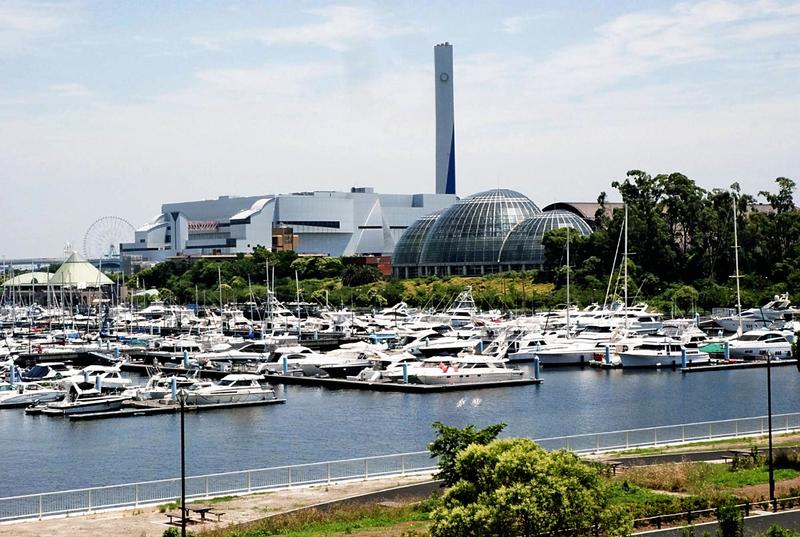
Yumenoshima currently has a marina and an athletic field, as the area is now mostly a leafy park. The heat generated at a modern garbage incineration plant is sent to the Yumenoshima Tropical Greenhouse Dome. The park includes an archery venue to be used for the Tokyo Olympics next year.
Koto Ward native Kunio Ayase, 51, director of the Koto Ward Sanitation Office, has continued to see changes in Yumenoshima.
"It was an island of garbage in my childhood, but its name was Yumenoshima so I felt like something was wrong," Ayase said. "But those who have an old image may be surprised to see Yumenoshima as it is today. Please come and see it!"
Read more from The Japan News at https://japannews.yomiuri.co.jp/