March 11, 2011, is a day that will never be forgotten by people all across Japan.
The Pacific coast tsunami that was triggered by that day's magnitude-9.0 earthquake hit mercilessly in the Iwaisaki district in Kesennuma, Miyagi Prefecture.
"I went there after the tide went out and I couldn't stop crying as I saw all the houses along the coast swept away," said Masaomi Kiyohara, 75, chief priest of the Iwaisaki Kotohira Shrine, reflecting on the tremendous damage caused by the Great East Japan Earthquake.
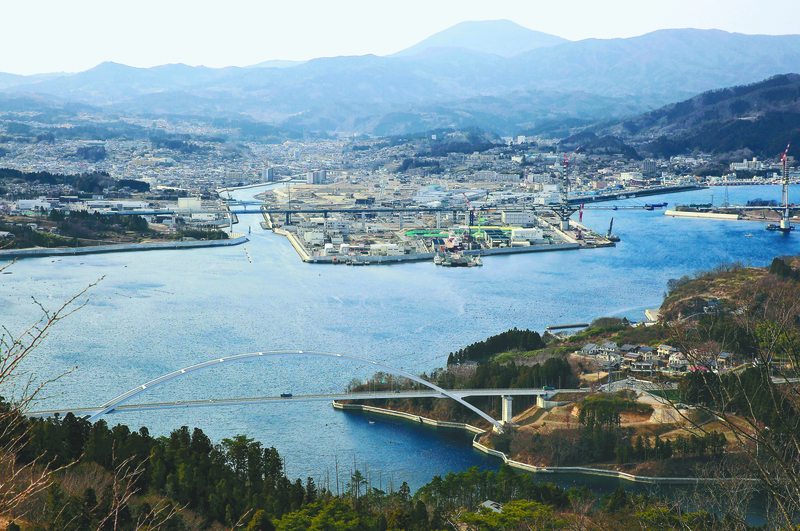
The area suffered such huge damage because of its topographical features projecting toward the Pacific Ocean. Pine trees planted for windbreaking were washed away along with the sandy soil.
About three months after the earthquake occurred, residents regained their composure and started clearing the debris scattered along the coastline.
"The pines that set their roots deep into rocky places remained in place, but they were rendered useless as they were showered with salt water and leveled," Kiyohara said. "But I saw a green leave on the edge of a branch of one of the pines. believing that the tree was still alive by some chance, I didn't fell the tree," he added.
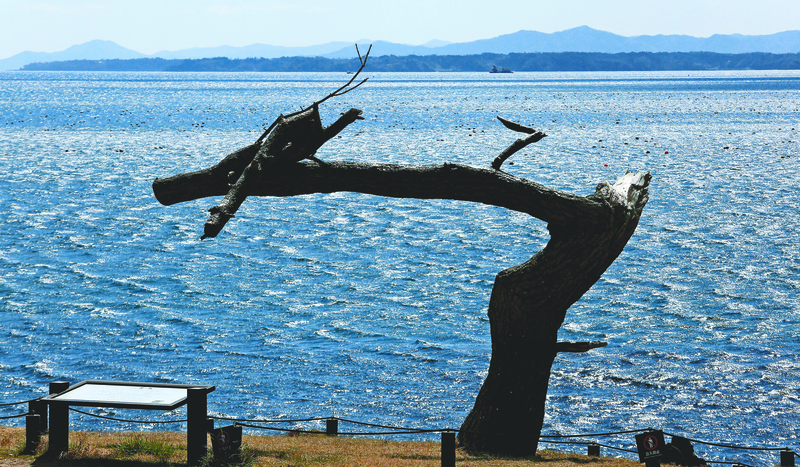
In January 2012, when an acquaintance of Kiyoyhara walked along the beach, the acquaintance's grandchild reportedly said to him, "This pine looks like a dragon."
With the upper part of its thick trunk torn off and a distinctive branch jutting out horizontally, the 2.7-meter-tall tree in fact looks like a dragon. The following year, 2012, happened to be the year of the dragon in Chinese zodiac.
"In due course," Kiyohara said, "the tree was taken up by local newspapers and TV stations as the pine of the dragon."
Like the "Miracle Pine" in Rikuzentakata, Iwate Prefecture, being submerged in seawater caused this tree's fatal decay.
"We should not forget that major earthquake, so I lobbied the local government to preserve the tree by any means," Kiyohara said.
The municipal government recognized the pine as a symbol of reconstruction and took such preservation steps as installing a steel pipe inside the pine before returning it back to its original place. The site where the pine stands has since become a photo spot for visitors to Iwaisaki.
Katsumi Sato, 52, director of the Ruins of the Great East Japan Earthquake Kesennuma City Memorial Museum, said with deep emotion: "Even after the great earthquake, citizens continued to have a hard time. Under such circumstances, they desperately needed a silver lining. Such being the case, the pine that survived the massive tsunami most likely looked to them even more like a dragon rising to heaven. This pine is a superb relic of the disaster, too."
Looking at the tree after hearing such an episode, I could not help but put my hands together and pray to the pine, which appeared at that moment to be swimming in a sea of clouds.
Specialty fukahire-don popular
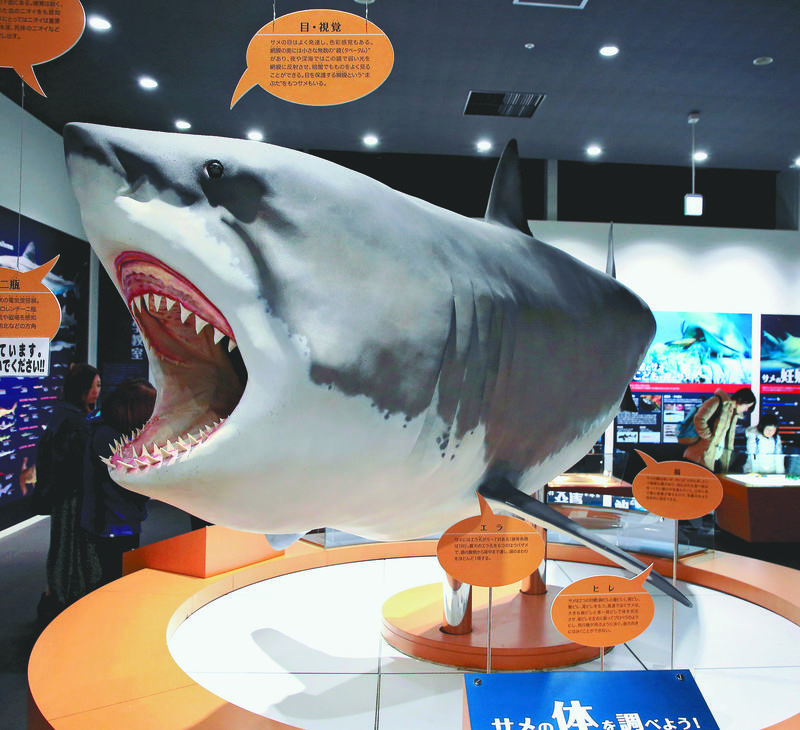
Kesennuma city, which is known for shark-hauling, is a production site for fukahire, or shark fins, which are high-end ingredients for Chinese cuisine. Fukahire are used of late also by washoku Japanese restaurants.
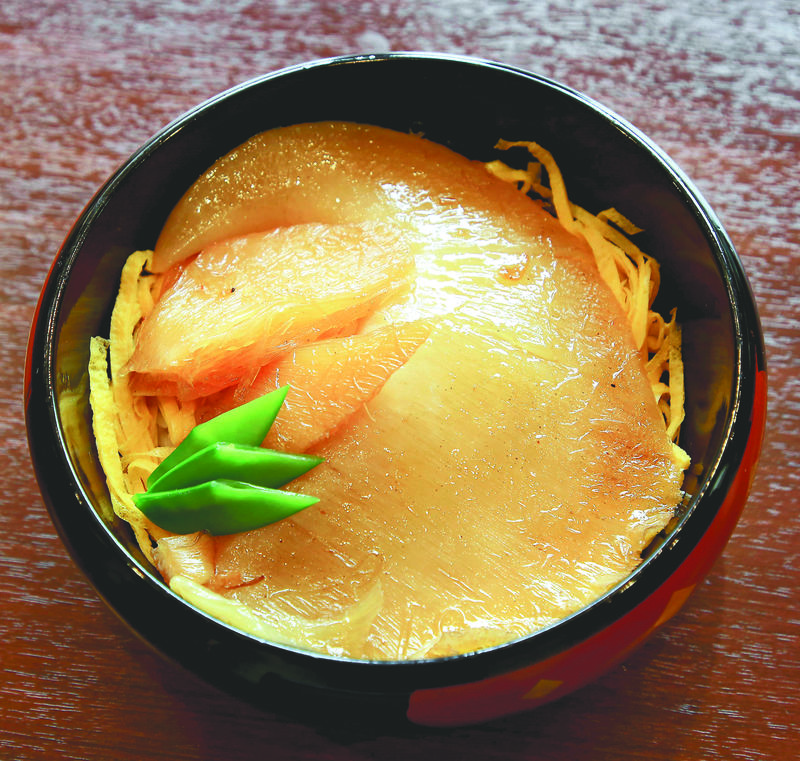
The sushi shop Kesennuma Yu Zushi near JR Minamikesennua Station has served fukahire hand-rolled sushi for 25 years. Currently, the shop serves also varieties of fukahire-don or a bowl of rice with fukahire on top. A popular variety is fukahire W (meaning double) don comprising tail and breast fins.
Shop proprietor Junya Kato, 60, said: "Fukahire themselves are tasteless. So how to season them is an element in which chefs can display their skills. I ate a rice bowl of salmon shark's tail fin mixed with blue shark breast fin (Shown in photo). The fins, with an adequate level of firmness, are delicately seasoned with a combination of Chinese and Japanese flavors. They went well with crab meat and rice, so I could not stop eating. The price for this fukahire-don, including fukahire soup, was 5,280 yen.
Some of the facilities and stores mentioned above are closed to prevent the spread of the new coronavirus. The Kesennuma Tourism and Convention Association says, "We hope you will come and visit us once the problem of the new coronavirus has settled down."
Read more from The Japan News at https://japannews.yomiuri.co.jp/