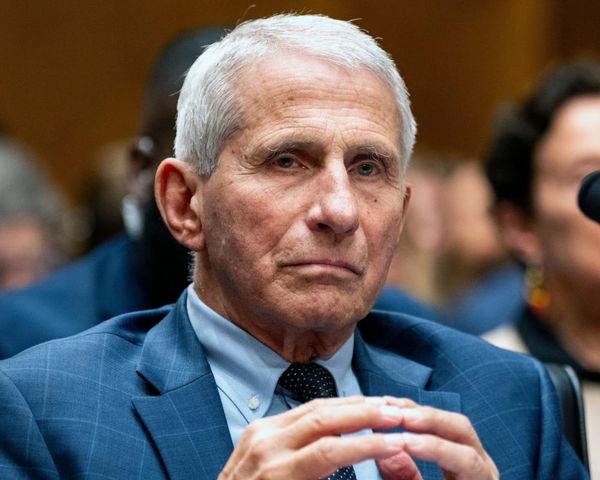
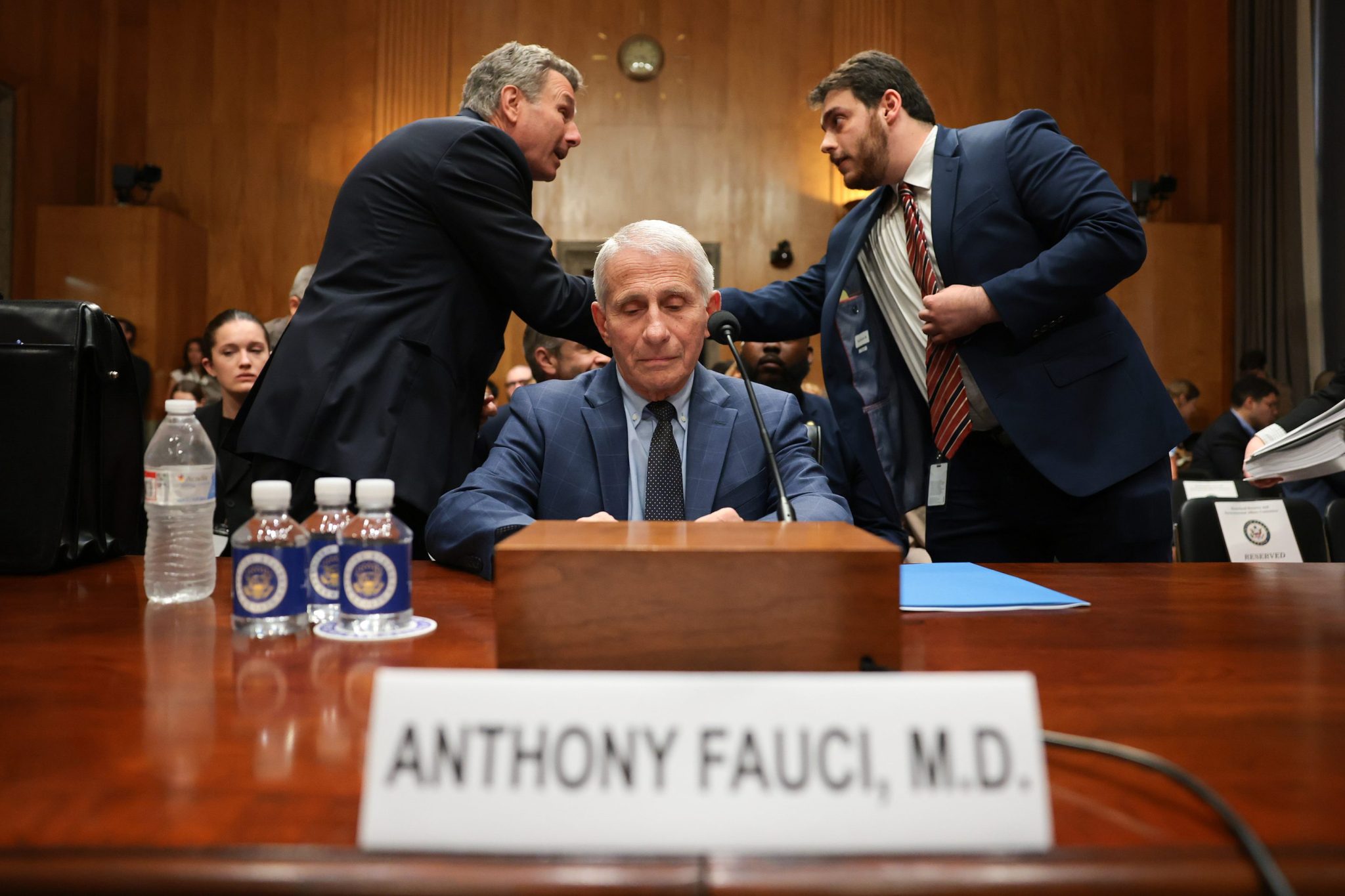
In the age of Big Players, even science has become politicized. The most recent evidence is contained in Dr. Anthony Fauci’s diary, which was just released by Senator Rand Paul. The diary and related documents give us a shocking picture of Big Players plowing under truth to seek and serve their own political interests.
As we recently wrote in Fortune, Big Players are big because their words and deeds move a whole system. They are insensitive to any disciplinary mechanism in the system, be it profit and loss in a market or peer review in science. In addition, they are discretionary because they are not bound to any simple, understandable rule. They act on judgment, even mood or whim in some cases. Big Players make their words and deeds matter more than underlying fundamentals such as consumer preferences or scientific truth. Fauci’s diary provides no less than a confessional by a Big Player who is reveling in his unchecked powers and celebrity status.
Fauci’s diary includes details on the now-famous conference call of February 1, 2020. There were 12 people on the call, including high-achieving scientists and, crucially, a small group of powerful science administrators. These were the UK’s Chief Scientific Advisor Patrick Vallance, Jeremy Farrar of the private funding behemoth Wellcome Trust, head of the NIH Francis Collins, and, of course, Anthony Fauci.
Those on the call had a cozy little chat with regard to what they were going to do about that pesky COVID lab-leak hypothesis. According to Fauci, 10 of the 12 scientists thought the virus was man-made in a lab. There were two outliers who rejected the idea that COVID was made in a lab and that the pandemic had resulted from a lab-leak. They were insistent that the virus was of a natural origin. Interestingly, Fauci was not surprised that one of the two who rejected the lab-leak hypothesis was a researcher who has been involved in gain-of-function research in a lab. And yet, within days, the 10 people who had embraced the theory that COVID was man-made in a lab surprisingly changed their tune, and embraced the natural-origin hypothesis, at least in their public statements. This sudden switch following the meeting and its aftermath raised red flags both in The Nation and The Federalist. When such odd bedfellows converge on the same interpretation, it’s not a partisan reading. Moreover, it’s one worth paying attention to.
As it turns out, the February 1st conference call included four Big Players, namely, Fauci, Farrar, Collins, and Vallance. Each of them was big because they controlled mountains of scientific funding. Indeed, any ambitious scientist had to be in the good graces of these Big Players or risk financial ostracism and effective banishment from the halls of Big Science.
Each of these four Big Players was insensitive to the discipline of peer review. They had each reached a position in which they sat above science and pulled the strings. And they were, each of them, discretionary, using their judgment to make consequential decisions, from month to month, week to week, sometimes hour to hour.
Beginning with that February 1st conference call, Big Players conspired to suppress scientific discussion. They formed themselves into a great hydraulic press stamping scientific opinion into conformity, with conclusions dictated by politics, not scientific evidence.
Fauci’s conduct during COVID exemplifies the dangers posed by Big Players in science. Publicly, Fauci declared: “I always speak the unvarnished truth to presidents and other senior government officials, even when such truths may be uncomfortable or politically inconvenient, because extraordinary things can happen when science and politics work hand in hand.” That was Fauci’s scientific rhetoric. He had it honed to perfection. Yet there was another side to Fauci: his role as a Big Player. Indeed, during COVID, Fauci suppressed scientific debate. It’s all laid out in Dr. Anthony Fauci’s diary.
The opinions expressed in Fortune.com commentary pieces are solely the views of their authors and do not necessarily reflect the opinions and beliefs of Fortune.
Steve Hanke is a Senior Contributing Columnist at Fortune and a Professor of Applied Economics at Johns Hopkins University. He is a co-author of DID LOCKDOWNS WORK? The verdict on Covid restrictions.
Roger Koppl is a Professor of Finance at Syracuse University’s Whitman School of Management and author of Big Players and the Economic Theory of Expectations.