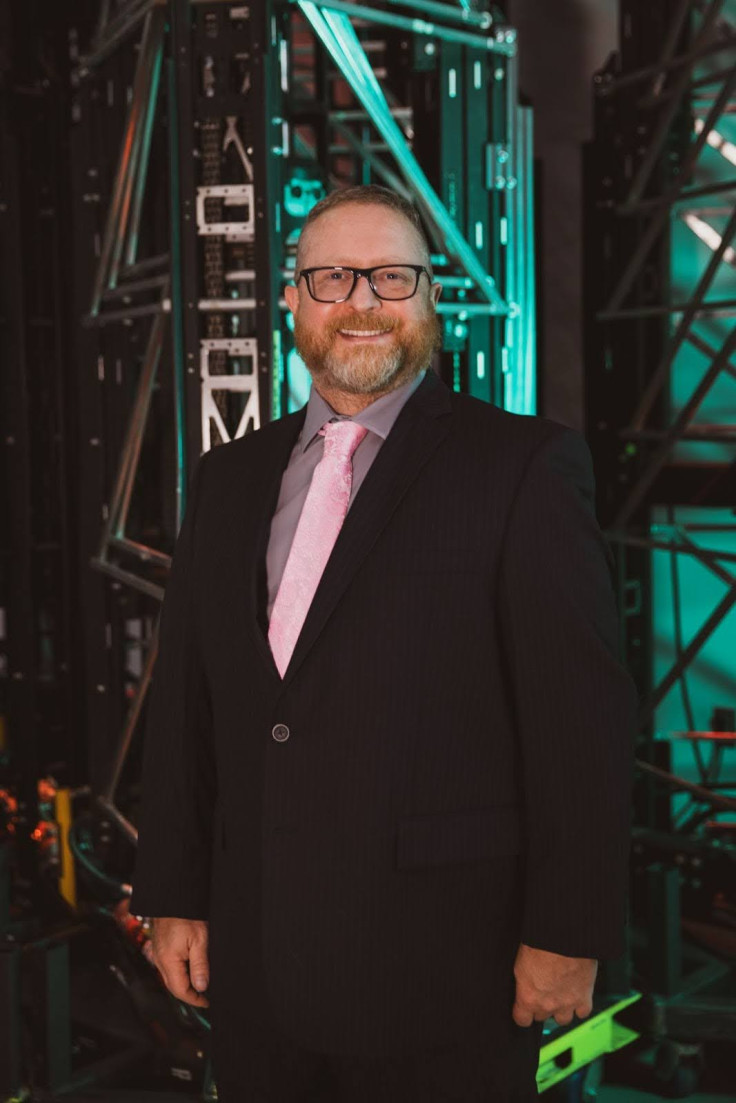
Dr. Curtis Rasmussen believes that the pressure on business leaders to deliver AI-driven returns has never been higher. Yet, he believes that a foundational disconnect persists: organizations continue to deploy advanced systems without fully understanding the people who must use them, the workflows those systems alter, or the technical constraints behind the tools themselves.
The consequences of this, he believes, are playing out across the industry. A recent MIT report notes that the failure rate for generative AI projects in organizations is 95%, despite directing billions of dollars in investment. For Rasmussen, those numbers reflect deep technical inefficiencies and a deeper misalignment between human readiness and machine design. He notes that together, these imbalances can lead to confusion, rushed decisions, and, in some cases, costly reversals for companies trying to automate without understanding what should and should not be automated.
Within this divide, Rasmussen has built the foundation of his career, shaped across military, intelligence, and federal agencies, and paired with a PhD in industrial-organizational (I.O.) psychology. He has spent decades understanding the technical architecture of AI systems as deeply as he understands the behavioral dynamics of the people relying on them. "My specialty really is human-machine teaming," he says. "I understand the machine side because I've worked with it extensively. And with my I.O. background, I understand the human side, how to overcome issues with implementation and ensure the whole system makes sense."
Rasmussen emphasizes that his perspective is both eclectic and unusually comprehensive. He spent 22 years in the Navy as a mechanic and instructor before moving into intelligence, where he worked in criminal analysis and operational problem-solving. After finding himself in policy and organizational roles across regulatory bodies, he served in national cybersecurity agencies for nearly a decade, which ultimately led him to a career as an I.O. psychologist. It was across these varied environments that he recognized the same recurring pattern. "Technology can succeed or fail based on how well humans and machines are integrated, not on the ingenuity of the tool alone," he explains.
Today, as a consultant and keynote speaker, Rasmussen evaluates the full ecosystem of AI adoption for organizations facing mounting pressure to automate. He often reminds leaders that the real risk is not AI itself, but deploying it without understanding the work it is meant to augment.
He points to the story of a major corporation that replaced a large portion of its staff with AI, only to be told 90 days later by its board to rehire the employees and remove the system. "That's a major cost, and it could lead to a business failing altogether," he says. "I help organizations understand whether they even need AI, whether they have the right data, the right people, and the right mix before they make decisions that aren't grounded in reality."
Rasmussen doesn't only advise on human-machine teaming, but he is also actively contributing to the field's technical foundation. He holds three pending patents, each designed to address barriers in machine accuracy, algorithm selection, and workforce integration.
His Multi-Dimensional Algorithm Structure (MAS) introduces a taxonomy for AI algorithms to help teams select the right approach based on their data and objectives. His eXplainable Artificial Intelligence Construct (XAIC) evaluates whether humans need training on a system, or whether the design should minimize reliance on specialized knowledge from the start. And his n-Sphere Anti-Falsing Calculation (n-SAC), a computer-vision method that increases accuracy in distinguishing shadows from solid objects, was developed to solve a safety problem that still plagues the industry.
"There's a lot of smoke and mirrors in this space," he says. "It's cost people a lot of money, and it's cost a lot of people their jobs. I'm here to provide clarity, what AI can do, what it can't, and how to navigate it responsibly." He leads with education because he believes the public narrative around AI is shaped more by speculation than by practical understanding. "Even very intelligent people misunderstand it. Without humans, there is no AI, because AI has no purpose without people," he adds.
As AI continues to influence every sector, Curtis Rasmussen remains committed to his mission of building a leadership that can allow organizations to pursue innovation with clarity, safeguard their workflows, and build efficient AI systems that can deliver genuine returns on investment while supporting society at large.