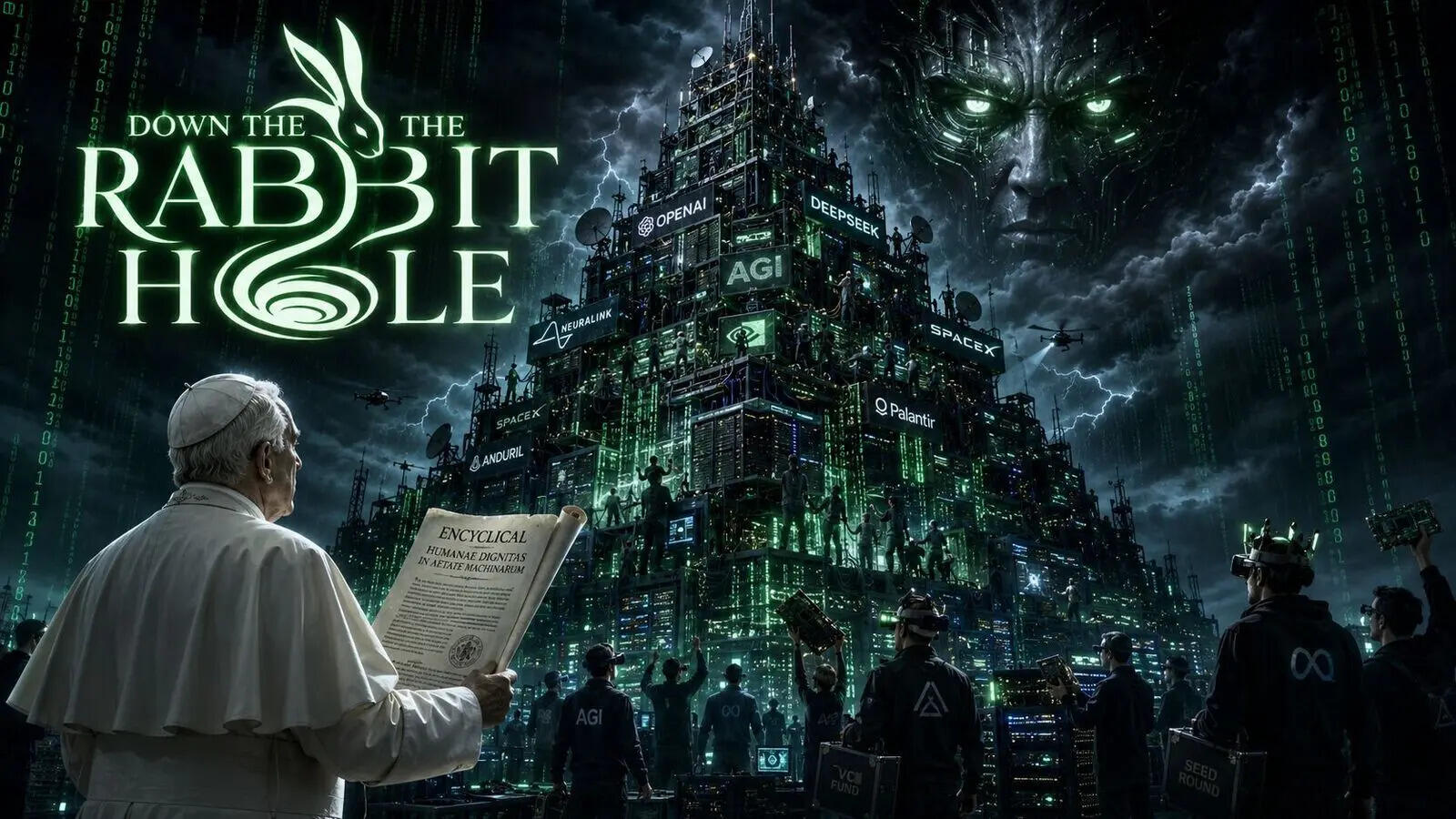
The fictional misanthrope Dr House would often joke that if one could reason with religious people, there would be no religious people. Of course, the savant made those observations before Donald Trump became president, an event so catastrophic that it has forced the most openly religious person in the world to act as a voice of reason.
With the democratic powers of his home country electing the presidential version of Pope Alexander VI, a man whose foreign policy is based on nepotistic self-aggrandisement, it has fallen on the first American Pope to provide a moral compass to his countrymen and much of the WENA world. And now, like every manager in every corporate office, he’s also talking about Artificial Intelligence. Thankfully, it’s not with the zest of the corporate honcho who thinks AI can replace all sorts of wasteful workers, so the only ones making money are the CEO and shareholders.
In his first encyclical, titled Magnifica Humanitas, or Magnificent Humanity, the Pope warns of the dangers of Artificial Intelligence, comparing it to the Tower of Babel and stating: “Humanity, created by God in all its grandeur, is today facing a pivotal choice: either to construct a new Tower of Babel or to build the city in which God and humanity dwell together.”
But what exactly is the Tower of Babel? What is an encyclical? Why is the Pope talking about Artificial Intelligence? And can he be the voice of reason against largely atheist tech bros who might find Christ when it suits their narrative? And why are the sons of Abraham worried about a Deus Ex Machina? For those living under a rock, or more bothered about cockroaches or clubs, here’s a small primer.
The Tower of Babel story
For most folks who don’t read the Bible end to end, the first time they heard the term Tower of Babel may well have been in X-Men: Apocalypse, the film where an ancient mutant with god-like powers named En Sabah Nur, played by Oscar Isaac, wakes up after several millennia and decides that humanity has been a spectacularly poor use of cosmic real estate. In one of the film’s more memorable sequences, Apocalypse hijacks the world’s nuclear arsenals and launches them into space before thundering: “You can fire your arrows from the Tower of Babel, but you can never strike God!”
The pulpy line takes an old religious myth and gives it a modern spin: man pointing missiles at the sky.
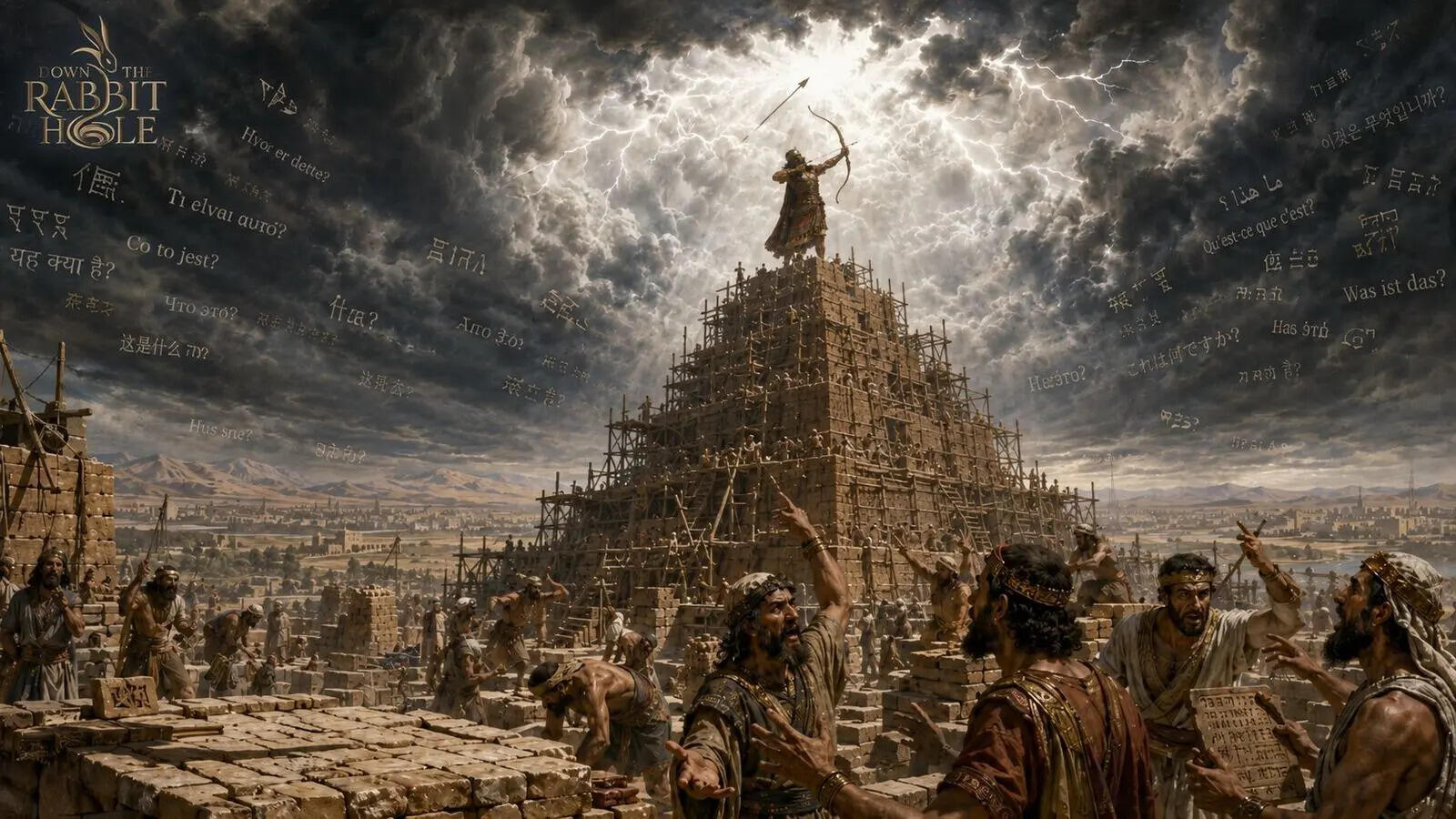
The Tower of Babel is a fantastical biblical allegory, what scholars call an etiological myth, in this case a story that explains why humanity speaks so many different languages. It appears in Genesis, shortly after the story of Noah’s Flood, when humanity is still imagined as one people with one language. They settle in the land of Shinar and decide to build a city and a tower “whose top may reach unto heaven” and one that could overcome any flood.