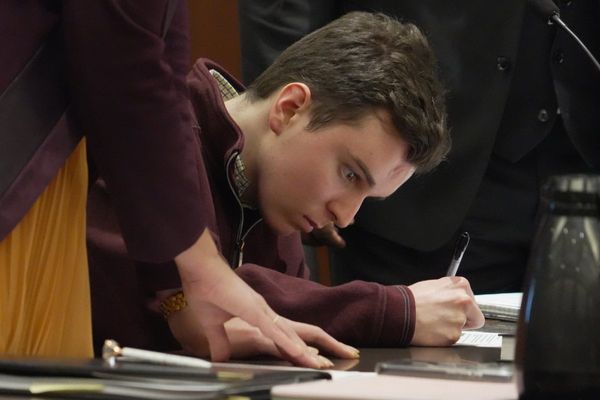
Treating Uthra murder case as rarest-of-rare, the Kollam Additional Sessions Court on Wednesday awarded double life sentence along with 17 years of rigorous imprisonment to Sooraj for murdering his wife.
In the judgment running to more than 400 pages, judge M. Manoj said the multiple sentences will run concurrently. The court had found him guilty under Sections 302 (murder), 307 (attempt to murder), 328 (causing hurt by means of poison) and 201 (causing disappearance of evidence of offence) of the IPC on Monday.
Fine imposed
The accused has been sentenced to imprisonment for life and pay a fine of ₹5 lakh under Section 302 and in default of payment he will undergo rigorous imprisonment for one year. He will undergo imprisonment for life and pay a fine of ₹50,000 for committing the offence under Section 307 and the default of payment will lead to rigorous imprisonment for one year.
The accused was also awarded rigorous imprisonment for 10 and 7 years along with a fine ₹25,000 and 10,000 under Sections 328 and 201. The fine amount will be paid as compensation to Uhtra’s parents and since her minor son needs rehabilitation on account of the crime committed, victim compensation will be provided to the child.
The court observed that unparalleled cunningness of the accused, the amount of pain he inflicted on the victim, his intention to use a cobra as a weapon, the way he convinced Uthra of his affection and his attempt to camouflage the murder as a myth of serpentine curse make the case fit into the rarest-of-rare category.
Defence contention
The defence counsel had argued that uxoricide in itself would not fall under the category. “The accused has committed uxoricide in a diabolic, ghastly and dastardly manner by adopting a method of unparalleled wickedness,” said the court pointing out that the crime has shocked the collective conscience of society.
According to the judgment, the murder was committed for financial gain and the accused was in fiduciary relationship with the victim.
“He prepared and planned for the murder even while Uthra was convalescing after the viper bite. On both occasions of the attempt to murder and murder the unsuspecting victim and the accused were alone in the room. He sedated the victim on both occasions by mixing drugs in her drink.” it said.
While observing the crime as cruel and heinous, the court said death penalty can be imposed only when both the aspects of the rarest-of-rare doctrine are satisfied.
Firstly, the case must clearly fall into the ambit of rarest-of-rare and secondly when the alternative option of awarding imprisonment for life is foreclosed.
Last resort
“The selection of death punishment as the penalty is the last resort when alternative punishment of life imprisonment is futile and serves no purpose,” it said.
The court considered the young age of the accused and possibility for reformation as the mitigating circumstances.
“The accused, who is 27 years old now, had no criminal antecedents and was not involved in offences of grave nature or moral turpitude in the past. In the absence of any criminal antecedents the young age of the accused will be the mitigating circumstance. In the said circumstances it's held that the death sentence need not be imposed and a sentence of imprisonment for life would serve the interest of justice,” said the judgment.