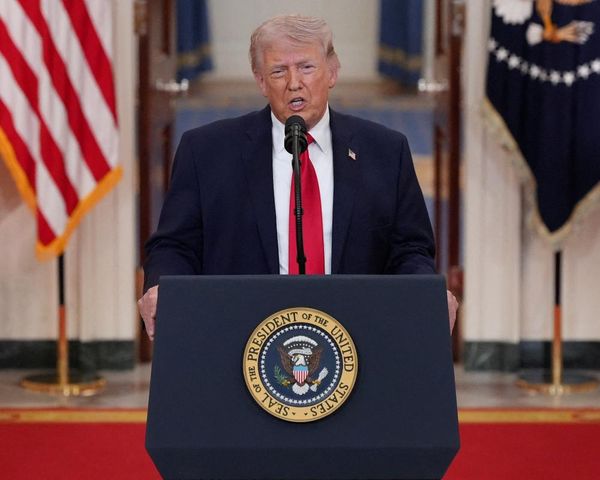
During his state visit this week, Donald Trump tweeted that a “big Trade Deal” would be possible once the UK “gets rid of the shackles”. He was not communicating from a cell in the Tower to negotiate the removal of his leg-irons. Shackles have been prisoners’ fetters for a millennium, but since 1200 or so they have also been any metaphorical restraint.
Our “shackles” in this case are the EU regulations that prevent the UK importing American chlorinated chicken and suchlike. In John Yeats’s 1872 book The Growth and Vicissitudes of Commerce, the author recounts the difficulties caused to domestic industry by the fact that, in the 16th century, the Hanseatic League operated its own steelworks in London as a “state within a state”. When the emperor Rudolf II shut down English factories in Germany, Elizabeth I retaliated by closing the Steel Yard – and so, Yeats comments, “removed the chief shackle upon British trade”.
The second Elizabeth might also have cause to worry about British industry. Trump himself last year imposed an import tariff of 25% on British steel. If the UK does throw off its shackles, it might simply find that the next pair is made overseas.