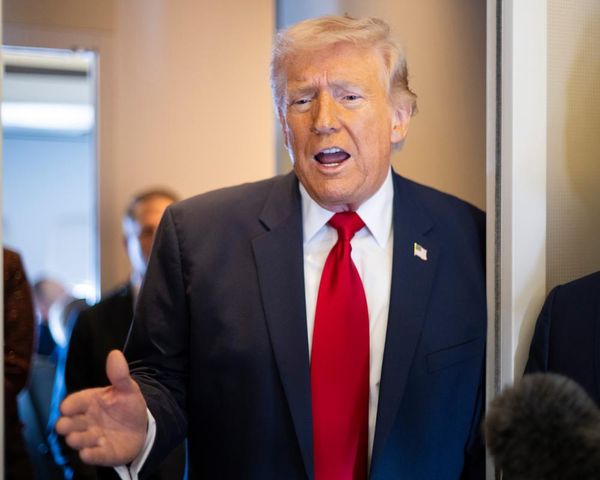
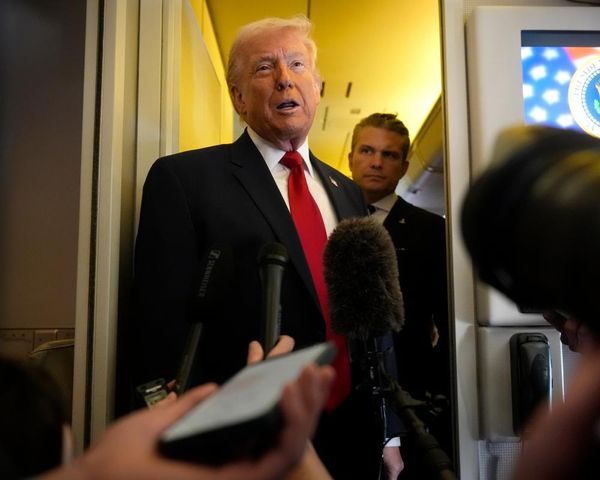
“We have places in London and other places that are so radicalised that the police are afraid for their own lives. We have to be very smart and very vigilant.” It is nice that Donald Trump calls us all a big “we”; you can wait for years for some solidarity in the face of radical London.
Where was he in the 90s, when the streets of Camden Town filled with the poisonous fumes of hippies trying with incense and bric-a-brac to undermine the market logic that keeps us safe? Or the noughties, when the creed of food fetishism hit Borough, bringing with it pork pies that cost as much as a pig, fruits we couldn’t name, herbs bearing the names of the people who found them?
These formed a gateway to a London that would one day produce a cereal cafe, and the civil unrest that went with it – undermining the fabric of a society in which Ritz crackers were served at parties, and people liked them. Where was Donald Trump then? Never mind. He’s here now.
In Clapham there is an unhealthy obsession with physical perfection and endurance. People jog down the street in bare feet to improve their field resilience. Mothers who should be drinking hot chocolate are using their babies, strapped ruthlessly into buggies, as a kind of cross-country training aid. Medieval skills such as archery and fencing are a regular part of life in south-west London, and even children go to ninja classes. It is difficult to believe that key agents in all this haven’t been abroad for their training.
On Silicon Roundabout, in central London’s insalubrious Old Street, there are people who spend all day on the internet, breaking from their secretive research only to communicate with friends on the encrypted radical hotbed known as Whatsapp. Spending time online is a recognised sign of radicalisation.
Meanwhile, further west in Chiswick they are on a merry-go-round of incessant fundraising – so opaque as to be inevitably nefarious. They all seem to make condiments and then sell them to one another, despite the fact that they all openly prefer their own. They knit for no imaginable civilised person, and organise various other events for interpersonal transactions. It is not possible to follow the money: capital outflows of this sort almost always end up in the wrong hands.
Lewisham, in the south-east of the city, is probably the most dangerous area of all: police officers have avoided it for years, fearful of being asked to sign a petition for some unnecessary health service, before being given a lecture about Jeremy Hunt. Crowds gather with the open intention of bringing down the state. Again, mothers use their children for ideological display, insisting that they wouldn’t be alive were it not for primitive local traditions like midwifery or hole-in-the-heart surgery. Respect for the order of things is almost nil.
If only we had a man who was prepared to be a man in these places; if only the local “bobbies” weren’t so frightened. We do indeed need to be very smart, and very vigilant.