Summary
- The presidential debate commission said it will mute candidates during parts of the event this week, allowing both Trump and Biden two minutes of uninterrupted time to answer each moderator question. Both candidates will be unmuted for open discussion afterward. The rule change comes after a chaotic first debate during which Trump, especially, interrupted and talked over Biden and the debate moderator
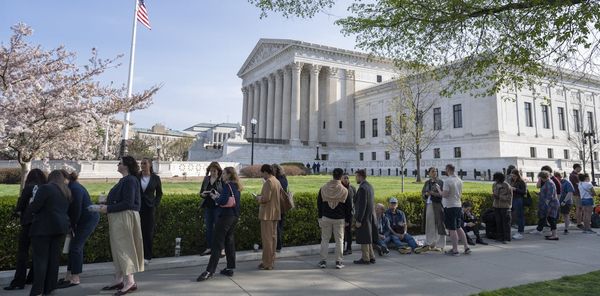
- The supreme court blocked Republican efforts to stop an absentee ballot deadline extension in Pennsylvania. The ruling will likely mean thousands more votes are counted in one of the most critical swing states in the election. Republicans in the swing state had tired to stay an order from the Pennsylvania supreme court allowing ballots postmarked by election day to be counted even if the arrive up to three days later.
- Trump attacked Dr Anthony Fauci as a “disaster” on a call with campaign staff. “People are tired of coronavirus,” the president said. “People are tired of hearing Fauci and all these idiots.” The comments came one day after “60 Minutes” aired an interview with Fauci, in which the infectious disease expert said he was not surprised Trump caught coronavirus because of the president’s activities in the days before he developed symptoms.
-
Joe Biden criticized Trump for attacking Fauci, arguing Americans are “tired of your lies about this virus.” Biden said of Trump in a statement, “We need a leader to bring us together, put a plan in place, and beat this virus — but you have proven yourself yet again to be incapable of doing that.”
- Russian intelligence agents were planning a cyber-attack on the Tokyo Olympics, the UK National Cyber Security Centre revealed, as part of a joint operation with the US intelligence agencies. The UK also confirmed details of a Russian attempt to disrupt the 2018 winter Olympics.
- The supreme court agreed to hear two cases involving Trump’s controversial immigration policy. One case centers on Trump’s “Remain in Mexico” policy, which requires asylum-seekers to stay in Mexico as their claims are processed. The other focuses on government funding of the US-Mexican border wall.
- In-person early voting begins today in the crucial swing state of Florida. Democratic vice-presidential nominee Kamala Harris held events in Orlando and Jacksonville today.
– Maanvi Singh and Joan E Greve
Kelly Loeffler, the Republican US senator from Georgia who has embraced a follower of the toxic rightwing conspiracy theory QAnon in a desperate bid to hang on to her seat, squared off with her Trump-supporting rival and the leading Democratic candidate in their first debate today.
The virtual debate, staged through separate video links to ensure safety amid the pandemic, was a chance for voters to get to grips with one of the most volatile and chaotic races in the nation. Some 20 candidates are standing in a race which, as a special election, had no primary.
Loeffler, who was appointed to the seat in January following the resignation of Johnny Isakson, is having to fend off a fierce challenge from Doug Collins, an avidly Trump-supporting congressman. The pair have been scrambling over each other in a rapid dash to the right, trying to outdo the other in their radical conservative credentials.
An exchange between Collins and Loeffler featured sparring on a personal angle.
“You’ve attacked my hair, my makeup, how I talk, my clothes, where I’m from,” Loeffler said, adding: “I am the true conservative. I don’t have to have a record I have to lie about,” the Gainesville Times reported.
Collins shot back: “I’ve never mentioned anything personally – her fixtures, hair or anything else. But it’s amazing what she [says] about me.”
Democratic candidate Raphael Warnock, senior pastor of the Ebenezer Baptist church in Atlanta, where Martin Luther King preached for eight years, asked Collins if he would condemn QAnon.
That is the virulent conspiracy theory rapidly which claims a cabal of Democrats and billionaires is running a pedophile and human trafficking ring and which the FBI has warned is a domestic terrorism threat.
“I don’t agree with QAnon … and don’t support them,” Collins said.
Loeffler said: “I don’t know anything about QAnon.”
The World Health Organization’s emergency director, Michael Ryan, has linked soaring transmission rates in the northern hemisphere to the failure to quarantine people exposed to the virus.
He said if he could have one wish, it would be to ensure “every contact of a confirmed case is in quarantine for the appropriate period”.
“I do not believe that has occurred systematically, anywhere,” Ryan said, adding it was “a good part of the reason why we’re seeing such high numbers”.
Ryan said that about half of the 48 countries in the UN health agency’s European region had seen roughly 50% increases in cases within the past week – and hospitalizations and death rates were beginning to track those rises.
Some moderately good news is that the average age of sufferers was now much younger, treatment has improved and those infected may have been exposed to lower doses of the virus because of physical distancing and mask-wearing.
Worldwide cases of the virus passed 40 million on Monday.
The WHO says 42 potential vaccines are now being tested on humans, of which 10 have reached the third and final stage. A further 156 are being worked on in laboratories with a view to human testing.
But the WHO’s chief scientist, Soumya Swaminathan, said that while one or two trials may report data by the end of the year, most would start to do so in early 2021.
The Trump campaign said the president will participate in the debate this week despite the rule change. Trump’s campaign manager Bill Stepien said: “President Trump is committed to debating Joe Biden regardless of last-minute rule changes from the biased commission in their latest attempt to provide advantage to their favored candidate.”
Here are the highlights from the first debate:
The debate rule change allowing for microphones to be muted is likely to anger the Trump campaign.
In a statement, the non-partisan commission noted: “We realize, after discussions with both campaigns, that neither campaign may be totally satisfied with the measures announced today. One may think they go too far, and one may think they do not go far enough. We are comfortable that these actions strike the right balance and that they are in the interest of the American people, for whom these debates are held.”
Both campaigns had agreed to a format in which each candidate would have two minutes to answer a question from the moderator, before launching into back and forth open discussion.
“The Commission is announcing today that in order to enforce this agreed upon rule, the only candidate whose microphone will be open during these two-minute periods is the candidate who has the floor under the rules,” it said in a statement. Both mics will be unmuted for open discussion.
Analysis: Supreme court ruling on Pennsylvania's deadline for absentee ballots
The US supreme court decision to not pause a ruling from the Pennsylvania supreme court extending the deadline for absentee ballots in the state is a hugely consequential ruling that will likely mean thousands more votes are counted in one of the most critical swing states in the election.
Chief justice John Roberts joined the court’s three liberal justices in the ruling, producing a 4-4 deadlock. The even split means that a September ruling from the Pennsylvania supreme court ordering ballots to count as long as they are postmarked by election day and received in the days after will stand. The ruling is a win for Democrats, who sought the extension in state court, and a loss for Republicans, who had asked the US supreme court to intervene. Nearly 900,000 voters in Pennsylvania have already returned their ballots, according to state data collected by Michael McDonald, a professor at the University of Florida.
The justices made the ruling on an emergency request from Pennsylvania Republicans and, as is customary in similar cases, offered no explanation for their ruling. Justices Samuel Alito, Neil Gorsuch, Brett Kavanaugh and Clarence Thomas all said they would have granted the Republican request.
Pennsylvania typically requires mail-in ballots to arrive by election night in order to count. But last month, the Pennsylvania supreme court, citing potential postal service delays amid the Covid-19 pandemic, extended the deadline by 3 days last month, saying ballots should count as long as they are postmarked by election day. The court also required election officials to count ballots with no postmark or an illegible one.
In a typical election, only around 1% of mail-in ballots are rejected, but that number is expected to rise this year as more people vote by mail for the first time. One of the top reasons mail-in ballots get rejected is because they arrive after election day. The decisions from the Pennsylvania supreme court and US supreme court offer important insurance against that kind of disenfranchisement.
The ruling is a break from a string of rulings this year in which the US supreme court has upheld a swath of voting restrictions across the country, even amid the Covid-19 pandemic. But the Pennsylvania case had an important distinction; while all the voting cases that have reached the supreme court this year have been from federal courts, the Pennsylvania case came from a state court. The supreme court may have been more hesitant to overrule a state court on a manner of election law, which the constitution specifically authorizes the states to set.
Updated
The presidential debate commission has adopted rules to mute microphones
When Trump and Biden face off on Thursday for a final televised debate, each candidate will have their microphones cut off while the other is delivering responses to questions.
During the 90-min debate, each candidate will have two minutes of uninterrupted time to respond to questions before they move on to open debate. The rule change from the non-partisan Commission on Presidential Debates (CPD) comes after a chaotic first debate during which the presidential conductors spoke over each other, and Trump, especially, interrupted his opponent.
Republicans and Trump have already been sour at the CPD after it canceled the second debate due to safety concerns after Trump was diagnosed with Covid-19, and earlier today contested the topics the commission had chosen for the debate this week.
Updated
Justice Department lawyers argued that Trump was addressing his fitness for office and speaking in an official capacity when he called E Jean Carroll – who has accused him of rape – a politically-motivated liar.
From the AP:
The lawyers argued in papers in Manhattan federal court that the president should be replaced as the defendant in E. Jean Carroll’s defamation lawsuit by the Justice Department because he was acting in an official capacity when he made his statements.
They said he was entitled to refute Carroll’s claims because she was trying to call “into question the president’s fitness for office and a response was necessary for the president to effectively govern.”
The lawyers had made similar arguments before and were replying to written arguments submitted to a judge by lawyers for Carroll, a media figure who hosted an advice show in the mid-1990s when she says she was attacked.
Earlier this month, Carroll’s attorneys argued the opposite, saying Trump can’t insult their client and then cite his job as reason to remove himself as a defendant. “Only in a world gone mad could it somehow be presidential, not personal, for Trump to slander a woman who he sexually assaulted,” they said.
Carroll has said Trump raped her in a department store dressing room a quarter century ago after they randomly crossed paths and engaged in conversation as each recognized the other’s measure of fame.
Her lawyers argued that defamatory attacks by the president included assertions that Carroll had falsely accused other men of rape, that she lied about him to advance a secret political conspiracy and sell books and that he had never met her even though they’d been photographed together. The lawyers noted that Trump also had said: “She’s not my type.”
Updated
After Donald Trump said at his Prescott, Arizona rally that he could raise more campaign money than he had, by hypothetically calling the head of Exxon and offering permits in exchange for $25m, the energy company has issued a statement clarifying that no such exchange occured.
"I call the head of Exxon. I'll use a company. 'How, how are you doing, how's energy coming? When are doing the exploration? Oh, you need a couple of permits, huh?' But I call the head of Exxon, I say, 'you know, I'd love you to send me $25m for the campaign'" - Trump #QuidProQuo pic.twitter.com/Tr1ccpyMzw
— Aaron Rupar (@atrupar) October 19, 2020
Offering political favors in exchange for campaign donations is illegal. Staging a mick phone call, Trump said, “I call the head of Exxon... ‘How, how are you doing, how’s energy coming? When are doing the exploration? Oh, you need a couple of permits, huh?’”
We are aware of the President’s statement regarding a hypothetical call with our CEO…and just so we’re all clear, it never happened.
— ExxonMobil (@exxonmobil) October 19, 2020
Supreme court blocks Republican efforts to stop mail-in voting expansion
Republicans and the state GOP had asked the supreme court to stay a Pennsylvania supreme court order extending the ballot receipt deadline in the state.
In a 4-4 vote, justices Gorsuch, Alito, Kavanaugh, and Thomas voted against the order. The court took a while to issue this ruling - it seems chief justice Roberts was unable to win over any of the opposers. Because the supreme court is missing a justice, after the death of Ruth Bader Ginsberg, a 4-4 means a loss for Republicans. A majority is needed to grant a stay.
Breaking news: The US Supreme Court said it would not halt a ruling from the PA Supreme Court extending the ballot receipt deadline in the state. This is one of the most significant rulings of the 2020 election cycle
— Sam Levine (@srl) October 19, 2020
Mail-in ballots in Pennsylvania were due by the time polls close on election day, but the Pennsylvania supreme court’s order allowed officials to count ballots postmarked by 8pm on election day to be counted even if they arrive up to three days later.
The ruling was celebrated by voting rights advocates, who cited postal services delays and other concerns as millions vote by mail due to the pandemic.
Updated
A fire inside an official election drop box in Los Angeles county has damaged voters’ ballots and is under investigation for arson, officials said.
The blaze Sunday night in the city of Baldwin Park appeared to be intentional, according to authorities, though the cause and the extent of the destruction were still under investigation. The fire required firefighters to spray water into the box to extinguish the flames, likely causing significant damage. Video from the scene showed dozens of wet and burnt ballots.
“The arson of an official ballot drop box … has all the signs of an attempt to disenfranchise voters and call into question the security of our elections,” Hilda L Solis, LA county supervisor, said in a statement, adding that the county has asked the state attorney general and FBI to investigate.
The LA county registrar’s office, which oversees the elections in the state’s largest county, has not responded to questions about how many ballots were affected, but said officials had last collected ballots from the site at 10am on Saturday. The fire was reported around 8pm on Sunday, and the damaged drop box location has since remained closed.
A fire department spokeswoman said three arson investigators were dispatched to the scene, and that the fire department spent nearly two hours on site responding to the blaze.
George Silva, a local resident who saw the fire on Sunday night while on a bike ride, told the Guardian firefighters initially struggled to put out the blaze.
“I felt a sense of broken-heartedness and disappointment,” said Silva, who runs a local air conditioning business. “I can’t believe somebody would do this.” He hasn’t voted yet and said he now planned to cast his ballot in person when early voting begins later this month. “I’m waiting until I know my vote will be safe and secure.”
The incident comes one week after California’s Republican party sparked confusion by placing their own unauthorized ballot boxes in several counties, prompting state election officials to send a cease-and-desist order demanding their removal. The state warned that the GOP boxes could mislead voters and violate the law.
The Senate Judiciary Committee – led by Republican Lindsey Graham - will consider authorizing subpoenas for testimony from the CEOs of Twitter and Facebook, “regarding the platforms’ censorship of New York Post articles,” the committee said.
“Committee staff continues to negotiate with both Twitter and Facebook to allow for voluntary testimony. If an agreement for voluntary testimony is not reached, the committee will vote on authorizing the subpoenas at a date to be determined,” the statement reads.
Here’s background on the NY Post articles, and social media companies response, from my colleague Kari Paul:
Facebook and Twitter took steps on Wednesday to limit the spread of a controversial New York Post article critical of Joe Biden, sparking outrage among conservatives and stoking debate over how social media platforms should tackle misinformation ahead of the US election.
In an unprecedented step against a major news publication, Twitter blocked users from posting links to the Post story or photos from the unconfirmed report. Users attempting to share the story were shown a notice saying: “We can’t complete this request because this link has been identified by Twitter or our partners as being potentially harmful.” Users clicking or retweeting a link already posted to Twitter are shown a warning the “link may be unsafe”.
Twitter said it was limiting the article’s spread due to questions about “the origins of the materials” included in the article, which contained material supposedly pulled from a computer that had been left by Hunter Biden at a Delaware computer repair shop in April 2019. Twitter policies prohibit “directly distribut[ing] content obtained through hacking that contains private information”.
Republicans accused the companies of protecting Biden.
The two presidential campaigns have been bickering over the topics to be covered during the final presidential debate this Thursday.
The Trump campaign has written to the Commission on Presidential Debates, alleging that the Biden campaign somehow influenced the debate hosts to avoid picking foreign policy as a discussion topic. Trump’s campaign manager Bill Stepien called the Commission the “Biden Debate Commission” and said there had been an agreement to focus on foreign policy.
Our letter to the BDC (Biden Debate Commission) pic.twitter.com/ZsY5JfMbT7
— BillStepien (@BillStepien) October 19, 2020
Biden’s press secretary TJ Ducklo responded, saying “The campaigns and the Commission agreed months ago that the debate moderator would choose the topics. The Trump campaign is lying about that now because Donald Trump is afraid to face more questions about his disastrous COVID response”
Two days after the New York Times published a profile entitled “Joe Biden’s Non-Radical 1960s”, the Democratic nominee for president picked up the endorsement of Rolling Stone, a magazine founded as a bible of sex, drugs and rock’n’roll at the height of the counterculture, in 1967.
“We’ve lived for the past four years under a man categorically unfit to be president,” the magazine’s editorial board wrote of Donald Trump, whom Biden leads in most national and battleground polls, two weeks out from election day.
“Fortunately for America, Joe Biden is Donald Trump’s opposite in nearly every category: the Democratic presidential nominee evinces competence, compassion, steadiness, integrity, and restraint.
Trump told reporters he was unaware of polling numbers for Martha McSally, the Republican senator who is trailing Democrat Mark Kelly in Arizona.
The state has long been a Republican stronghold, but Democrats are making gains. Kelly, an astronaut, and husband of former congresswoman Gabby Giffords is leading by 5 to 10 points in recent polls.
Trump, who often distances himself from problems or losses, says he doesn't personally know what McSally's polling numbers are right now. (They're not great.) pic.twitter.com/8wWgb8saxe
— Josh Wingrove (@josh_wingrove) October 19, 2020
Donald Trump is on his way to Tucson, Arizona, where he’s holding his second campaign rally of the day.
Earlier on Monday, Trump spoke in Prescott, Arizona. The crowd at Prescott Regional Airport cheered as the president attacked his rival in the race, Joe Biden, and cable news network CNN. Trump called CNN a group of “dumb bastards” for focusing its coverage on the coronavirus pandemic, which has claimed the lives of nearly 220,000 Americans.

A US appeals court has refused to block the release of an April 2016 deposition by Ghislaine Maxwell concerning her relationship with Jeffrey Epstein.
The deposition was taken in a civil defamation lawsuit brought by Virginia Giuffre, one of Epstein’s accusers. Giuffre and the Miami Herald had recently pushed to unseal the documents.
More from Reuters:
The 2nd US Circuit Court of Appeals in Manhattan said there was a presumption the public had a right to see the April 2016 deposition.
In its unsigned order, the appeals court also said US District Judge Loretta Preska in Manhattan did not abuse her discretion in rejecting Maxwell’s “meritless arguments” that her interests superseded that presumption.
The British socialite had argued that she thought the 418-page deposition was confidential, and that releasing it could undermine her ability to defend against criminal charges that she enabled Epstein’s sexual abuses. Her lawyers have said bad publicity from disclosing “intimate, sensitive, and personal” details from the deposition would violate Maxwell’s right against self-incrimination, and imperil a fair trial because jurors might hold it against her.
The appeals court separately rejected Maxwell’s request to modify a protective order in her criminal case, and let her use confidential materials produced by the government to try to persuade Preska not to unseal the deposition.
Lawyers for Maxwell did not immediately respond to requests for comment, including whether they plan a further appeal. Maxwell, 58, has pleaded not guilty to helping Epstein recruit and groom underage girls as young as 14 to engage in illegal sexual acts in the mid-1990s, and not guilty to perjury for having denied involvement in the deposition
Updated
The New Yorker magazine has suspended Jeffrey Toobin while it is investigating a report that the author and commentator exposed himself during a Zoom meeting with staff members of the New Yorker and WNYC radio. Toobin is also stepping away from his job as CNN’s senior legal analyst.
In a statement to the Associated Press, the New Yorker said Toobin had been “suspended while we investigate the matter.” It declined further comment. A CNN spokesperson said that “Jeff Toobin has asked for some time off while he deals with a personal issue, which we have granted.”
Toobin has been a long-time writer for the New Yorker and joined CNN in 2002. His most recent book reported on the Mueller investigation.
Vice was the first to report on the incident.
Ashley Kirk, Tom McCarthy and Helena Robertson report:
Even if Biden defeats Trump, he will be unable to pass legislation on key issues such as healthcare, immigration and climate change unless the Democrats simultaneously seize the Senate, where the Republicans now have a 47-53 majority.
The Democrats could pull it off. Democratic challengers in two states, Arizona and Colorado, appear to have a good chance in defeating Republican incumbents, while only one Democratic incumbent, in Alabama, looks especially vulnerable, according to the latest forecast from the Cook Political Report.
The number of additional seats the Democrats need to win for a voting majority depends on who wins the White House, since any Senate tie of 50-50 is broken by the sitting vice-president. If Trump wins re-election, the Democrats probably need three states, in addition to Arizona and Colorado, for the majority; if Biden wins, the Democrats probably need only two more.
Today so far
That’s it from me today. My west coast colleague, Maanvi Singh, will take over the blog for the next few hours.
Here’s where the day stands so far:
- Trump attacked Dr Anthony Fauci as a “disaster” on a call with campaign staff. “People are tired of coronavirus,” the president said. “People are tired of hearing Fauci and all these idiots.” The comments came one day after “60 Minutes” aired an interview with Fauci, in which the infectious disease expert said he was not surprised Trump caught coronavirus because of the president’s activities in the days before he developed symptoms.
-
Joe Biden criticized Trump for attacking Fauci, arguing Americans are “tired of your lies about this virus.” Biden said of Trump in a statement, “We need a leader to bring us together, put a plan in place, and beat this virus — but you have proven yourself yet again to be incapable of doing that.”
- Russian intelligence agents were planning a cyber-attack on the Tokyo Olympics, the UK National Cyber Security Centre revealed, as part of a joint operation with the US intelligence agencies. The UK also confirmed details of a Russian attempt to disrupt the 2018 winter Olympics.
- The supreme court agreed to hear two cases involving Trump’s controversial immigration policy. One case centers on Trump’s “Remain in Mexico” policy, which requires asylum-seekers to stay in Mexico as their claims are processed. The other focuses on government funding of the US-Mexican border wall.
- In-person early voting begins today in the crucial swing state of Florida. Democratic vice-presidential nominee Kamala Harris held events in Orlando and Jacksonville today.
Maanvi will have more coming up, so stay tuned.
After Trump mentioned Joe Biden, the crowd at the president’s rally in Prescott, Arizona, broke out into chants of “Lock him up!”
The chant, which was used against Hillary Clinton in 2016, has become more common at Trump’s rallies in recent days.
"Lock him up!" chants for Joe Biden are a new staple of Trump rallies.
— Aaron Rupar (@atrupar) October 19, 2020
"I know people that would've had him locked up five weeks ago," Trump says, suggesting Bill Barr is having mercy on Biden. pic.twitter.com/kSQzx1j3Jt
Trump said Biden was “lucky” that William Barr is the US attorney general because others might not have been as “fair” to the Democratic nominee.
“I know people that would’ve had him locked up five weeks ago,” Trump said. “Bill Barr is a very nice man and a very fair man.”
Trump and his allies are trying to draw attention to a New York Post story about Hunter Biden’s emails that is reportedly being investigated as a potential part of a foreign influence operation.
Biden criticizes Trump for attacking Fauci as a 'disaster'
Joe Biden has released a statement criticizing Trump for attacking Dr Anthony Fauci as a “disaster” during a call with his campaign staff today.
“Coronavirus infections are spiking across the country, but President Trump decided to attack Dr. Fauci again today as a ‘disaster’ and call public health experts ‘idiots’ instead of laying out a plan to beat this virus or heeding their advice about how we can save lives and get our economy moving again,” Biden said in the statement released by his campaign.
“Mr. President, you’re right about one thing: the American people are tired. They’re tired of your lies about this virus,” Biden added. “Now, more than ever, we need a leader to bring us together, put a plan in place, and beat this virus — but you have proven yourself yet again to be incapable of doing that.”
Biden is off the campaign trail today to prepare for his Thursday debate against the president, where the Democratic nominee will likely try to press Trump on these attacks against Fauci.
Trump is now holding his first of two campaign rallies today in Arizona.
Speaking to a crowd in Prescott, the president attacked CNN as a group of “dumb bastards” for focusing its coverage on the coronavirus pandemic, which has claimed the lives of nearly 220,000 Americans.
"They are getting tired of the pandemic, aren't they? You turn on CNN, that's all they cover. 'Covid, Covid, Pandemic, Covid, Covid.' You know why? They're trying to talk everybody out of voting. People aren't buying it, CNN, you dumb bastards." -- Trump pic.twitter.com/QobvMA6Yz0
— Aaron Rupar (@atrupar) October 19, 2020
“They’re getting tired of the pandemic, aren’t they?” Trump said, echoing comments he made during a call with campaign staff earlier today. “You turn on CNN, that’s all they cover. ‘Covid, Covid, Pandemic, Covid, Covid.’”
The president added, “You know why? They’re trying to talk everybody out of voting. People aren’t buying it, CNN, you dumb bastards.”
The Arizona crowd cheered Trump’s attack on CNN.
The Republican chairman of the Senate health committee, Lamar Alexander, defended Dr Anthony Fauci after Trump attacked the infectious disease expert as a “disaster.”
Dr. Fauci is one of our country’s most distinguished public servants. He has served 6 presidents, starting with Ronald Reagan. If more Americans paid attention to his advice, we’d have fewer cases of COVID-19, & it would be safer to go back to school & back to work & out to eat.
— Sen. Lamar Alexander (@SenAlexander) October 19, 2020
“Dr. Fauci is one of our country’s most distinguished public servants,” Alexander said in a tweet.
“He has served 6 presidents, starting with Ronald Reagan. If more Americans paid attention to his advice, we’d have fewer cases of COVID-19, & it would be safer to go back to school & back to work & out to eat.”
Alexander’s comments seem to be the latest effort from Republicans to distance themselves from Trump, as the president’s chances of winning a second term have dwindled.
Trump is making his literal closing pitch to American voters, mocking Dr Anthony Fauci for his ceremonial opening pitch at the Washington Nationals game in July.
The president retweeted a message from an ally saying Fauci’s pitch was a “metaphor for how wrong he has been.” Trump also reshared a video of his own opening pitch for the Somerset Patriots in 2004.
It’s worth noting Trump is the first president in decades not to throw out a ceremonial first pitch during his term.
Much more importantly, Trump is mocking the government’s top infectious disease expert for his baseball skill in the middle of a global pandemic that has already claimed the lives of 219,891 Americans, according to Johns Hopkins University.
While speaking to reporters, Trump also insulted Dr Anthony Fauci, hours after attacking him as a “disaster” in a campaign staff call.
“Dr. Fauci is a very nice man…sometimes he says things that are a little bit off,” Trump says on the tarmac in Arizona, adding: “He’s been there for about 350 years, I don’t want to hurt him.”
— Bloomberg QuickTake (@QuickTake) October 19, 2020
Fauci has been the director of @NIAIDNews since 1984 pic.twitter.com/9eECwghu2m
The president said he didn’t want to “hurt” Fauci because the infectious disease expert is a “very nice man.”
Trump added, “He’s been there for about 350 years; I don’t want to hurt him.”
Fauci has led the National Institute of Allergy and Infectious Diseases since 1984.
Trump took some questions from reporters after arriving in Arizona, and he attacked a reporter as a “criminal” for not reporting on Hunter Biden.
"You're a criminal for not reporting it. You are a criminal for not reporting it." -- Trump calls @jeffmason1 "a criminal" for not reporting on Hunter Biden's emails pic.twitter.com/k9f7sTHm93
— Aaron Rupar (@atrupar) October 19, 2020
“You’re a criminal for not reporting it. You are a criminal for not reporting it,” the president said, before once again going on to attack Joe Biden as a “criminal” as well.
The FBI is reportedly investigating whether the New York Post’s story about Hunter Biden’s emails is part of a foreign disinformation campaign.
Trump has arrived in the battleground state of Arizona, where he will hold two campaign rallies in Prescott and Tucson today.
The president was greeted by Republican Governor Doug Ducey and Senator Martha McSally, who is locked in a close race with Democratic candidate Mark Kelly. Recent polls show McSally trailing Kelly.
Trump arrives in Phoenix, Arizona. He’s got two rallies today in the state. pic.twitter.com/r1Gl8edTRJ
— Jill Colvin (@colvinj) October 19, 2020
Trump again attacks Fauci over Twitter
Hours after attacking Dr Anthony Fauci as a “disaster” in a campaign staff call, Trump is again going after the infectious disease expert on Twitter.
“Dr. Tony Fauci says we don’t allow him to do television, and yet I saw him last night on @60Minutes, and he seems to get more airtime than anybody since the late, great, Bob Hope,” Trump said.
The president also mocked Fauci’s “bad arm” after he threw out the ceremonial first pitch at the Washington Nationals game in July.
...P.S. Tony should stop wearing the Washington Nationals’ Mask for two reasons. Number one, it is not up to the high standards that he should be exposing. Number two, it keeps reminding me that Tony threw out perhaps the worst first pitch in the history of Baseball!
— Donald J. Trump (@realDonaldTrump) October 19, 2020
In his “60 Minutes” interview, Fauci, who has led the National Institute of Allergy and Infectious Diseases since 1984, said he had frequently been blocked from going on television since the start of the pandemic.
“There has been a restriction,” Fauci said. “But it isn’t consistent.”
Has the White House been controlling when Dr. Fauci can speak with the media?
— 60 Minutes (@60Minutes) October 18, 2020
“To be honest… yes,” says Dr. Fauci. “There has been a restriction… but, it isn’t consistent.” https://t.co/LXBve3PUWC pic.twitter.com/YOoNLnAHc9
In his tweet thread, Trump also criticized Fauci for reversing his guidance about wearing masks after evidence showed cloth masks could help limit the spread of coronavirus from people who were asymptomatic or had not yet developed symptoms.
Fauci told “60 Minutes,” “Contrary to what we thought, masks really do work in preventing infection.” He added, “When you find out you’re wrong, it’s a manifestation of your honesty to say ‘Hey, I was wrong.’”
Trump is now en route to the battleground state of Arizona for two campaign rallies in Prescott and Tucson.
After attacking Dr Anthony Fauci as a “disaster” in a campaign staff call earlier today, the president did not stop to talk to the press as he boarded Air Force One.
Pres Trump gives a perfunctory wave on boarding Air Force One in Las Vegas as heads to Arizona for rallies in Prescott and Tucson. He won Arizona in 2016, but is now trailing in the polls. pic.twitter.com/edrcQkDRVT
— Mark Knoller (@markknoller) October 19, 2020
Trump pushed back against a New York Times report that his allies are privately pessimistic about his chances of victory.
Tweeting at New York Times reporter Maggie Haberman, who co-wrote the story, Trump said, “There has never been a time in either of my two Campaigns when I felt we had a stronger chance of winning than we do right now. Early voting reports look far stronger than originally anticipated. Every RALLY is BOFFO.”
....There has never been more enthusiasm or spirit, by everyone. Great fun, and so good for our Country. Already winning many states, but not reported. Biden put the LID on again - raising money with promises. They finally caught him, COLD, and he knows it. Laptop is devastating!
— Donald J. Trump (@realDonaldTrump) October 19, 2020
In reality, polls show Trump consistently trailing Joe Biden in key battleground states, and FiveThirtyEight currently gives the incumbent president a 12% chance of victory.
The Times reported that some Trump campaign staffers have started inquiring about potential employment on Capitol Hill after the election, signaling they don’t believe the president will win a second term:
Away from their candidate and the television cameras, some of Mr. Trump’s aides are quietly conceding just how dire his political predicament appears to be, and his inner circle has returned to a state of recriminations and backbiting. Mark Meadows, the White House chief of staff, is drawing furious blame from the president and some political advisers for his handling of Mr. Trump’s recent hospitalization, and he is seen as unlikely to hold onto his job past Election Day.
Mr. Trump’s campaign manager, Bill Stepien, has maintained to senior Republicans that the president has a path forward in the race but at times has conceded it is narrow. ...
Less than three weeks before Election Day, there is now an extraordinary gulf separating Mr. Trump’s experience of the campaign from the more sobering political assessments of a number of party officials and operatives, according to interviews with nearly a dozen Republican strategists, White House allies and elected officials. Among some of Mr. Trump’s lieutenants, there is an attitude of grit mixed with resignation: a sense that the best they can do for the final stretch is to keep the president occupied, happy and off Twitter as much as possible, rather than producing a major shift in strategy.
Russia planned cyber-attack on Tokyo Olympics, says UK
Russian military intelligence services were planning a cyber-attack on the Japanese-hosted Olympics and Paralympics in Tokyo this summer in a bid to disrupt the world’s premier sporting event, the UK National Cyber Security Centre has revealed, disclosing a joint operation with the US intelligence agencies.
The Russian cyber-reconnaissance work covered the Games organisers, logistics services and sponsors and was under way before the Olympics was postponed due to coronavirus.
Many previous ascribed Russian cyber-attacks have been against the state institutions of Russia’s political opponents, but some Russian cyber-activity has been directed at the agencies conducting inquiries into Russian sports doping.
The new evidence is the first indication that Russia was prepared to go as far as to disrupt the summer Games, from which all Russian competitors had been excluded because of persistent state-sponsored doping offences.
The UK has also become the first government to confirm details of the breadth of a previously reported Russian attempt to disrupt the 2018 winter Olympics and Paralympics in Pyeongchang, South Korea. It declared with what it described as 95% confidence that the disruption of both the winter and summer Olympics was carried out remotely by the GRU unit 74455.
In Pyeongchang, according to the UK, the GRU’s cyber-unit attempted to disguise itself as North Korean and Chinese hackers when it targeted the opening ceremony of the 2018 winter Games, crashing the website so spectators could not print out tickets and crashing the wifi in the stadium.
Today so far
Here’s where the day stands so far:
- Trump attacked Dr Anthony Fauci as a “disaster” on a call with campaign staff. “People are tired of coronavirus,” the president said. “People are tired of hearing Fauci and all these idiots.” The comments came one day after “60 Minutes” aired an interview with Fauci, in which the infectious disease expert said he was not surprised Trump caught coronavirus because of his activities in the days before he developed symptoms.
- The supreme court agreed to hear two cases involving Trump’s controversial immigration policy. One case centers on Trump’s “Remain in Mexico” policy, which requires asylum-seekers to stay in Mexico as their claims are processed. The other focuses on government funding of the US-Mexican border wall.
- In-person early voting begins today in the crucial swing state of Florida. Democratic vice-presidential nominee Kamala Harris is holding events in Orlando and Jacksonville today.
The blog will have more coming up, so stay tuned.
As Trump attacked Dr Anthony Fauci as a “disaster” this morning, the infectious disease expert was virtually accepting an award for “exemplary leadership.”
In his remarks accepting the award, Fauci warned the country is “going through a time that’s disturbingly anti-science in certain segments of our society.”
Dr. Fauci, while virtually accepting a leadership award this morning, said, "We have a lot of challenges ahead of us, and I can't help thinking that we're really going through a time that's disturbingly anti-science in certain segments of our society."
— Kaitlan Collins (@kaitlancollins) October 19, 2020
Fauci made similar comments in his “60 Minutes” interview, which aired yesterday. The top health official said he has received death threats since the start of the coronavirus pandemic, and his family members have been harassed.
Once an avid runner, Dr. Anthony Fauci, now 79, power walks. Since receiving death threats, he is now accompanied by a security detail. https://t.co/lbtcL5htQS pic.twitter.com/Q3KG0kV0rV
— 60 Minutes (@60Minutes) October 18, 2020
Kamala Harris is campaigning in the crucial swing state of Florida, where in-person early voting started today.
Sen. Kamala Harris lands in Orlando on the first day of early voting in Florida. pic.twitter.com/e0UgtANQ0a
— Steve Contorno (@scontorno) October 19, 2020
The Democratic vice-presidential nominee spoke at the Central Florida Fairgrounds in Orlando, where dozens of cars had pulled up for a drive-in rally. Drivers honked their horns in support as the event unfolded.
Harris will also participate in a voter mobilization event in Jacksonville later today.
The day’s events mark a return to the campaign trail for Harris, who canceled her planned trips this weekend after two people she had recently flown with tested positive for coronavirus.
The Biden campaign said Harris did not have close contact with either person, but she still canceled her travel plans out of an abundance of caution.
It should also be noted that the Trump campaign recently used Dr Anthony Fauci’s words in a campaign ad, a decision that attracted criticism from the infectious disease expert.
The ad included Fauci’s comment from March praising the work of the White House coronavirus task force. “I can’t imagine that anybody could be doing more,” Fauci said at the time.
The Trump campaign took the comment and placed it in an ad to make it seem as though Fauci was specifically referring to the president.
Fauci said last week, “That ad clearly implies strongly that I’m endorsing a political candidate, and I have not given them my permission to do that.”
He added, “The quote that they took is completely out of context.”
So Trump is simultaneously calling Fauci a “disaster” and using the expert’s words to try to bolster his own credibility on the pandemic response.
Trump attacked Dr Anthony Fauci as a “disaster,” but polls indicate Americans trust the infectious disease expert more than the president when it comes to the coronavirus pandemic.
According to a New York Times/Siena College survey taken in June, 67% of American voters say they trust Fauci as a source of information on the pandemic.
Just 26% of US voters said the same of Trump.
Although Trump described Dr Anthony Fauci as a “disaster,” the president told campaign staffers that he was worried about the consequences of firing the infectious disease expert.
“Every time he goes on television, there’s always a bomb, but there’s a bigger bomb if you fire him,” Trump said.
The president also acknowledged that there were likely reporters listening in on the campaign staff call (yes, there were). But Trump seemed unconcerned about his attacks on Fauci being made public.
“If there’s a reporter on, you can have it just the way I said it, I couldn’t care less,” Trump said.
Trump attacks Fauci as a 'disaster' in campaign staff call
Speaking to his campaign staff on a conference call, Trump attacked Dr Anthony Fauci, the government’s top infectious disease expert.
“People are tired of coronavirus,” the president said, according to reporters who listened in on the call. “People are tired of hearing Fauci and all these idiots.”
Trump added that Fauci, who has led the National Institute of Allergy and Infectious Diseases since 1984, was a “nice guy” but that he had “been here for 500 years.”
The president also claimed (without evidence) that the US death toll would have been as high as 800,000 if he had followed Fauci’s advice.
“Fauci is a disaster,” Trump said.
The president’s comments come one day after 60 Minutes aired an interview with Fauci, in which the expert said he was “absolutely not” surprised Trump got coronavirus because he was holding crowded events with minimal social distancing and mask usage in the days before he developed symptoms.
Dr. Fauci says he was “absolutely not” surprised that President Trump got sick with coronavirus after seeing POTUS at what “turned out to be a super-spreader event” at the White House. https://t.co/Iq75GoCErk pic.twitter.com/iDWEaoX582
— 60 Minutes (@60Minutes) October 18, 2020
Updated
Trump joined a campaign staff call from his hotel in Las Vegas, where he is staying before his two campaign rallies in Arizona later today.
The president tried to instill confidence in his campaign staff, insisting he would win the election, despite the recent disappointing polls.
“We’re going to win,” Trump said. “I wouldn’t have told you that maybe two or three weeks ago.”
Polls show Trump consistently trailing Joe Biden in key battleground states, and FiveThirtyEight currently gives the incumbent president a 12% chance of victory.
Joe Biden’s coronavirus test today has come back negative, the Democrat’s campaign announced moments ago.
“Vice President Biden underwent PCR testing for COVID-19 today and COVID-19 was not detected,” the campaign said in a statement.
Biden has been regularly releasing the results of his coronavirus tests since Trump tested positive earlier this month.
The Biden campaign announced last week that an aviation company administrator who recently flew with the nominee had tested positive, but the two did not have close contact, as defined by the Centers for Disease Control and Prevention.
Biden is off the campaign trail today, instead focusing on preparing for his Thursday debate against Trump.
Barack Obama has filmed a campaign ad for Sara Gideon, the Maine Democrat seeking to unseat Republican Senator Susan Collins next month.
“From her work to lower the cost of health care and prescription drugs to tax relief she’s helped provide for middle class Mainers, Sara has brought people together to get things done,” the former president says in the ad.
“Sara will always be a strong voice for Maine, and is exactly the type of leader we need in Washington.”
Obama endorsed Gideon back in August, a noteworthy announcement considering Collins often voted in favor of the former Democratic president’s policies when he was in office.
Speaking to reporters at the White House, Mark Meadows claimed Mitch McConnell has committed to putting any negotiated coronavirus relief deal on the Senate floor for a vote.
“The Senate Republicans have been very vocal in terms of their lack of support of a number that’s even close to what the president has already supported,” the White House chief of staff said. “Whether there’s enough votes to get to the 60-vote threshold, that’s up to Leader McConnell.”
But McConnell has not committed to putting any deal negotiated between House speaker Nancy Pelosi and treasury secretary Steven Mnuchin on the floor.
The Senate majority leader said Saturday, “If Speaker Pelosi ever lets the House reach a bipartisan agreement with the administration, the Senate would of course consider it.”
The Senate is expected to vote tomorrow on a standalone bill to provide more loans to small businesses, but Pelosi has made clear she wants to see a much broader relief package -- a rare area of agreement between her and Trump.
The AP has more details on the supreme court’s decision to hear a case about Trump’s “Remain in Mexico” policy:
As is typical, the court did not comment Monday in announcing it would hear the case. Because the court’s calendar is already full through the end of the year, the justices will not hear the case until 2021. If Joe Biden were to win the presidential election and rescind the policy, the case would become largely moot.
Trump’s ‘Migrant Protection Protocols’ policy, known informally as ‘Remain in Mexico,’ was introduced in January 2019. It became a key pillar of the administration’s response to an unprecedented surge of asylum-seeking families at the border, drawing criticism for having people wait in highly dangerous Mexican cities.
Lower courts found that the policy is probably illegal. But earlier this year the Supreme Court stepped in to allow the policy to remain in effect while a lawsuit challenging it plays out in the courts.
More than 60,000 asylum-seekers were returned to Mexico under the policy. The Justice Department estimated in late February that there were 25,000 people still waiting in Mexico for hearings in U.S. court. Those hearings were suspended because of the coronavirus pandemic.
Updated
Supreme court agrees to hear Trump administration appeals on two immigration cases
The supreme court has agreed to hear the Trump administration’s appeals in two cases involving the president’s controversial immigration policy.
One case has to do with Trump’s “Remain in Mexico” policy, which requires asylum-seekers to wait in Mexico as their cases are decided.
The other has to do with funding of the wall along the US-Mexican border.
This is Joan Greve in Washington, taking over for Martin Belam.
Congress is running out of time to pass another coronavirus relief bill before the election, much to the chagrin of the president, who has called on Congress to “go big or go home” on the relief package.
The AP reports:
Trump’s GOP allies are reconvening the Senate this week for a revote on a virus proposal that about one-third the size of a measure being negotiated by [House speaker Nancy] Pelosi and Treasury Secretary Steven Mnuchin. But the Senate GOP bill has failed once before, and that Trump himself now says is too puny. The debate promises to bring a hefty dose of posturing and political gamesmanship, but little more. A procedural vote on a stand-alone renewal of bipartisan Paycheck Protection Program business subsidies is slated for Tuesday.
Even the architect of the larger Senate measure, Majority Leader Mitch McConnell, R-Ky., isn’t claiming the vote will advance the ball. Once the measure fails, he plans to turn the chamber’s full attention to cementing a 6-3 conservative majority on the Supreme Court by confirming Judge Amy Coney Barrett. It is likely to be the Senate’s final act before Election Day.
In that context, this week’s action has the chief benefit of giving Republicans in tough reelection races one last opportunity to try to show voters they are prioritizing COVID relief — and to make the case to voters that Democrats are the ones standing in the way.
Joe Biden’s social media team have responded to the somewhat quirky accusation from president Donald Trump yesterday that one of the things Biden would do if elected is listen to scientists [see 7:43].
...yes https://t.co/RzZ3j3zoAL
— Joe Biden (@JoeBiden) October 19, 2020
Florida isn’t the only state where in-person voting opens today. Residents in Alaska, Arkansas, Colorado, Idaho and North Dakota will also be able to cast their ballots today.
Tomorrow it is the turn of voters in Hawaii, Louisiana, Utah and Wisconsin. West Virginia follows on Wednesday.
The US election system is completely decentralised, which is why there is such a variation on dates and rules between states. Christina A. Cassidy reports this morning for the Associated Press on one particular question – what happens to your early vote if you die after it has been cast?
She spoke to Hannah Carson in North Carolina. At 90 years old and living through a global pandemic, Carson knows time may be short. She wasted no time returning her absentee ballot for this year’s election.
As soon as it arrived at her senior living community, she filled it out and sent it back to her local election office in Charlotte, North Carolina. If something were to happen and she doesn’t make it to election day, Carson told AP she hopes her ballot will remain valid. “I should think I should count, given all the years I have been here,” she said.
But in North Carolina, a ballot cast by someone who subsequently dies can be set aside if a challenge is filed before election day with the county board of elections.
Seventeen states prohibit counting ballots cast by someone who subsequently dies before the election, but 10 states specifically allow it. The law is silent in the rest of the country, according to research by the National Conference of State Legislatures.
Even though a law might require such ballots to be rejected, it’s likely that some could still count depending on when the person dies and when election officials find out about the death.
“The law may say that the ballot of a person who dies in that situation can’t be counted, but it is a hard law to follow,” said Wendy Underhill, head of elections for the National Conference of State Legislatures.
When someone dies close to an election, it takes time for death records to be updated, and there is a narrow window between when a ballot is cast and counted. Colorado in 2016 had between 15 and 20 instances of voters who cast a ballot by mail and then died before Election Day. All were counted.
In Michigan’s primary earlier this year, 864 ballots were rejected because the voters died before the election even though they were alive when they filled them out. The president’s son Donald Trump Jr. tweeted a link to a story about the dead voters in Michigan that was later debunked for misrepresenting the issue.
With President Trump making unsubstantiated claims of voter fraud, the question of whether ballots will count if early voters die soon after could be a source of further conspiracies to come.
Kamala Harris’ husband, Doug Emhoff, is tweeting about their trip to Florida today.
15 Days. Heading to Florida for first day of in person EARLY VOTING. LET’S GO!! @JoeBiden @KamalaHarris
— Doug Emhoff (@DouglasEmhoff) October 19, 2020
In-person early voting begins in the state today, and Miami Herald journalist Aaron Leibowitz has already snapped one of the first pictures of a line.
About 60 people in line to vote at the library in North Beach. pic.twitter.com/ZGVuAmxSE8
— Aaron Leibowitz (@aaron_leib) October 19, 2020
It looks like it is going to be a wet wait to vote in Coral Gables.

Alexandra Olsen reports for Associated Press on a new survey that has been carried out asking American workers about the impact coronavirus has had on their working lives. As well as putting millions out of work, the pandemic has left many of those still working fearful, distressed and stretched thin.
A quarter of US workers say they have even considered quitting their jobs as worries related to the pandemic weigh on them, according to a new poll by the Associated Press-NORC Center for Public Affairs Research in collaboration with software company SAP. A fifth say they have taken leave.
About 7 in 10 workers cited juggling their jobs and other responsibilities as a source of stress. Fears of contracting the virus also was a top concern for those working outside the home.
Employers have been responding. The poll finds 57% of workers saying their employer is doing “about the right amount” in regards to the pandemic; 24% say they are “going above and beyond.” Just 18% say their employer is “falling short.”
That satisfaction seems largely related to physical protections from the virus, which overwhelming majorities of workers considered very important.
At least half also say it is very important for their employers to expand sick leave, provide flexibility for caregivers and support mental health, and workers report less satisfaction with efforts in these areas.
Lower income workers were especially likely to have considered quitting – 39% of workers in households earning less than $30,000 annually have considered it, compared to just 23% in higher income households.
John Roman, a senior fellow at NORC at the University of Chicago, said those findings likely reflect fears of exposure of the virus among those who can’t work from home. Hourly wage workers are also less likely to feel attachment to a job, making them more likely to search for safer work, he said.
“This is perhaps the most surprising finding,” Roman said. “The people who can least afford to lose their jobs are leaving jobs in higher numbers. But it fits with the story that they feel unsafe health-wise.”
CNN’s Harry Enten was asking the question last night, why is Biden putting so many red states in play?
Biden seems to be leading or is quite competitive in a lot of states that Trump carried fairly easily four years ago. These include Georgia, Iowa, Ohio and even Texas. I get asked often whether I believe that Biden has a shot in these states.
The short answer is yes. It makes a lot of sense given the national polling that Biden is putting a lot of seemingly red states into play. This doesn’t mean he’ll ultimately carry any of these states. If the national race tightens, these states will probably fall into Trump’s column.
For now though, Biden is leading in the national polls by about 10 points. That’s 8 points better than Hillary Clinton won the national popular vote by in 2016.
There is, of course, no guarantee that the states will ultimately shift uniformly based upon the national result. They didn’t in 2016, when Trump did much better in the Midwest than you would have thought given a national swing of 2 points from the 2012 result.
But the reason for what happened in 2016 is fairly simple: Trump vastly outperformed Mitt Romney among White voters without a college degree, and the Midwest has a disproportionate share of them.
All of these states are in play, and we shouldn’t be shocked by it. When there’s a big swing, as the national polls imply in 2020, there are going to be some seemingly shocking results.
Read more here: CNN – Why Biden is putting so many red states in play
Texas senator John Cornyn has begun trying to distance himself from Donald Trump. Martin Pengelly reports for us:
A member of Republican leadership in the US Senate has likened his relationship with Donald Trump to a marriage, and said that he was “maybe like a lot of women who get married and think they’re going to change their spouse, and that doesn’t usually work out very well.”
The Texas senator John Cornyn’s comments, to the Fort Worth Star-Telegram, are the latest instance of a Republican under electoral pressure seeking to distance himself from an unpopular president, however gingerly, as polling day looms. Democrats are favoured to take the Senate, potentially leading to unified government in Washington.
“I think what we found is that we’re not going to change President Trump,” Cornyn said. “He is who he is. You either love him or hate him, and there’s not much in between.
“What I tried to do is not get into public confrontations and fights with him because, as I’ve observed, those usually don’t end too well.”
Trump spent some of the weekend in a public fight with Senator Ben Sasse of Nebraska. Sasse criticised Trump in a call with constituents, lamenting among other things his treatment of women and the way he “kisses dictators’ butts” and “flirts with white supremacists”.
Trump fired back with insults, forcing Republican National Committee chair Ronna McDaniel on to the defensive on the Sunday talkshows.
Sasse is more or less assured of re-election in two weeks’ time but his prediction of a “bloodbath” for Senate Republicans with an unpopular president at the top of ticket may have stung Trump – and McDaniel – the most.
Read more here: Republican senator tries to distance himself from Trump: ‘He is who he is’
According to that Washington Post report, Dr. Scott Atlas has been busy making himself unpopular with colleagues on the coronavirus task force. He also made himself unpopular with the moderators at Twitter over the weekend. NBC News report that the social media company removed one of his tweets for spreading coronavirus disinformation.
Twitter on Sunday removed a tweet from one of President Donald Trump’s top Covid-19 advisers, which falsely claimed that masks don’t work to prevent the spread of coronavirus.
The tweet no longer appeared on the site Sunday morning, replaced with a note saying “This Tweet is no longer available” and a link to Twitter’s rules and policies explaining why the company removes or limits certain posts.
The tweet in question, posted Saturday by Dr. Scott Atlas, read: “Masks work? NO: LA, Miami, Hawaii, Alabama, France, Phlippnes, UK, Spain, Israel. WHO:’widesprd use not supported’ + many harms; Heneghan/Oxf CEBM:’despite decades, considerble uncertainty re value’; CDC rvw May:’no sig red’n in inflnz transm’n’; learn why.”
In a follow-up tweet posted later Saturday, Atlas wrote: “That means the right policy is @realDonaldTrump guideline: use masks for their intended purpose — when close to others, especially hi risk. Otherwise, social distance. No widespread mandates.”
Later Sunday, the coordinator of the Trump administration’s testing response, Dr. Brett Giroir, the assistant secretary for health at the Department of Health and Human Services, tweeted: “#Masks work? YES!”
You may recall that at the end of September CDC director Robert Redfield was overheard saying of Atlas: ‘Everything he says is false’.
Read more here: NBC News – Twitter removes tweet from top Trump Covid-19 adviser saying masks don’t work
Washington Post have a deep dive this morning inside the White House coronavirus task force, which they describe as “Trump’s den of dissent”
As summer faded into autumn and the novel coronavirus continued to ravage the nation unabated, Scott Atlas, a neuroradiologist whose commentary on Fox News led President Trump to recruit him to the White House, consolidated his power over the government’s pandemic response.
Discord on the coronavirus task force has worsened since the arrival of Atlas, whom colleagues said they regard as ill-informed, manipulative and at times dishonest. White House coronavirus response coordinator, Deborah Birx, recently confronted vice president Pence, about the acrimony, according to two people familiar with the meeting. Birx, whose profile and influence has eroded considerably since Atlas’s arrival, told Pence’s office that she does not trust Atlas, does not believe he is giving Trump sound advice and wants him removed from the task force, the two people said.
The result has been a US response increasingly plagued by distrust, infighting and lethargy, just as experts predict coronavirus cases could surge this winter and deaths could reach 400,000 by year’s end.
The Post say that their assesment is based on “interviews with 41 administration officials, advisers to the president, public health leaders and other people with knowledge of internal government deliberations”.
They quote Atlas’ spokesperson condemning their report as “another story filled with overt lies and distortions to undermine the President and the expert advice he is being given.”
Read more here: Washington Post – Trump’s den of dissent: Inside the White House task force as coronavirus surges
Matt Stieb writes for New York Magazine this morning about two of the more curious insults that president Donald Trump lobbed at Joe Biden at his rallies over the weekend – that he listens to scientists.
At a rally in Carson City, Nevada, he told a crowd of unmasked supporters that Joe Biden will “listen to the scientists,” in a rigid tone and posture that suggested that only a sucker or loser would do such a thing.
The insult may not be as barbed as the president thinks it is. In the midst of a pandemic which has killed almost 220,000 Americans, voters still fear the threat of the virus and wish for a more competent and robust federal response. Two out of three Americans are concerned that they or someone close to them will contract the virus, while a similar number (65 percent) agreed that “Trump has not taken the coronavirus outbreak in the U.S. seriously enough,” according to a poll taken shortly after the outbreak in the White House was made public.
Trump also sought to make out Biden as the Grinch.
While the president has long trafficked in the conservative fable that Democrats are out to ruin Christmas, he directly blamed his opponent for any holiday interruptions this year. “The Christmas season will be canceled,” Trump said, describing a Biden win — without accounting for the fact that he will still be president either way come December 25.
Joe Biden endorsed for President by Rolling Stone magazine
He’s not perhaps the most rock’n’roll figure to have ever run for president in the US, but this morning Joe Biden has been endorsed by Rolling Stone magazine. Warning that “the American experiment hangs in the balance in the November election”, their editorial board writes:
We’ve lived for the past four years under a man categorically unfit to be president. Fortunately for America, Joe Biden is Donald Trump’s opposite in nearly every category: The Democratic presidential nominee evinces competence, compassion, steadiness, integrity, and restraint. Perhaps most important in this moment, Biden holds a profound respect for the institutions of American democracy, as well as a deep knowledge about how our government — and our system of checks and balances — is meant to work; he aspires to lead the nation as its president, not its dictator. The 2020 election, then, offers the nation a chance to reboot and rebuild from the racist, authoritarian, know-nothing wreckage wrought by the 45th president. And there are few Americans better suited to the challenge than Joe Biden.
We endorse Joe Biden for President. His platform offers progressive solutions to every major problem facing the country, and he has the experience to put those principles into practice. Read our entire endorsement here: https://t.co/E5nEHQ9mME pic.twitter.com/aLVJonFKdE
— Rolling Stone (@RollingStone) October 19, 2020
They argue strongly against giving the current president four more years in power.
As much as any specific policy, this election is a referendum on character — the character of the president and the character of the nation. America doesn’t need a saint in the Oval Office. But the country has been reeling with a broken man at the Resolute Desk. Trump is a narcissist and an egotist, a shameless liar and an open bigot, a man who simply cannot understand the notion of sacrifice for the greater good, even as he demands unthinking fealty from those in his service.
Crucial state of Florida begins in-person early voting today
Democratic vice presidential nominee Kamala Harris takes part in an early vote launch drive-in rally in Orlando, Florida in the morning, then travels to Jacksonville, Florida for voter mobilisation event in the afternoon. That’s because Florida begins in-person early voting today.
It’s one of the crucial states to look out for on election night – a Florida loss would make it nearly impossible for Trump to reach the 270 electoral votes needed to retain the White House.
Associated Press report that about 2.5 million mail-in ballots have already been cast, with Democrats returning 1.2 million and Republicans about 755,000 as of Sunday. Non-affiliated voters and third-party members make up the rest. The number of mail-in votes is already approaching the 2.7 million cast in 2016. Trump ultimately defeated Hillary Clinton in the state by about 113,000 votes.
Florida Republicans have said they aren’t worried about the mail-in gap, believing any advantage Biden gets will be swamped by Trump supporters casting in-person ballots starting this week and on Election Day. They believe Democrats are “cannibalizing” their own votes moving in-person voters to mail-in without increasing their overall support.
Long lines have plagued early voting sites in Georgia and other states, but Florida county elections supervisors have said they expect lines to move smoothly.
Elections officials are predicting that between mail-in ballots and early voting, about 70% of the ballots expected will be cast before Election Day. The state allows those ballots to be processed, but the actual count remains secret until after the polls close 3 November. Counties must end early voting by 1 November, and mail-in ballots, with few exceptions, must be received by 7pm on election day.
The last couple of polls in Florida showed it as a very tight race ahead, with The Hill/HarrisX poll on Friday putting it as a tie, and the Mason-Dixon giving Biden a three point lead.
If you fancy trying your own hand at predicting how election night will play out, you can plot either a Trump or Biden path to victory with our ‘build your own’ US election interactive.
Over at Politico, Natasha Bertran and Kyle Cheney have this look at how Biden’s advisers say that intel has become a political weapon under Trump, and how a Biden presidency would revamp the fraying intel community. They write:
What initially seemed like [Trump’s] mere boredom — which demoralized intelligence officials but could potentially be managed by including pictures and charts in briefings to hold the president’s attention — later morphed into something the officials saw as more sinister: an interest in wielding intelligence as a political cudgel. Whether selectively declassified by spy chiefs he installed for their loyalty, or obscured from congressional and public scrutiny if it conflicted with his preferred narrative, intelligence became just another weapon in the president’s arsenal. Trump’s actions, and the endless partisan battles over the Russia probe and impeachment, have left the intelligence community bruised and battered.
They quote Tony Blinken, who served as deputy secretary of state and deputy national security adviser under Obama and is an adviser to the Biden campaign:
This will be among the most important things a President Biden would need to do—and that he’ll want to do—immediately. I know from several conversations with him about this that he has deep concern about what has been done to the IC these last several years in terms of the politicization, and repairing that starts at the top with the president.
Bertran and Cheney go on to say:
The Biden campaign has been considering a couple of veteran national security hands who could serve in senior intelligence roles in a Biden administration and hit the ground running to repair what they see as the damage Trump has done to the intelligence community over the last four years. “There is no question that Biden and his team will have an urgent task in restoring faith, trust, competence, and morale in the intelligence community,” said former NSA general counsel Glenn Gerstell, who retired earlier this year. “It’s going to be a huge effort.”
Read more here: Politico – Biden would revamp fraying intel community
Charlie Kirk is the latest conservative voice to have their Twitter account locked for spreading misinformation. Jason Murdock reports for Newsweek:
The Twitter account of conservative activist and author Charlie Kirk was locked over the weekend for spreading misinformation.
Kirk, founder and president of Turning Point USA, a student-focused right-wing activism organization, confirmed on Sunday that he did not have access to his profile, telling Fox News he was in a “hostage situation” with the social networking platform.
Twitter said in a lock notification to Kirk that one of his posts had violated rules “against posting misleading information about voting.” Elaborating, Twitter warned: “You may not post content providing false information about voting or registering to vote.”
Kirk’s Twitter account was locked after he falsely asserted it was 370,000 mail-in ballots that were rejected by Pennsylvania state officials, not ballot applications.
Read more here: Newsweek – Charlie Kirk Twitter account locked for spreading voting misinformation to his 1.8 million followers
We’ve been running a series looking at the environmental impact of a potential second Trump term and the scheduled US withdrawal from the Paris accord on 4 November. This morning Nat Herz has this piece for us about Big Oil’s answer to the melting Arctic – cooling the ground so it can keep drilling:
The oil company ConocoPhillips had a problem. It wanted to pump 160,000 more barrels of oil each day from a new project on Alaska’s North Slope. But the fossil fuels it and others produce are leading to global heating, and the Arctic is melting. The firm’s drilling infrastructure could be at risk atop thawing and unstable permafrost.
A recent environmental review of the project describes the company’s solution: cooling devices that will chill the ground beneath its structures, insulating them from the effects of the climate crisis.
The oil development that is fueling climate change continues to expand in the far north, with companies moving into new areas even as they are paying for special measures to protect equipment from the dangers of thawing permafrost and increasing rainfall – both expected outcomes as Arctic temperatures rise three times as fast as those elsewhere.
Under Donald Trump’s administration, Alaska has emerged as a hotbed of Arctic oil extraction, with big projects moving forward and millions of acres proposed to be opened to leasing. The administration recently finalized its plan to open a piece of the Arctic national wildlife refuge to the oil industry. And drilling is expanding at an Indiana-sized region next door: the National Petroleum Reserve in Alaska, which, despite its name, also contains treasured subsistence areas for locals.
Read more here: Big Oil’s answer to melting Arctic: cooling the ground so it can keep drilling
During this US election cycle the unique characteristics of the Trump campaign have tended to obscure detailed policy debate. Indeed the Republican convention decided on a platform of simply supporting Trump, and his detailed list of policy objectives for a second term came out in August as a bullet point list.
Joe Biden’s plans have faced rather more traditional scrutiny. This morning Pete Schroeder and Katanga Johnson from Reuters have had a look at what his policies might look like for the financial sector. They singled out these areas as one which his administration and agency picks would likely focus on.
Community Reinvestment act – the pandemic has shone a harsh spotlight on America’s racial and wealth inequalities, galvanizing Democrats to use a range of policy levers to address the problems. Those include the 1977 Community Reinvestment Act, a fair lending law giving banks regulatory points for lending to low-income communities. Biden has pledged in campaign materials to expand the rules to other sectors, including mortgage and insurance companies.
Housing finance – addressing the country’s affordable housing crisis is a priority. A Biden administration would likely halt the Trump plan to release housing finance giants Fannie Mae and Freddie Mac from government control, a move Democrats worry would increase the cost of mortgages for middle and lower-income Americans. Biden has also pledged to review rules by Trump’s housing regulator, which are meant to guard against lending behaviors which disproportionately adversely impact racial minorities or other protected groups.
Consumer protections – Biden has called for a robust Consumer Financial Protection Bureau which was created following the 2009 financial crisis to ensure banks did not take advantage of consumers. The agency has been less aggressive under Trump. Among Biden’s most eye-catching policy proposals is creation of a public credit reporting agency to compete against the likes of Equifax and TransUnion. According to Biden’s campaign materials, the new agency would aim to “minimize racial disparities” in credit reporting after some studies found the current system disadvantages and excludes minorities.
Climate change risks – Democratic lawmakers and policy experts are pushing hard for public corporations to be required to disclose climate change risks to their businesses and for such risks to be incorporated into the financial regulatory system.
Bankruptcy reform – Biden has adopted a bankruptcy reform plan pushed by consumer advocate Elizabeth Warren which he previously opposed. The proposal would make it easier for Americans to pursue bankruptcy and shield assets like houses and cars from debtors during the process.
Postal banking – Biden has expressed support for a long-held progressive policy to get the US Postal Service to provide basic banking services. The banking industry opposes creation of a taxpayer funded competitor and would fight the plan.
“All these rules exist, we’re told, to ensure a free and fair election. Yet there is no widespread voter fraud in America. The real risk is that your vote will be thrown out on technicalities that were designed to disenfranchise left-leaning voters” – so says the New York Times today in an interactive designed to educate you about how to make sure your mail-in ballot gets counted.
Whether it is signatures not matching precisely, incorrect details filled in on forms that are designed to act more like a literacy test than a ballot paper, or just a failure to completely color in the bubble where you express your preference, the ways your vote can be discounted in a US election are myriad.
Read more here: New York Times – How could your ballot be rejected? Let us count the ways
Space news! I don’t often get to write about space news on the US politics blog, but Finland’s Nokia have just announced that they have been selected by Nasa to build the first cellular phone network on the moon. Presumably Huawei were not in the running.
Reuters add that the lunar network will be part of the US space agency’s efforts to return humans to the moon by 2024, and to build a long-term human presence and settlements there under its Artemis programme.
Updated
James Downie wrote for the Washington Post last night his view that one of the top priorities for a Biden presidency would be to get to grips with ‘the filibuster’, even if the Democratic party have taken control of the Senate.
Currently it takes 60 votes in the Senate to guarantee that you can end debate and move legislation forward – a threshold that the Democratic party are unlikely to reach on 3 November even with a Biden landslide in the main event. Downie suggests:
Before the election, Biden should say he will ask Senate Democrats to end the filibuster if Senate Republicans block pandemic relief. If the former vice president is squeamish about being that specific, he should at least promise Americans he’ll do whatever it takes to get them the economic stimulus they desperately need. That way, next year Democrats can say that they’re executing the will of the voters.
He reminds us that:
The night of Barack Obama’s inauguration, congressional Republicans committed to block every bill — including desperately needed economic aid. In a Biden administration, we’ll see the same. We’ll hear wails about the national debt, fake fury about small programs that right-wing outlets have turned into scandals, and nonsense about balancing the budget like a family checkbook, all amplified by credulous media. Never mind that Republicans blew hundreds of billions on ineffective tax cuts for the wealthiest and ran a $3.1 trillion deficit. Without stimulus, Americans will continue to suffer, and Republicans want to benefit politically from that. How a Biden administration deals with this depends on whether Democrats also retake the Senate. If McConnell remains majority leader, Biden’s presidency will be in trouble even before Inauguration Day.
Read more here: Washington Post – Ending the filibuster is about to be more important than ever
President Donald Trump is appearing today in both Prescott and Tucson in Arizona. Reid Wilson last night for the Hill previewed the trip, saying that undecided voters in the state are wary of Trump and craving stablility. Wilson writes:
The few Arizona voters still struggling to make up their minds between Trump and Biden are weighing a conservative agenda they generally favor led by a candidate they do not like against a more liberal agenda they do not entirely support led by a candidate who comes across as far more empathetic.
In interviews with undecided and late-deciding voters here, many said they had supported Trump four years ago, but that his behavior had either disqualified him in their minds or raised serious questions about whether he is fit for another term in office.
“I actually voted for Trump last time around because I thought he’d be a good change. But he has been a tremendous disappointment. To me, he’s an embarrassment to the presidency,” said Claire Powers, 66, a registered independent in Scottsdale.
Joanna Albertson feels similarly conflicted. She has yet to decide which candidate to support this year. She sees a Republican Party that disdains working class Americans, and a Democratic Party that favors abortion rights she opposes.
“I’m inclined now to go with the one who I think may rock the boat the least because we’re already so unsettled. But it’s really hard to figure that out because I think that Trump has rocked the boat so much as president, and I think that Biden would be rocking the boat just because he would be new,” she said. “I think everybody is wondering, ‘How can I vote in this election and feel like I’m doing any good?’ ”
Read it here: The Hill – Undecided voters in Arizona wary of Trump, crave stability
A lawsuit seeking to prevent Virginia Gov. Ralph Northam from removing an enormous statue of Confederate Gen. Robert E. Lee in Richmond is scheduled to go to trial Monday.
The plaintiffs, a group of Richmond residents who live near the monument, filed suit after Northam ordered the removal of the statue in June amid the outcry caused by the police killing of George Floyd.
They argue that the Democratic governor does not have the authority to remove the statue in this former capital of the Confederacy, and that doing so would violate restrictive covenants in deeds that transferred the statue, its pedestal and the land they sit on to the state. The statue was erected twenty-five years after the Confederacy was ended.
The state has argued it cannot be forced in perpetuity to maintain a statue Attorney General Mark Herring has called a “divisive, antiquated relic.”

It was not immediately clear when Richmond Circuit Court Judge W. Reilly Marchant might rule from the bench. But no matter Marchant’s decision, the case could take more time to unwind it is widely expected to be appealed to the Supreme Court of Virginia, report the Associated Press.
Monument Avenue, which once contained one of the nation’s most prominent tributes to the Confederacy, was dramatically transformed over the summer. The avenue’s other large Confederate statues, which all sat on city property, were either toppled by protesters or hauled off by contractors working for the city. Amid weeks of nightly protests, Mayor Levar Stoney ordered the statues removed, invoking his authority under a local emergency order.

The Lee statue, meanwhile, which stands on state-owned land, was transformed into a bustling hub of activity for demonstrators protesting police brutality and racism.
Here’s a reminder of the moment yesterday which Michigan Gov. Gretchen Whitmer says saw the president “inspiring and incentivising domestic terrorism”.
“You’ve got to get your governor to open up your state okay”, Donald Trump said as the thousands gathered began chanting “lock her up”. “Hopefully you’ll be sending her packing pretty soon,” Trump said, prompting the crowd to yell back “lock her up!”. ‘Lock them all up’, added the president.
Whitmer responded on Twitter to the chants: “This is exactly the rhetoric that has put me, my family, and other government officials’ lives in danger while we try to save the lives of our fellow American”.
This is exactly the rhetoric that has put me, my family, and other government officials’ lives in danger while we try to save the lives of our fellow Americans. It needs to stop. https://t.co/EWkNQx3Ppx
— Governor Gretchen Whitmer (@GovWhitmer) October 17, 2020
Claudia Lauer reports for the Associated Press that police unions nationwide have largely supported Trump’s reelection, amid mass demonstrations over police brutality and accusations of systemic racism. A number of Black law enforcement officers, though, are speaking out against these endorsements, saying their concerns over entering the 2020 political fray were ignored.
Trump has touted his support from the law enforcement community, which include from some unions which publicly endorsed a political candidate for the first time. He’s running on what he calls a “law and order” platform and tapping into a strain of anger and frustration felt by law enforcement who believe they are being unfairly accused of racial discrimination.
The number of minority officers in policing has more than doubled in the last three decades, but many departments still have a smaller percentage of Black and Hispanic officers compared to the percentage of the general population those communities make up.
Many fraternal Black police organizations were formed to advocate for equality within police departments but also to focus on how law enforcement affects the wider Black community. There have often been tensions between minority organizations and larger unions, like in August, when the National Association of Black Law Enforcement Officers issued a letter condemning use of deadly force, police misconduct and abuse in communities of color.
While support for the Republican incumbent does not strictly fall along racial lines, many Black officers say the endorsements for Trump don’t fairly represent all dues-paying members.
“We are members of these unions, and they don’t take into consideration our feelings about Donald J. Trump, then they don’t care about us and ... they don’t care about our dues,” said Rochelle Bilal, the recent past president of the Guardian Civic League of Philadelphia, calling the National Fraternal Order of Police’s Trump endorsement an “outrage.”

Bilal, who was elected as Philadelphia’s first Black female sheriff last year, spoke at news conference on Friday with other Black law enforcement groups in Philadelphia to condemn Trump endorsements and the process they say ignored their concerns over what they perceived to be racist remarks, support for white supremacist groups and a lack of respect for women from Trump.
But national union leaders say the process is designed to give everyone a voice and the endorsement represents the majority of officers. The Fraternal Order of Police represents close to 350,000 officers nationally, but does not track racial demographics.
“I am a Black American and a Black law enforcement officer,” said Rob Pride, the National Fraternal Order of Police chair of trustees. “It’s been emotionally a rollercoaster ride for me since the George Floyd incident. It was horrific.”
Pride, who oversees the vote that leads to the organization’s presidential endorsement, says the 25 May police killing of Floyd in Minneapolis and the political climate “is tearing America apart” and having a similar effect on the FOP.
“We could probably have an hourlong conversation about why some folks feel President Trump is racist and why others disagree,” he said. “But there are a lot of officers of all races of all backgrounds who feel he best represents and supports the interests of law enforcement.”
Stephen Collinson and Caitlin Hu for CNN’s Meanwhile in America newsletter this morning have outlined where the network sees the current state of play with the nine states that will decide November’s election. They have it as:
- Michigan. 16 electoral votes. Trump won in 2016, now leans Biden.
- Wisconsin. 10 electoral votes. Trump won in 2016, now leans Biden.
- Iowa. 6 electoral votes. Trump won in 2016, now a toss-up.
- Ohio. 18 electoral votes. Trump won in 2016, now a toss-up.
- Pennsylvania. 20 electoral votes. Trump won in 2016, now leans Biden.
- North Carolina. 15 electoral votes. Trump won in 2016. Toss-up.
- Georgia. 16 electoral votes. Trump won in 2016. Toss-up.
- Arizona. 11 electoral votes. Trump won in 2016, now leans Biden.
- Florida. 29 electoral votes. Trump won in 2016. Toss-up.
Florida is the big prize on that list. They say “Florida is almost always decided by less than a couple of percentage points. We have no idea who will win the Sunshine State. But we know it will be close.”
You can have a look at what the polls have been saying about the key swing states on our US elections polls tracker.
On 6 October Chad Wolf, the acting secretary of homeland security, released his department’s annual assessment of violent threats to the nation. Analysts didn’t have to dig deep into the assessment to discover its alarming content.
In a foreword, Wolf wrote that he was “particularly concerned about white supremacist violent extremists who have been exceptionally lethal in their abhorrent, targeted attacks in recent years. [They] seek to force ideological change in the United States through violence, death, and destruction.”
Two days later, the FBI swooped. It arrested 13 rightwing extremists who had allegedly been plotting to carry out a range of attacks in Michigan, including the kidnapping of Democratic governor Gretchen Whitmer.
Later revelations revealed that a group of anti-government paramilitaries that included some of those arrested had also discussed kidnapping the governor of Virginia.
The double strike, just days apart, of the threat assessment and the Michigan plot arrests marked an important moment in America’s tortured history of racist terrorism. US authorities appeared not only to have woken up finally to the extent of the white supremacist threat but were actually doing something about it.
As the FBI director Christopher Wray told Congress in February, “racially and ethnically motivated violent extremists” have become the “primary source of ideologically-motivated lethal incidents” in the US. The danger overshadowed the jihadist threat that has dominated the security debate since 9/11.
Read more of Ed’s report here: ‘It is serious and intense’: white supremacist domestic terror threat looms large in US
One of the president’s engagements yesterday was at the International Church of Las Vegas in Nevada. Carlos Barría from Reuters took this photo as president Donald Trump received a blessing from the congregation. It went viral on social media last night.

Good morning and welcome to our live coverage of US politics. Here’s a quick catch up on what has been happening overnight, and what we might expect to see today…
- Trump is attempting to save himself in battleground states as Covid cases surge. He has little more than two weeks to reverse his dismal standing in the polls.
- Gretchen Whitmer says Trump was ‘inciting domestic terrorism’ with ‘Lock her up!’ rally chant.
- The Centers for Disease Control and Prevention (CDC) on Sunday reported 53,157 new coronavirus cases, taking the total to 8,081,489. The number of deaths has risen by 593 to 218,511, the health protection agency said.
- Dr Anthony Fauci said he was “absolutely not” surprised that Donald Trump contracted coronavirus. “I was worried that he was going to get sick when I saw him in a completely precarious situation of crowded, no separation between people, and almost nobody wearing a mask.”
- Trump claimed that the US was “rounding the turn” of the pandemic despite the weekly case average rising in 48 of the 50 states.
- The president will be attending two rallies in Arizona today.
- We’re hosting an online discussion panel on the US election on Tuesday 20 October, featuring senior political reporter Daniel Strauss, political correspondent Lauren Gambino, columnist Richard Wolffe, chaired by Jonathan Freedland. There’s more details and tickets here.
Updated