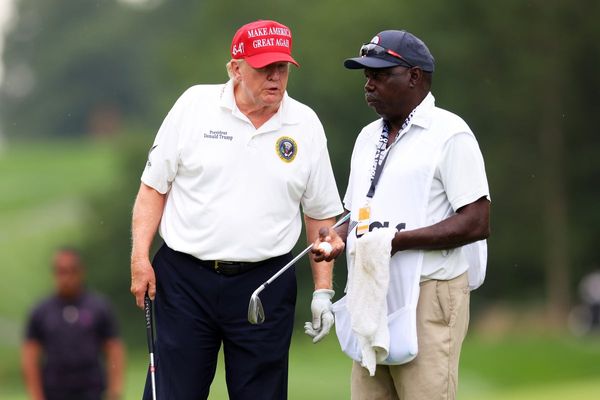
President Donald Trump's latest primetime address on election security has drawn fresh criticism after he used the nationally televised speech to revive long-running claims about the 2020 election, prompting New York Times columnist Maureen Dowd to brand him the 'world's most famous sore loser'.
US President Donald Trump has flagged a “really, really big” primetime address on election integrity, apparently doubling down on false claims that he won the 2020 vote.
— The Advertiser (@theTiser) July 15, 2026
📌 READ MORE: https://t.co/ET8pPcSSyx pic.twitter.com/UhjUC07Xqt
During Thursday night's address, Trump declassified documents that he said showed Chinese interference in US elections and renewed calls for Congress to pass the SAVE America Act. However, Reuters reported that the documents did not support Trump's central claim that Beijing altered the outcome of the 2020 presidential election, echoing previous US intelligence assessments that found no evidence foreign governments changed vote totals.
Dowd argued the speech ultimately became less about election security than the president's continued fixation on an election he has spent years insisting was stolen.
Prime Time Misfire
Dowd's column portrayed the address as a missed political opportunity, arguing that Trump failed to justify the rare decision to command national television audiences.
'When you commandeer prime time,' she wrote, 'you'd better have something prime to say.'
Instead, she described the speech as 'a dud' and 'a batty stew of whiny complaints', arguing that Trump once again allowed grievances over the 2020 election to overwhelm what could have been a broader message about election security.
Reuters reported that Trump centred much of the address on allegations of Chinese interference while repeating claims that the 2020 election had been 'rigged', despite previous intelligence findings rejecting assertions that Beijing altered the outcome. The president also urged lawmakers to pass the SAVE America Act ahead of November's midterm elections.
The speech came as several major US television networks declined to air it live on their primary broadcast channels, with some instead streaming it online or offering fact-checking alongside coverage.
An Unshaken Obsession
For Dowd, the speech reflected something larger than a single disappointing television appearance.
She argued that Trump's continued focus on the 2020 election has become a defining feature of his presidency, writing that he had reduced 'the grandeur of obsession to something pathetic'.
That criticism aligns with the broader political backdrop surrounding Thursday's address. Previous reports note that the Trump's administration has continued pressing election-related proposals despite repeated intelligence assessments concluding there is no evidence foreign governments changed the outcome of the 2020 vote.
Trump has maintained that newly declassified intelligence reveals serious vulnerabilities within the US election system. Yet previous reports have found the released material largely revisited familiar concerns about election security rather than providing evidence supporting Trump's central allegation that the election was stolen.
Dowd also suggested the address generated little enthusiasm among Republicans on Capitol Hill, writing there was 'barely a peep' from lawmakers who appeared eager for the president to move beyond his repeated focus on 2020.
Criticism Meets Contradiction
One of the sharpest points in Dowd's column concerned the contrast between Trump's sweeping claims and the evidence released by his own administration.
While Trump presented the newly declassified documents as proof of foreign election interference, Reuters reported that the intelligence community's previous assessment remained unchanged: although foreign actors attempted to influence public opinion, there was no evidence China altered vote counts in 2020.
Dowd argued that Trump's address ultimately recycled familiar arguments without fundamentally changing the public record.
She also turned her attention to the president himself, writing that his father's distinction between 'killers' and 'losers' continued to haunt him, leaving Trump unable to move beyond his election defeat.
The columnist added that Trump often succeeds in whipping up 'Poseidon-level winds of conspiracy', but argued this latest performance lacked the same political force, describing him as struggling to sustain the alternative narrative that has energised many of his supporters in recent years.
A Familiar Political Playbook
Although Dowd's column was deeply critical, Thursday's address underscored that election security remains central to Trump's political strategy heading into the 2026 midterms.
Reports suggest that the president used the speech to renew support for the SAVE America Act while promoting the newly declassified documents as justification for stronger federal election safeguards.
Critics, however, argue the speech followed a familiar pattern: sweeping allegations, selective disclosure of intelligence and renewed claims about an election that courts, audits and intelligence agencies have repeatedly found was not altered by widespread fraud.
That broader context explains why Dowd's closing line resonated beyond the column itself. Describing Trump as 'the world's most famous sore loser', she suggested the president remains locked in a political battle over the past even as the country moves toward another consequential election.
For Dowd, the issue was not simply one speech. It was the persistence of a political strategy that continues to place Trump's unresolved grievances over 2020 at the centre of his presidency—a strategy that, despite years of investigations and official findings, shows little sign of changing.