Aug. 07--Immigration officials urged a judge to reconsider her ruling to release hundreds of women and children from immigration detention facilities, warning that it would result in an uptick in border crossings, Department of Homeland Security officials said in a written response to the court late Thursday.
The ruling "would greatly impact DHS's operational capacity and its ability to secure the borders," they stated, adding that border officials have already seen increased border crossings of unaccompanied children and families this summer, especially in the Rio Grande Valley.
Obama administration officials also signaled that the ruling could force immigration officials to "separate parents and their children by detaining the parents and releasing the children" from immigration detention. Immigrant rights groups on Friday denounced the filing, calling it indefensible.
The filing is a response to a July 24 ruling by U.S. District Judge Dolly Gee, who found the family detention facilities "deplorable," stating that federal authorities were in serious violation of key provisions of an 18-year-old court settlement that put restrictions on the detention of migrant children.
Interested in the stories shaping California? Sign up for the free Essential California newsletter >>
The ruling has left questions about what the U.S. will do with the large number of children and parents who crossed the border from Latin America during a Central American exodus last summer.
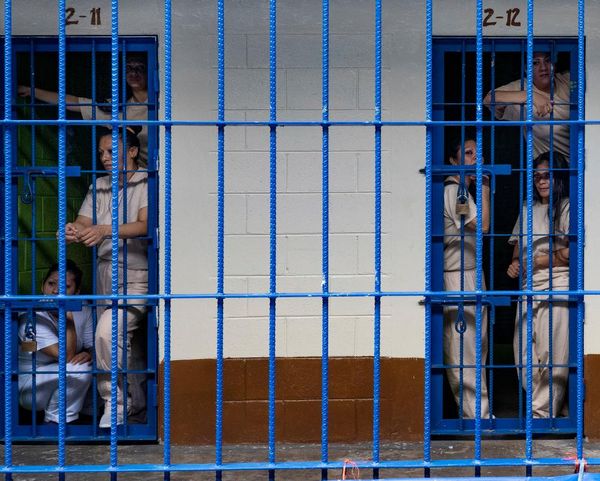
Currently, the Obama administration is detaining about 1,700 parents and children at three facilities, two in Texas and one in Pennsylvania.
In a 60-page response, federal officials begged Gee to reverse her ruling, stating that immigration officials are in the process of transitioning their detention facilities into "processing centers" where families are held for a relatively short period.
"The vast majority of recently detained individuals for whom detention is discretionary, e.g., individuals who have been found to have a credible or reasonable fear or are otherwise in standard removal proceedings, are being released," federal officials stated.
Federal officials also submitted their own proposed order, where one of the measures calls for processing times of families to improve. They said they anticipate that the average hold time for families found to establish credible or reasonable fear or return to their home countries would be no more than an average of 20 days after a claim of fear is made.
In her ruling, Gee had blasted federal officials, saying that children had been held in substandard conditions at the two Texas detention centers. She found "widespread and deplorable conditions in the holding cells of Border Patrol stations." In addition, she wrote that federal officials "failed to meet even the minimal standard" of "safe and sanitary" conditions at temporary holding cells. Federal officials contested her findings, stating that they had provided evidence that they were in compliance with safety and sanitary regulations and policies.
The judge had indicated that she planned to enter a nationwide injunction requiring Department of Homeland Security to come into compliance with a 1997 settlement -- better known as Flores -- that set specific legal requirements for the housing of immigrant children.
Peter Schey, president of the Los Angeles-based nonprofit Center for Human Rights and Constitutional Law, predicted that the judge will once again side with immigrant children and families, because nothing the government filed this week was surprising or new.
"They are requesting that the court completely rewrite the Flores settlement and they have no factual basis for that -- there is no surge, there has not been a surge for quite some time," Schey said, calling the government's position "morally indefensible and legally indefensible."
"We believe that the court is going to rule that the government is in violation, is in breach of the Flores settlement, and that it will require them to come into compliance. That will mean mothers who are not a significant flight risk or a threat to national security cannot be detained," he said.
Laura Lichter, a Denver-based immigration lawyer who has been volunteering since April with the CARA Pro Bono Legal Project at the family detention center in Dilley, Texas, said the government's filing portrayed a "kinder, gentler" form of family detention that doesn't match what she has seen, even with reforms federal officials claim to have made in recent weeks and months.
"The type of detention being described in this response simply doesn't exist," said Lichter, past president of the American Immigration Lawyers Assn.
She cited longstanding problems with family detention legal, medical and other services that have led to complaints and lawsuits by those detained.
"There are continuing medical issues happening on a daily basis" at family detention centers, Lichter said, adding that "it is baffling that the government has dug in and dug in so deep to this process of detaining families."
Last summer, as an unprecedented number of women and children from Central America crossed the Southwest border, Homeland Security Secretary Jeh Johnson ordered that immigration authorities dramatically expand the number of detention beds for families.
Johnson said at the time that he wanted to send the message that if people come to the U.S. illegally, they would be detained and then sent home. In addition, individuals held in detention are placed in an accelerated docket in immigration courts and can be removed from the country more quickly.
More than 68,000 people were apprehended along the border in fiscal year 2014. They were detained while officials decided whether they had a right to stay. Initially, many were released with orders to appear at immigration offices throughout the country, because there weren't appropriate facilities to house families. Then the Obama administration opened new detention centers for mothers and children.
Many of the Central American families and children who crossed the Southwest border last summer were fleeing crushing poverty and escalating gang violence. The exodus was also partly fueled by rumors in their home countries that unaccompanied children and single parents with at least one child would be allowed to stay.
Some people who crossed were apprehended, while others surrendered to border enforcement officials and requested asylum, which is within their rights under U.S. and international laws.
In reaction, the Obama administration expanded detention centers for families, and the court system -- already grappling with a backlog of cases -- became even more bogged down. Hundreds have been ordered removed, some have been released. Mothers and children are still detained at two Texas facilities -- one in Dilley, another in Karnes City, both run by private companies under contract with Immigration and Customs Enforcement. A third, in Berks County, Pa., is run by the county.
The Flores vs. Meese settlement requires the U.S. to release immigrant children or house them in the "least restrictive environment." Juvenile immigrants cannot be detained for more than an estimated 72 hours unless they are a significant flight risk or a danger to themselves or others. The children must be released to a parent or legal guardian.
One of the arguments federal officials made was that the settlement did not apply to children who are accompanied by parents. Gee disagreed. Still, federal officials made the same argument in Thursday's ruling and made several warnings throughout their response.
"Specifically, the proposed remedies could heighten the risk of another surge in illegal migration across our Southwest border by Central American families, including by incentivizing adults to bring children with them on their dangerous journey as a means to avoid detention and gain access to the interior of the United States," they stated.
Although the number of family members apprehended has fallen by 55% for fiscal 2015, Homeland Security officials said that the number of apprehensions this summer is still substantially higher than has been the case for many years.
"Moreover the numbers have increased steadily each and every month from January to July, which is a deviation from historical trends," they reported.
@mollyhf
MORE ON IMMIGRATION:
Paid $1 to $3 a day, unauthorized immigrants keep family detention centers running
Immigrants object to growing use of ankle monitors after detention
Mother who fled Honduras 'to escape abuse, mistreatment' says 'it's the same' in U.S.
UPDATE
12:23 p.m.: This articlehas been updated with comments from immigrant rights organizations.
This article was originally published at 3:38 a.m.