
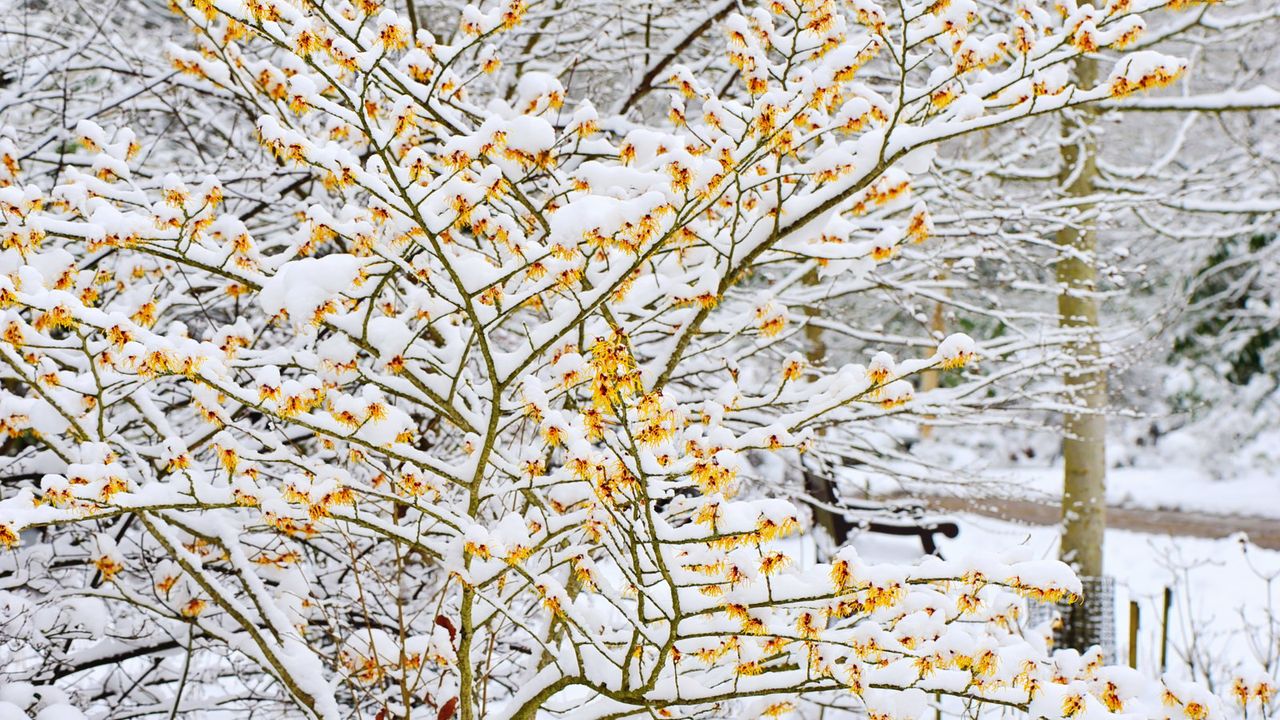
Some trees and shrubs are more vulnerable to snow than others. Some can cope with heavy snow, while others may be permanently damaged. It pays to know which plants to always remove snow from to prevent these plants from getting permanently damaged in winter.
The dangers stem from the fact that some shrubs are more brittle, or their growth habit causes them to hold more snow. More snow equals more weight, and, understandably, it can lead to snapping or major structural damage.
If you wonder whether you should remove snow from plants, the answer is yes, but not all of them. Know the difference between those that can tolerate snow and those susceptible to damage that require prompt action. To help you identify those more vulnerable plants in your yard, this guide reveals shrubs to always remove snow from and some susceptible trees, so they can survive winter unscathed.
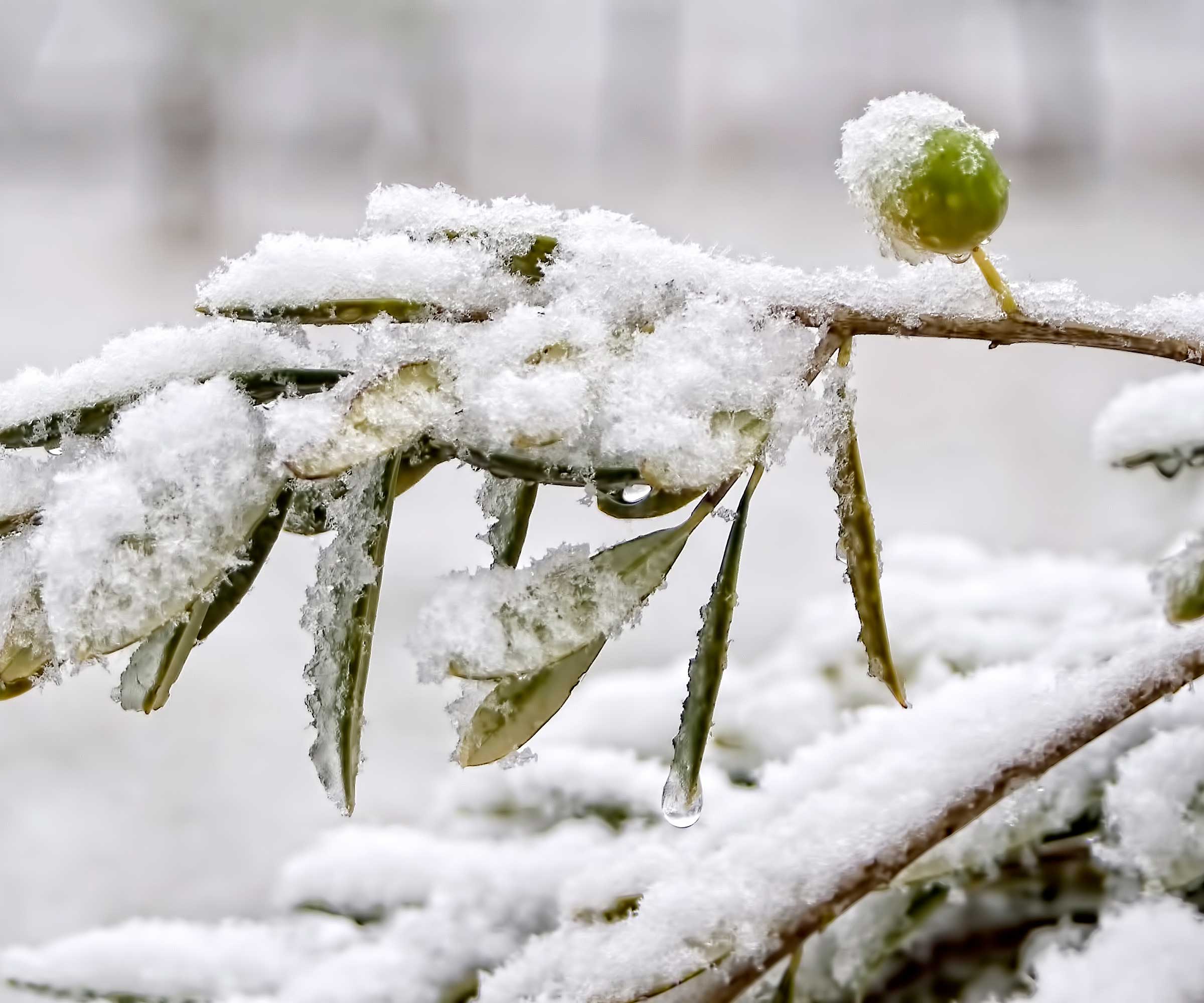
Trees and Shrubs to Always Remove Snow From – Take Fast Action
Evergreen shrubs are more susceptible to snow damage than deciduous shrubs, as they retain their leaves, and this causes them to accumulate more snow.
However, it does not mean that you can turn a blind eye to all deciduous shrubs, as some brittle wood can snap even under the weight of moderate snow.
You should always act fast after heavy snowfall to clear shrubs, as the weight can take an effect quickly, and it can only get worse if you leave that snow to turn to ice.
You can protect shrubs and trees ahead of winter by wrapping them in frost cloth or plant covers, such as these fleece plant covers at Walmart. And when heavy snow comes down, it pays to remove it from vulnerable plants quickly.
Upright Conifers
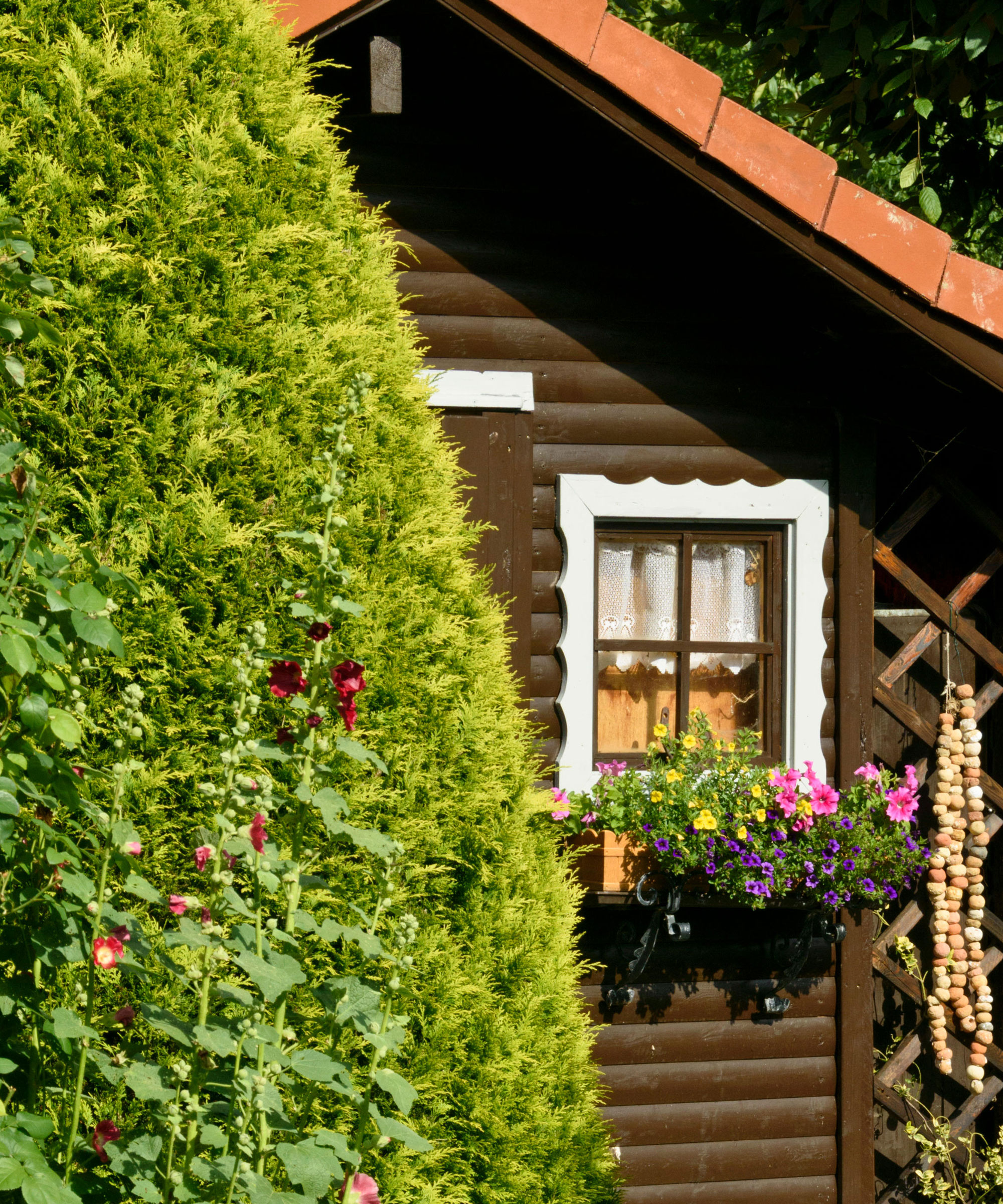
Conifers with upright and columnar growing habits are highly vulnerable to heavy snow and top the list of trees and shrubs to always remove snow from.
The dangers that face upright forms of conifers, like arborvitae, juniper, cypress, spruce, and hemlock, are that they catch a lot of snow. This causes their branches to bend. As the branches are only moderately flexible, they can easily suffer breakage under the weight of snow.
Even if they don’t snap, it can cause them to become permanently misshapen, which can cause problems when they are used in formal garden designs or as plants for topiary.
Jo Ellen Meyers Sharp, a vastly experienced garden writer, coach, and speaker known as the Hoosier Gardener, explains how arborvitae is highly susceptible, and what some gardeners do to avoid issues.
‘Arborvitae can be particularly problematic because snow-laden branches get bent out of shape,’ she says. ‘In northern climates where there are heavy snows, some people wrap the arborvitae with heavy twine to keep the branches upright.’
‘Arborvitae in northern climates are also protected from snow damage by wrapping them with burlap,’ she adds. You can get balls of super-tough natural twine at Walmart and burlap rolls at Amazon if you are considering wrapping your conifers for winter, too, to protect plants from frost and snow.
Broadleaf evergreens
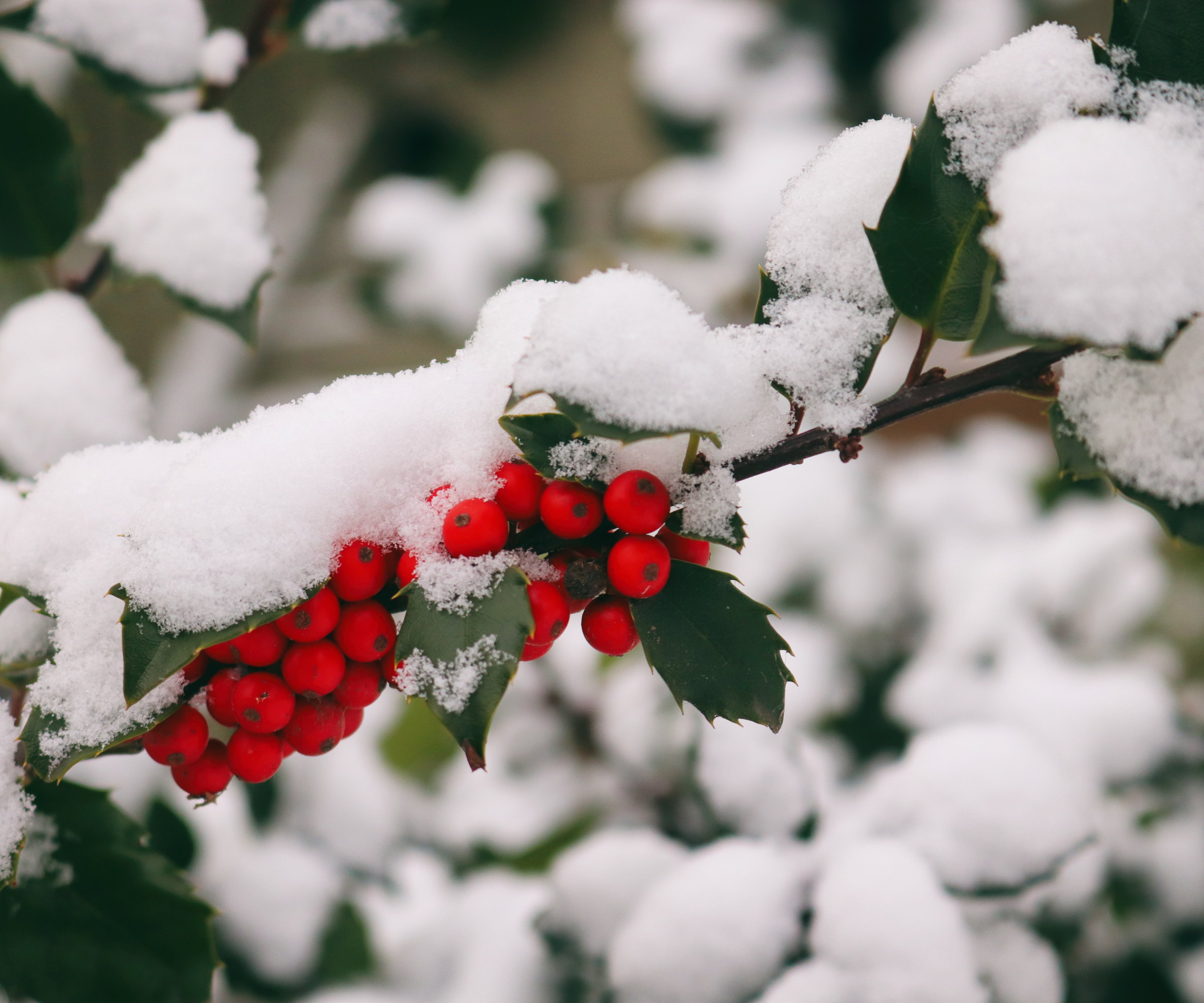
Broadleaf evergreens are those that retain large, flat leaves throughout the year. The surface areas of those leaves allow for a great deal of snow to accumulate, exerting huge weight on the shrub and putting it under great stress.
As Patrick Martin, a seasoned gardener and founder of the Frantoio Grove olive farm, warns: ‘The likes of boxwood, holly, rhododendron and azalea, cherry laurel, camellia, photinia, and hebe hold snow and ice on their leaves, which can bend branches, tear bark, and deform the shrub.’
Landscaping with evergreens is a popular way to transform a yard. As evergreen plants and shrubs are so versatile, you may have several doing various jobs, from acting as focal points in flower beds to providing screening for privacy.
However, even the easiest evergreen shrubs can be damaged after heavy snowfall. This is why you want to remove snow quickly, and not let more than an inch or two sit on the shrub. Carefully brush the snow away, rather than shaking the branches, which runs the risk of snapping frozen limbs.
Multi-stemmed shrubs and trees
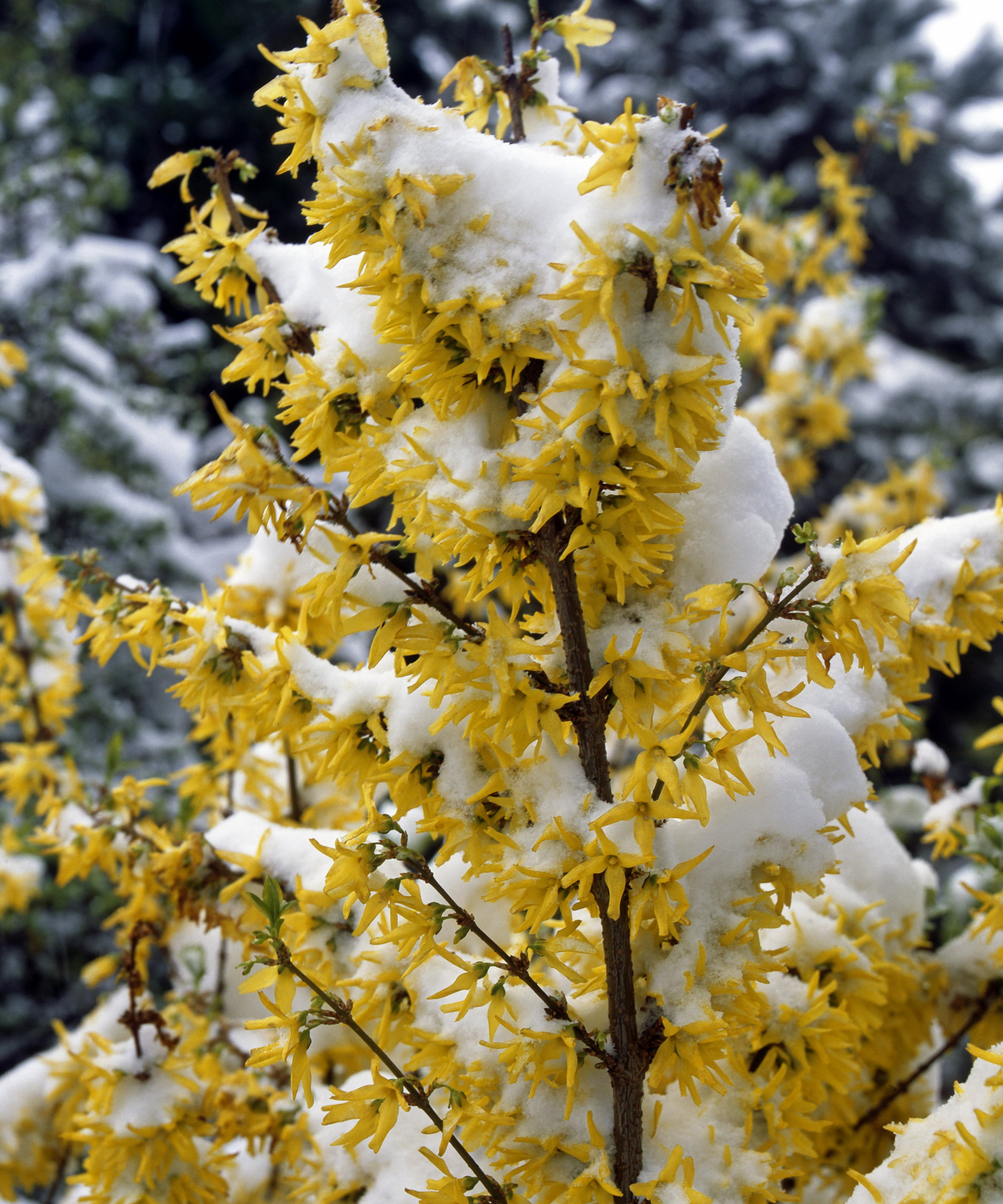
Though evergreens face the greatest danger, heavy snow can also cause massive damage to multi-stemmed and delicate deciduous shrubs. If you have these in your yard, you must always remove snow from them.
As some of these are hugely popular flowering shrubs, which can offer glorious blooms and make ideal plants for pollinators, you don’t want to risk them succumbing to harm.
‘Hydrangea, forsythia and lilac all have delicate branches,’ warns Peter Ivanov, a gardening expert from Fantastic Gardeners. ‘Their branches can snap under the snow’s weight, leaving unsightly breaks or reducing next season’s blooms.’
The risk with multi-stemmed shrubs and trees is that they are structurally suspect, and the accumulation of weight can cause major issues. Trees that might require snow clearance because of their growth habit include white pines, silver maples, poplars, elms, and holly.
As Peter Lowe, Garden Program Manager at The Dawes Arboretum in Newark, Ohio, says: ‘A tree or shrub with V-shaped branches that point upward to the sky creates a ‘crotch' and is easily split with snow.’
When there is a lot of snow, simply use a broom (such as this soft broom at Walmart) and gently brush it away in a downward fashion from branches and weak crotch points, taking care not to drop it onto lower branches and damage them.
Bamboo
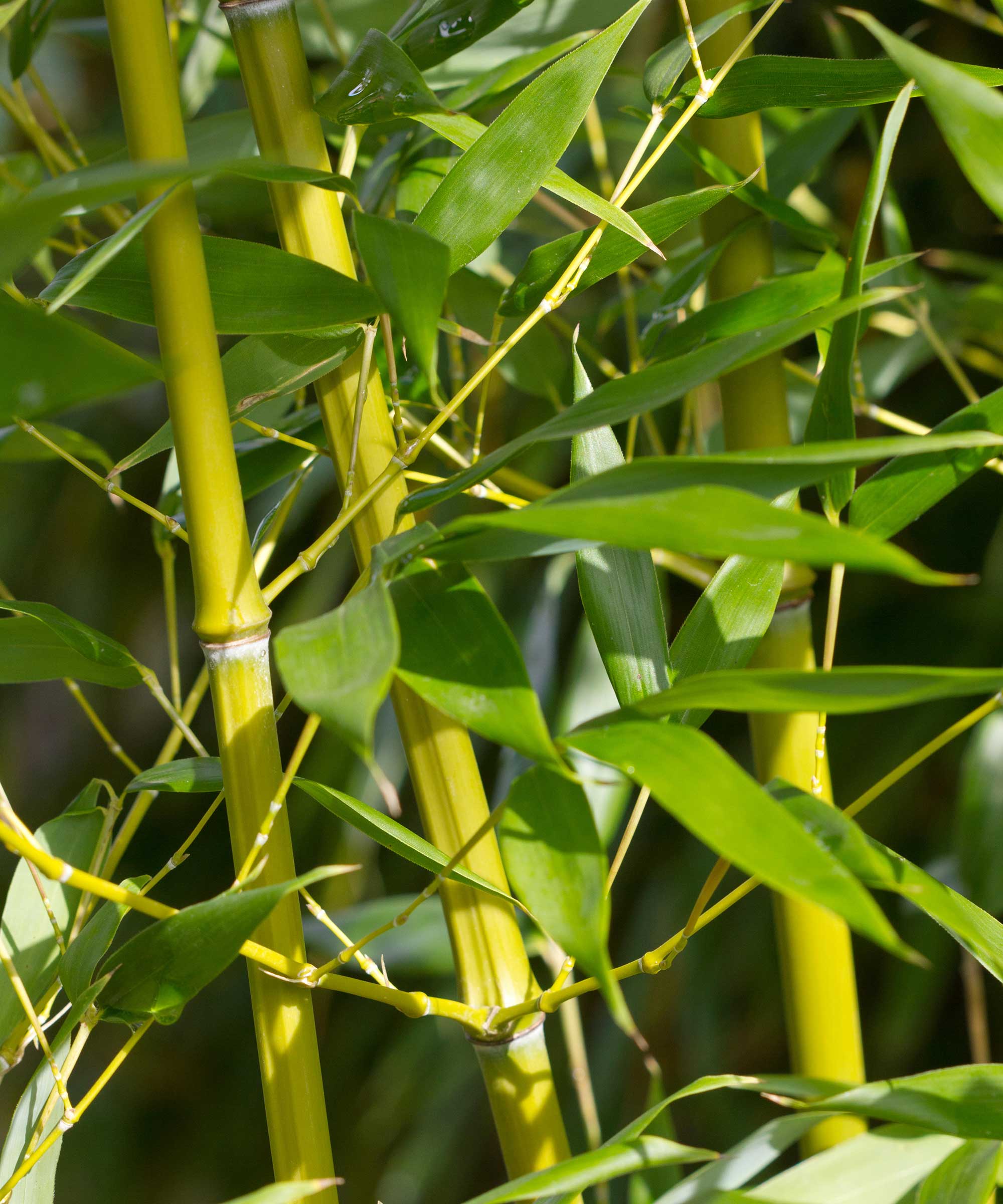
Bamboo comes with a reputation, but there is no denying the ornamental impact it can have in a yard, offering beauty as well as movement as the canes gently sway. Of course, all this is provided you buy the right variety or create barriers to stop bamboo from spreading.
When you do grow bamboo, removing heavy snow from it is important. Bamboo will bend under the weight of the snow, and, although it is flexible, too much weight can cause the stems to bend too far, resulting in them cracking, splitting, or snapping.
Even if the snow only causes bending rather than splitting, there is no guarantee that they will redress themselves once the snow thaws. You could be left with permanently misshapen bamboo as an eyesore in your yard.
Gently clear the snow with a broom. This is always better than shaking the stems, as they can be brittle and frozen, and the entire cane may snap due to excessive force. If any canes are damaged, hold off cutting bamboo down until the snow and ice thaw.
Cold-hardy tropicals
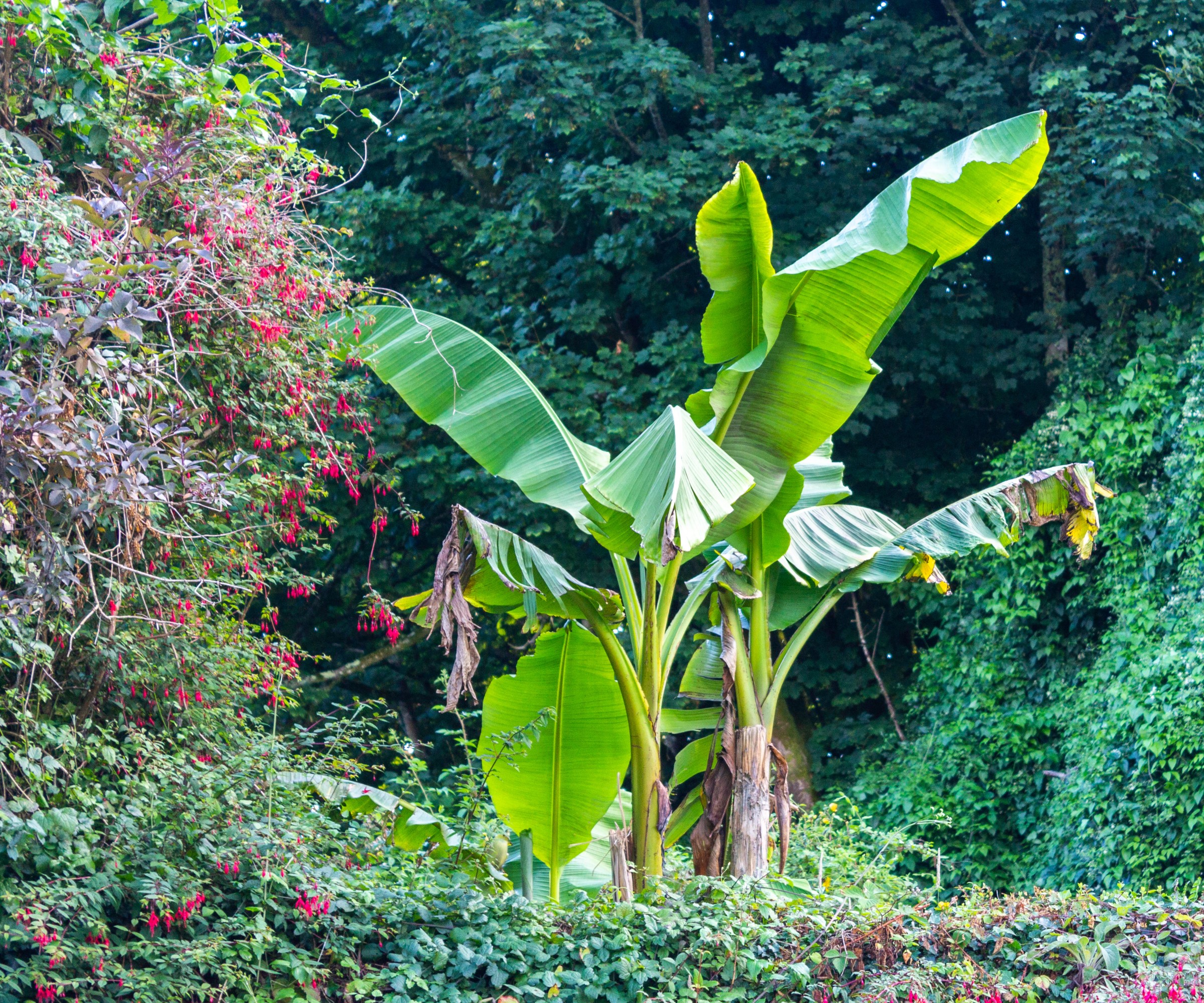
The term cold-hardy may lull some gardeners into a false understanding. While tropical plants undoubtedly need warmth and won’t like cold weather, hearing ones described as cold-hardy tropicals may mistakenly make you believe they can handle the winter elements.
However, the reality is that, while they can withstand lower temperatures, the weight of the snow risks the likes of cold-hardy avocados and bananas succumbing to snapped branches, split bark, and tissue damage.
Noah Aguilar, owner of Everglades Farm in Homestead, Florida, grows thousands of cold-hardy banana trees and avocados each year and warns that these plants can’t handle the snow and are ‘highly vulnerable to limb breakage’ when snow and ice accumulate on the leaves.
‘Avocados and bananas simply aren’t built to hold that kind of weight,’ says Noah. ‘Their leaves trap snow, their branches bend quickly, and you can lose an entire season of growth if the snow isn’t knocked off right away.’
‘For home gardeners growing tropical trees in colder states, we always recommend covering the tree during freezes to protect the leafy crown or top layer and prevent long-term damage.’
If you want to overwinter banana trees or protect avocado trees in winter in colder regions, covering them with burlap or frost cloth (such as this winter plant cover at Amazon) shields the canopy from cold damage and any build-up of snow.
You’ve seen how important it can be to remove deep snow from trees and shrubs, but what about when it accumulates on a lawn? Some snow on a lawn can actually provide moisture and insulate the grass, but it becomes an issue when it sits in a thick, compacted layer for long periods.
If you wonder what to do with snow on grass, consider how much snow you get and the impact that clearing it will have. When it is a thin layer, leave it be. A prolonged, thick layer can be removed in extreme circumstances, but it must be done carefully with a shovel or snow blower to avoid damaging the grass underneath.
Shop products for clearing snow from your yard
This snow shovel is ideal for manually removing snow from paths and small driveways. The blade width is 20 inches for more efficient clearing, and it weighs just 4.22 lbs.