Pity poor Desmond. And woe indeed is Thora. These days, only Geoff and, at a pinch, Attila will do.
It was reported this week that more than three-quarters of all graduate employers won't consider anyone with less than an upper-second-class degree. With more than 70 applicants for every vacancy, against 30 before the downturn,, 76% of firms surveyed said a 2:1 was a minimum requirement. A decade or so ago it was 54%.
This is not good news for anyone who emerges from university, as I did, with what then was known, with an affection born of more optimistic economic times, as a drinker's degree: a lower second. (Even more admirable, obviously, because it was reserved for the truly dedicated dosser, was a gentleman's or third-class degree.)
These days, degrees have different names, derived from rhyming slang: a 2:2, it seems, is a Desmond, after archbishop Tutu; a third is a Thora, after the actor Thora Hird, or a Douglas, after the former Tory foreign minister; a first is a Geoff for the footballer, or a Damien for the artist; and a 2:1 a Billy after the wrestler Billy Gunn, or an Attila, after the Hun.
More alarmingly, though, they actually seem to matter. Once, if you weren't merely idle or ignorant, a third-class honours degree was practically a guarantee of greatness: WH Auden, Lewis Caroll, AA Milne; Stanley Baldwin, Sir Alec Douglas-Home; more recently, David Dimbleby, Christopher Hitchens, Hugh Laurie.
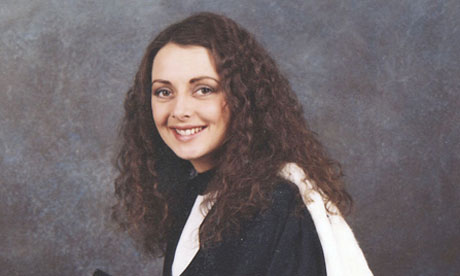
Even Carol Vorderman, a proud member of the "Nines Club" at Cambridge (she got a third in each of her three years of studies) later presented Countdown and became David Cameron's maths tsar – neither, I'm sure you agree, a negligible achievement.
Now it seems you need a 2:1 or better even to get an interview with Marks & Spencer. This is unfair. As Michael Morpurgo, another genius with a gentleman's degree, puts it apropos of teaching: "The class of a degree may be useful as part of the selection process, but only as part of the process. It is aptitude ... that is far more important."