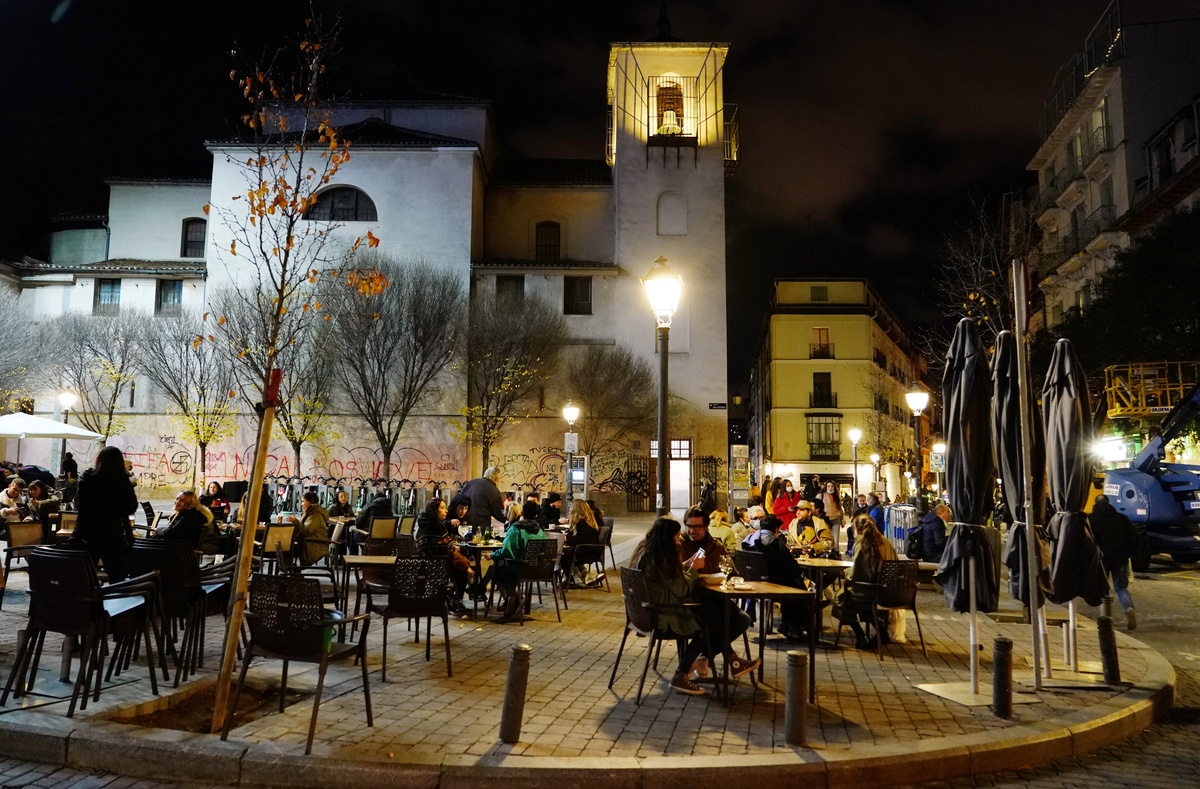
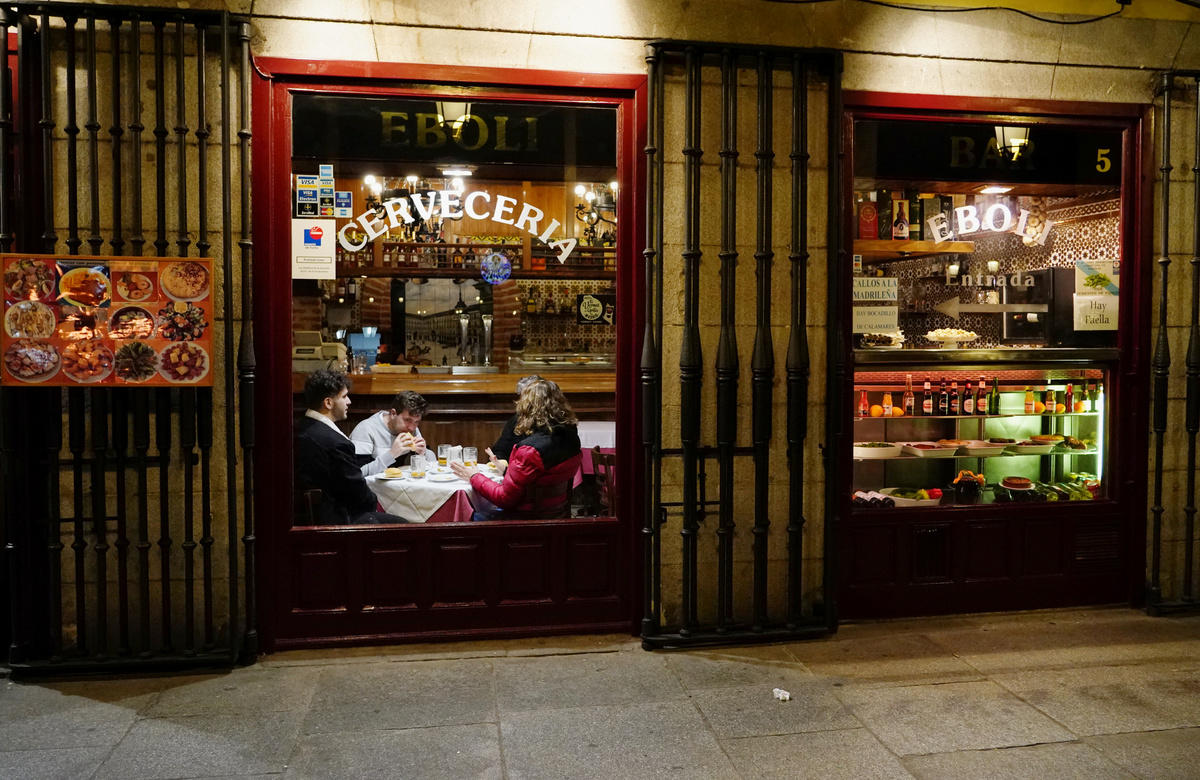
A long line of young people, many maskless and smoking, queue to enter a trendy Madrid bar in an evening scene common across the Spanish capital's bustling centre.
Madrid, one of Europe's worst COVID-19 hotspots at the start of the pandemic, has progressively reduced its spread during a second wave without closing down clubs or shops like other major cities trying to keep curb infections before Christmas.
With an average notification rate of 244 cases per 100,000 inhabitants over the last 14 days, according to the European Centre for Disease Prevention and Control, the Madrid region is back to levels seen before the second wave started.
And the level is barely above the national average, despite much of the rest of Spain having tougher restrictions.
The data are puzzling, four senior scientists told Reuters, with one possibility for the relatively low numbers the fact that Madrid was so badly hit in the first wave that more people have some degree of immunity.

Antigen tests may also have helped, the scientists said, while warning that nobody should stop taking precautions.
"Miracles in science don't happen" Manuel Franco, a professor at the University of Alcalá and researcher at Johns Hopkins University in Baltimore, said.
A nationwide study this week showed that almost 19% of Madrid's residents have had COVID-19 antibodies, the highest proportion in Spain and almost double the national average.
"There is no herd immunity, at least not in the whole region, but in certain places the whole cluster may already be infected and this makes it more difficult (for the virus) to reach other groups," Elena Vanessa Martinez, head of the Spanish epidemiological society, added.
THIRD WAVE?
The presence of antibodies is particularly high in groups that were hardest hit in the first wave, such as nursing homes, where more than half of the residents and at least 37% of staff have had COVID-19 antibodies, another study showed in November.
The greater the penetration of the virus in the first wave, the lesser the impact in the second, Daniel Lopez Acuna, a former director of Health Action in Crisis at the World Health Organisation, said.
"The factor of high immunity is decisive, but it is not the only one," he said, adding that this could help explain why countries that suffered less in the spring, such as Germany, are now being harder hit.
The scientist warned, however, that the absence of tougher measures could mean that a possible third wave of infections could affect Madrid before other places.
While the outbreak's spread has slowed, it took Madrid 10 weeks to get down to the current level of infections, they said, comparing this to the Paris' Ile-de-France region, for example, which did the same in five weeks with harsher restrictions.
A slower decline in case numbers means hospitals and intensive care units were under pressure for longer, they said.
And Madrid's downward trend has already faltered, with an upward surge in new cases in recent days.
"Over time, the virus reorganises itself again and finds other ways," Martinez warned.
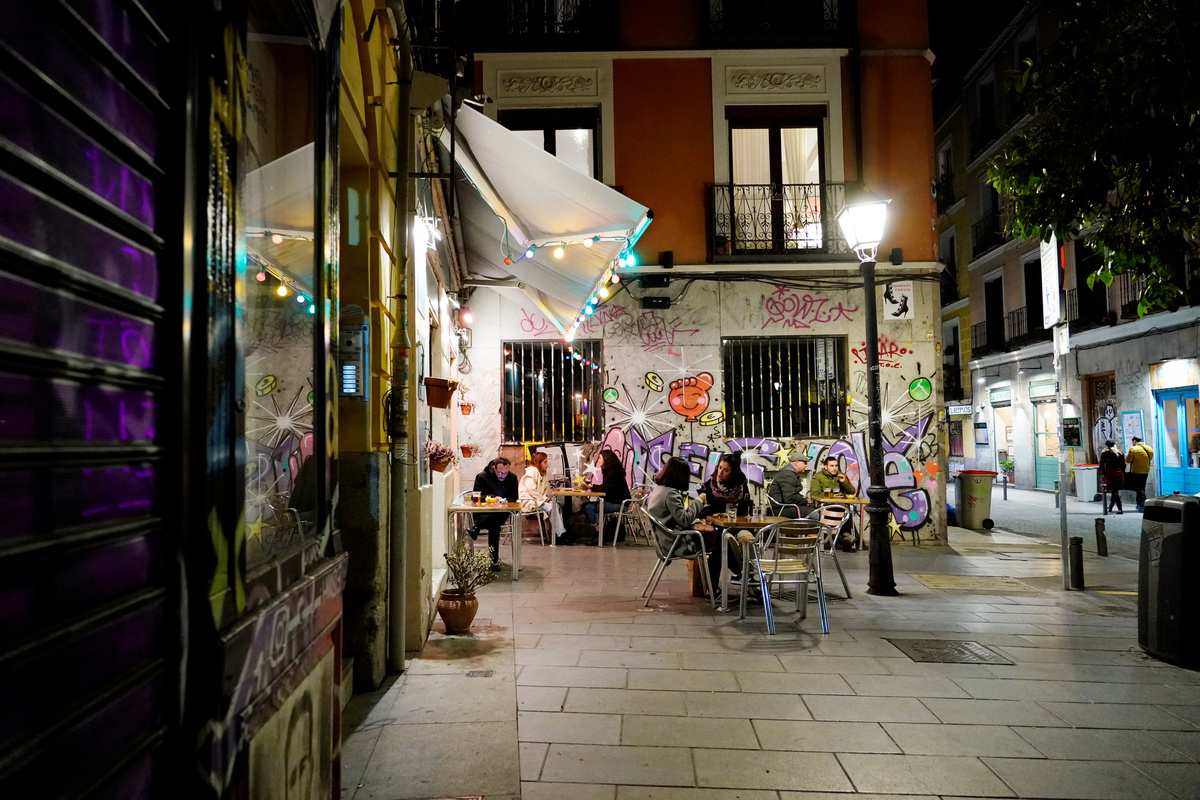
On Madrid's bustling streets, residents have mixed feelings.
"They should be more strict," said IT engineer Judith Casal, adding that normal year-end holiday activities like ice skating should be closed.
But for pensioner Carmen de Diego, Madrid's lighter restrictions feel like a liberation.
"I'm trying to go to the movies and the theatre more than ever, to help the economy," she said.
(Reporting Belén Carreño; Additional reporting by Silvio Castellanos and Kate Kelland; Editing by Ingrid Melander and Alexander Smith)