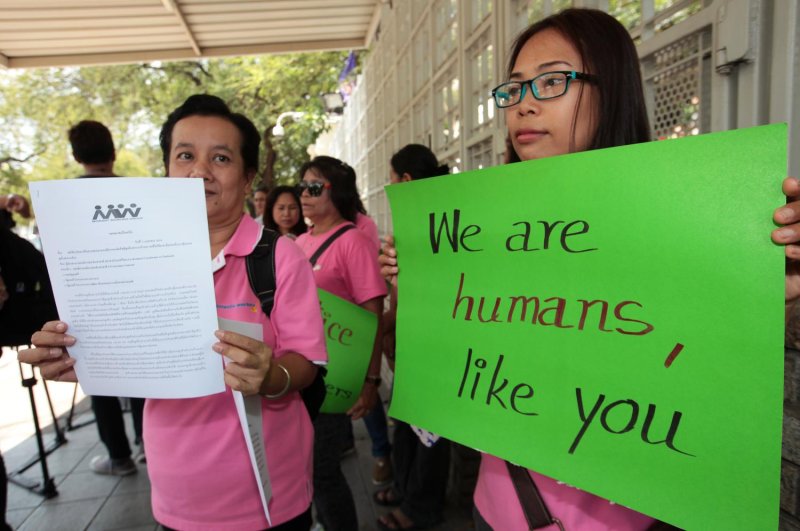
Fifteen years ago on June 16, on a sunny June day in Switzerland, millions of domestic workers worldwide gained the recognition they had long deserved.
A Thai delegation comprising the government, employers and workers was part of that momentous day, where the Domestic Workers Convention 2011 (No. 189) was adopted by consensus at the International Labour Conference.
The Domestic Workers Convention created a foundation for change when it recognised domestic workers as workers, entitled to the same rights and protections as other workers.
In the fifteen years since its adoption, globally, there has been at least a 15-percentage point increase in the number of domestic workers recognised under labour laws.
Domestic workers in Thailand, both Thai and migrants, play a critical role in sustaining families, societies and the economy. They clean homes, cook meals, guard households and tend to gardens. They also care for children, the elderly and disabled in need of care and support. In Thailand, as elsewhere, a significant majority of domestic workers are women.
In April 2024, Thailand took a momentous step with the reform of its own regulations on domestic work. Ministerial Regulation No. 15 governing working conditions of domestic workers provides labour and social protection to domestic workers nearly on par with other workers.
They are now entitled to minimum wages, eight-hour workdays and an additional one-hour daily break. They now also have maternity protections -- including 120 days of maternity leave and protection from being fired because of their pregnancy.
Yet despite this progress, challenges remain.
More needs to be done to create greater awareness of the rights and responsibilities established by the regulation amongst employers and domestic workers alike. Also, since domestic workers in Thailand are not covered by the mandatory social security scheme, they and their families lack income security in the event of sickness, old age, disability or death.
Today, protecting domestic workers is more urgent than ever. Demand for domestic work is growing, especially given the ageing population and with more Thai women joining the labour force.
The International Labour Organization (ILO) estimated last year that at least 70 per cent more at-home caregivers will be needed for the elderly by 2037. Many of these would need to be migrants from neighbouring countries, as fewer and fewer Thai nationals are entering domestic care work.
The question now is how we can continue to improve conditions and ensure domestic workers actually receive the rights that Thai law provides.
The government is committed. Recently, the labour inspectorate engaged in a strategic compliance planning workshop on domestic work to explore ways to promote improved compliance with Ministerial Regulation No. 15.
Specialised training and standard operating procedures for labour inspectors, given the unique challenges of the sector, have also been developed with ILO support.
Domestic workers' right to organise, a key plank of the Domestic Workers Convention, is also improving. The Network of Domestic Workers in Thailand, an affiliate of the global International Domestic Workers Federation, has over 1,000 members and many other domestic workers are organised through informal groups.
Thailand has already taken the steps that matter most. The advent of Ministerial Regulation No. 15 in 2024 brought the substance of the Domestic Workers Convention into Thai law.
Extending social security coverage to domestic workers, which is already under consideration, would close the remaining gap. Ratification of the convention is the natural next step: it consolidates Thailand's reforms, makes them permanent, and places them on the international record. It also signals to the region that Thailand's commitment to domestic workers is not just a policy choice but a legal one.
Domestic workers are the bedrock of the economy and provide essential care services that enable hundreds of millions of women and men to participate in the labour market and in their family lives. Now is the time to ensure that domestic workers themselves enjoy a firm foundation of decent work. Our collective well-being depends on it.
Xiaoyan Qian is the International Labour Organisation Country Director for Thailand, Cambodia and the Lao People's Democratic Republic. The article marks the 15th anniversary of the Domestic Workers Convention, which falls on June 16.