Last month, during domestic violence awareness month, we ran a series of stories about the difficulties that abused women face at home and at work. Readers brought us their questions. The Guardian partnered with the Women’s Information Service, WISE, to answer your questions on the topic. WISE is a regional organization that has been working to end domestic and sexual violence and stalking for over 40 years. Below are the reader questions and answers from Peggy O’Neil, executive director at WISE.
What would make it easier for victims to seek help?
First, connect with your local domestic violence program and get involved. There is an international network of program. Check out hotpeachpages.net to find the one nearest your home. Ask how you can help the program and support victims in your own community.
Educate yourself and others – read the series of articles that the Guardian has produced this week, watch Private Violence (and any number of other documentaries and films about the culture of violence), attend trainings and events put on by your local programs, and share what you’ve learned with others. Help raise the community dialogue about domestic violence and the impact it has on the world. Isolation and silence breed domestic violence. Become and stay informed.
Before you speak, think: “Would a victim feel blamed by this?” When you become known as someone who is safe to confide in, survivors will reach out to you and share their private violence.
Always ask a survivor what they need and what is safe for them and their children and then trust them. Survivors are the experts on their life and their situation. Don’t assume that you know what other people need, or that your own experiences or strategies will safely or effectively translate to other people’s lives.

Why is it so difficult to leave? Why do victims stay?
The thing that I did not know that was so revealing to me was that anywhere between 50% and 75% of domestic violence homicides happen at the point of separation or after [the victim] has already left [her abuser]. ... It was always that she had tried to leave. She had done exactly what we think they’re supposed to do and she dies. And her children die.” - Cynthia Hill
‘Why doesn’t she just leave’ is a question that is often asked.
As with anything – if it were that simple, it would have already been done. For domestic violence victims, ‘just leaving’ is complex, unsafe and can be fatal. According to the United States Institute for Justice: “One in five women killed or severely injured by an intimate partner had no warning: the fatal or life-threatening incident was the first physical violence they had experienced from their partner. A woman’s attempt to leave an abuser was the precipitating factor in 45% of the murders of women by their intimate partners.”
Leaving an abusive relationship isn’t easy, for many reasons. Here are 50 reasons why victims stay. Please take a few minutes to peruse the list and ask yourself, how hard would it be for you to leave?
If you experienced police intervention (eg a neighbour called the police in response to hearing/seeing domestic violence), did it help improve your situation in any way?
This is a really important question.
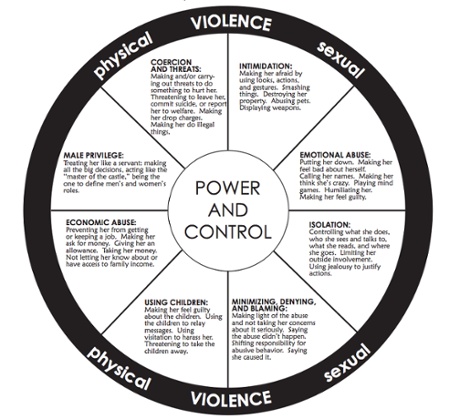
The first thing is that law enforcement is limited in their possible response based on whether or not a documented crime has occurred. This means generally that police have very few options to help survivors until a crime has occurred, and that standard is usually physical violence. We know that so much of domestic violence is manipulation, coercion, and does not leave physical wounds, and so the criminal justice system very often is unable to provide meaningful redress. Furthermore, often when police do intervene, the perpetrator may make bail and be free later that night and even more determined to prove who is in control. They may be unable to provide actual safety for survivors, so often survivors may decide that they are safer not involving law enforcement.
It’s important to acknowledge that while many of us assume that justice systems will be just, all systems were created by people who have their own biases. Domestic and sexual violence are still dramatically misunderstood, and people unfamiliar with the issues can make assumptions that dramatically undermine their efficacy to redress the crimes.
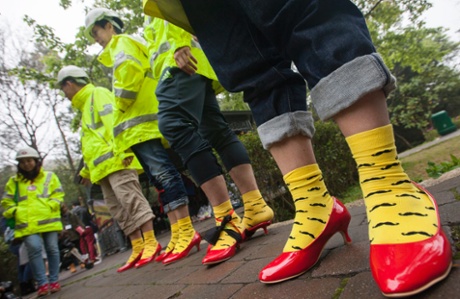
What do you think of the current practice of treating domestic violence as a one-way street and focusing exclusively on male abusers/female victims?
These questions about gender come up often, and most recently developed into the popular and interesting #NotAllMen #YesAllWomen conversations on Twitter and beyond. Domestic and sexual violence impact everyone and the root causes of violence produce negative effects for men, women, children, and people who live outside of the binary. Everyone is affected, so everyone must be part of the solution.
Overwhelmingly these crimes are perpetrated by men - three quarters the perpetrators of family violence are men- and against women, who are 86% victims of abuse by partners. This is not to say that other variations of the experience don’t exist, just that at most they make up 10% of the issue at hand – not insignificant, but the imbalance is notable.
Having said that – men are experiencing violence. In the United States one in 71 men are sexually assaulted as adults, compared to one in five women. Children suffer far more: one in six boys and one in five girls, according to the Centers for Disease Control and Prevention. This means that there are huge numbers of boys who have suffered in silence, often unable to reach out at all because of the stigma around sexual assault generally and male victims specifically. Crises like the Catholic Church sexual abuse and Penn State only further illustrate this point.
There is help for men who have been abused – first and foremost the crisis centers across the country that support survivors should be support all survivors – men who have experienced violence, men who are impacted by the violence perpetrated on their loved ones, and women/child survivors. There is also online support, including 1in6.org developed specifically for men who experienced abuse as children.For more information, The National Center Against Domestic Violence has a fact sheet on male victims.
Ellen Pence, a major force in developing responses to domestic violence, spoke at length about women’s use of violence