Even as foreign institutional investors continue to pull money out of Indian equities, domestic investors are emerging as the backbone of the market, helping benchmark indices remain resilient despite global uncertainty and concerns over valuations.
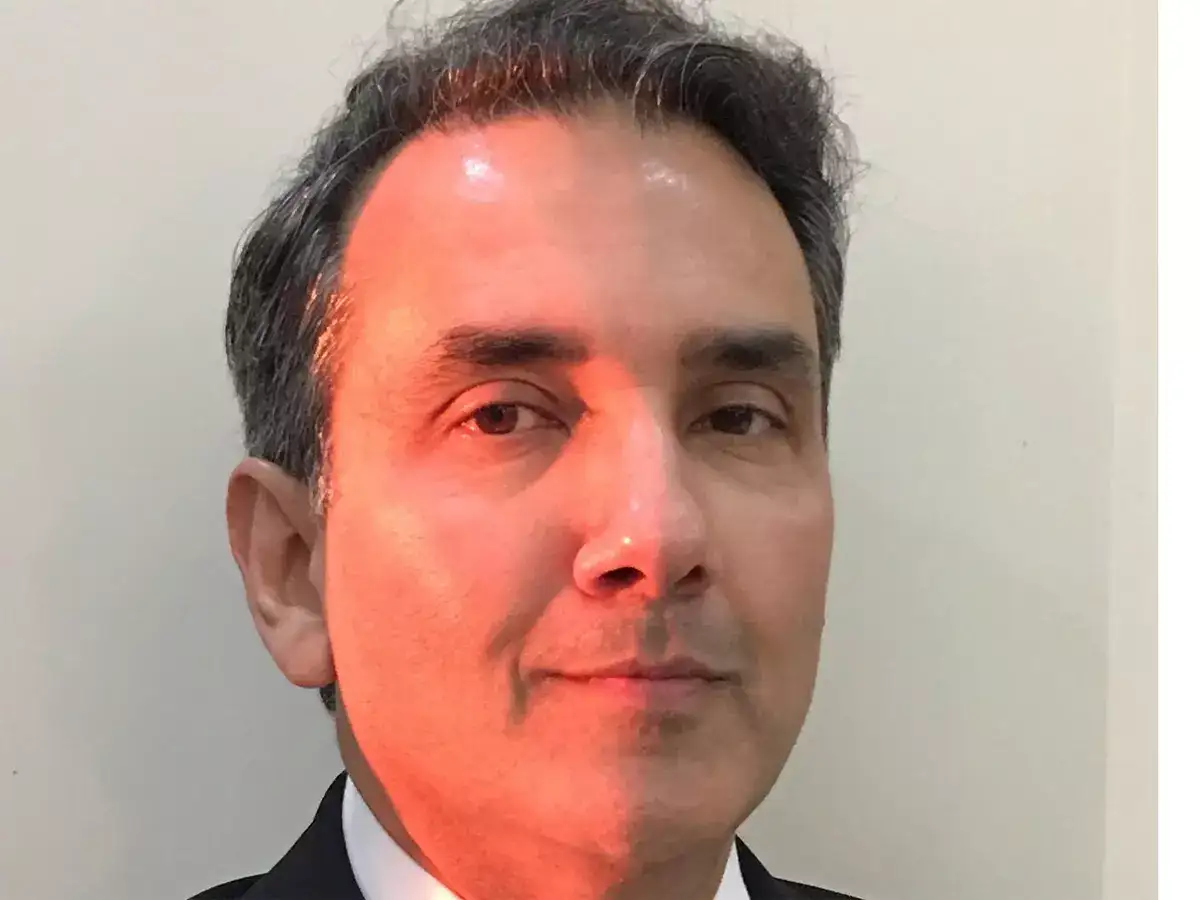
Speaking to ET Now, market veteran Gautam Trivedi from Nepean Capital drew a sharp distinction between the economy and the stock market, arguing that the two are currently moving in opposite directions.
“The fundamentals of the economy and the stock market are not always aligned,” Trivedi said, noting that such divergences are not uncommon in his three decades in the markets.
According to him, India currently appears unattractive from a foreign investor’s perspective, especially when compared with emerging markets linked to artificial intelligence and commodities. “We are the second worst-performing market year-to-date among all emerging markets. We are down on a dollar basis a negative 8% and second only after Indonesia which is down about 20%,” he said.
Trivedi explained that global investors are increasingly focused on AI-driven opportunities, particularly in markets like Korea and Taiwan, while commodity-heavy economies such as Brazil are also drawing attention. India, he said, lacks a clear AI-led market narrative that can compete for foreign capital.
“India does not have AI or commodity plays like Korea, Taiwan, or commodities like Brazil and earnings growth obviously has not been that great when back home in the US you have 17% to 18% dollar earnings growth why take a risk and go to emerging markets and out of that India,” he said.
Domestic Investors Continue To Drive Markets
Despite the continued exodus of foreign money, Indian equities have remained firm due to strong domestic participation. Trivedi highlighted that domestic institutional investors have invested nearly $35 billion so far this year, comfortably offsetting roughly $22 billion in FII outflows.
“The money flow coming in from retail investors into mutual funds, into insurance companies, and of course on top of that you have the pension funds adding as well,” he said.
He also pointed to the widening participation of retail investors across the country. According to Trivedi, India now has around 130 million unique investors, but equity ownership remains heavily concentrated in a few states.
“Five states account for 47.5% of the unique investor base. The top 10 states account for 73%, which means the equity penetration is still left in a meaningful way to spread across the country,” he said.
The sustained inflows into mutual funds, even during volatile market conditions, underline growing confidence among domestic investors. “Why did in the month of March did we see 40,000 crores of net inflows? The April numbers came out yesterday, 38.5 thousand crores of net inflows. So, that tells you that domestic investors are really not too concerned about the current economic situation and are putting money in for the long term,” he added.
Search For Better Returns Fuels Equity Participation
Trivedi believes the shift toward equities is also being driven by the lack of attractive post-tax returns from traditional savings instruments like fixed deposits and savings accounts.
“Absolutely. And also do not forget here you pay long-term capital gains on your capital gains whenever you make them unlike in bank it is full tax so whether it is an FD or a savings account, so there is also a bit of a tax arbitrage here if you can call it that,” he said.
Power, Hospitality, Exporters Among Preferred Bets
On sectoral opportunities, Trivedi said he remains positive on power, data centre-linked businesses, hospitality and exporters.
He pointed to the strong performance of Indian Hotels Company Limited as an example of the hospitality boom underway in the country.
“You saw the numbers that came out yesterday from Indian Hotels, they were blockbuster and of course, since Puneet Chhatwal has taken over the stock has basically been a 10-bagger,” he said, while also disclosing that his firm owns the stock.
According to him, rising domestic travel trends and the increasing cost of overseas vacations could further benefit Indian hospitality companies. “You will see more Indians holidaying within India than actually going overseas,” he added.
Trivedi also expressed optimism about exporters, particularly as India moves closer to trade agreements with Europe, the UK and eventually the US. A weaker rupee, he said, could further improve competitiveness for Indian manufacturers.
Recalling a recent visit to the United States, he noted the limited presence of Indian-made goods in large retail chains. “Why are so many products made in China, Vietnam, Mexico, Indonesia? Bangladesh and Sri Lanka obviously dominate the clothing area, why cannot we be more competitive?” he asked.
IT Sector Faces AI Challenge
While valuations in the IT sector have corrected significantly, Trivedi remains cautious on the space until companies demonstrate a stronger AI-led growth strategy.
“You are asking me a question on a day when TCS, Infy, and HCL Tech have hit a new 52-week low,” he said.
Referring to major Indian IT firms like Tata Consultancy Services, Infosys and HCLTech, Trivedi acknowledged their strong balance sheets and management quality but questioned how they would adapt to the changing AI landscape.
“These are good companies, very smart management, no debt, so it ticks a lot of boxes, but the question is where do you go from here, it is a new era that is coming in with AI and how are you positioned to take advantage of that,” he said.
He added that, apart from TCS announcing a major commitment to the data centre space, there has been limited evidence that Indian IT firms are aggressively repositioning themselves for the AI era.
“Valuations are very attractive, but they might get cheaper if they do not adapt to AI quickly,” Trivedi cautioned.