NEW YORK (Reuters) - A contraction in Chinese exports engendered fears of a slowdown in the world's second-largest economy, sparking a risk-off move Monday which hurt the U.S. dollar against the Japanese yen, a safe-haven investment in times of geopolitical turmoil.
Market sentiment swung negative after data showed that China's exports unexpectedly fell in December, pointing to a further weakening of its economy and a gloomy growth picture.
"We did see a move lower in dollar/yen overnight that has held through the American session," said Greg Anderson, global head of foreign exchange strategy at BMO Capital Markets. The yen <JPY=> was last up 0.3 percent against the greenback.
Fears of a Chinese slowdown also initially hit the offshore yuan <CNH=>, but it was little changed on the day as of late afternoon Monday. The currency had rallied 1.5 percent against the dollar last week, its biggest weekly rise since January 2017. The rally reflected optimism in the progress of U.S.-China trade talks, though it was somewhat incongruent with recent sluggishness in China's economy.
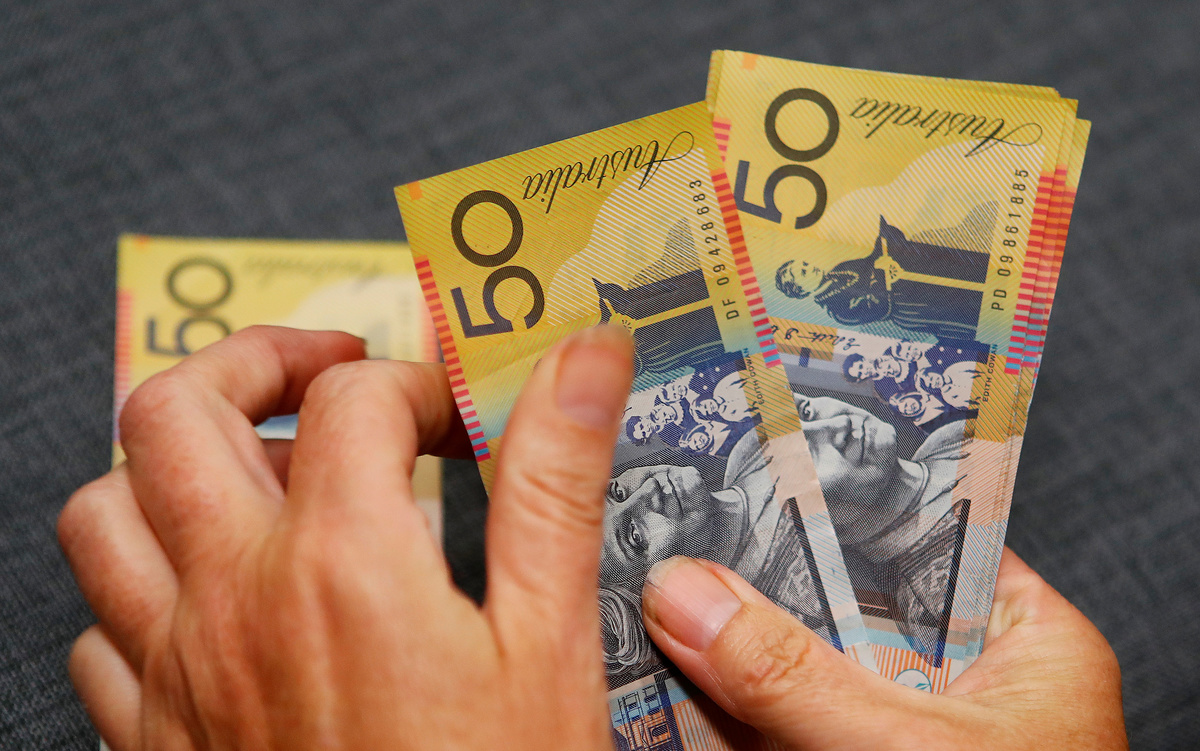
"The biggest theme (in the market today) is 'risk-off.' The soft Chinese data sparked the sell-off and benefited the Japanese yen and at the cost of the Australian dollar," said John Doyle, vice president of dealing and trading at Tempus, Inc. China is Australia's largest trade partner and negative sentiment about its economy bodes ill for the Aussie dollar.
After a stellar 2018 in which the greenback gained 4.3 percent as the Federal Reserve hiked interest rates four times, investors now expect the U.S. central bank to pause or even halt its monetary tightening policy.
Chairman Jerome Powell reiterated last week that the Fed has the ability to be patient on monetary policy given that inflation remains stable.
Against the euro <EUR=>, the greenback was about 0.03 percent lower, and the dollar index <.DXY> was at 95.60, down about 0.06 percent.
Earlier Monday, the British pound <GBP=> rose 0.3 percent to a 7-week high of $1.29 at the start of what is expected to be a highly volatile week. It was last up 0.14 percent.
Prime Minister Theresa May warned on Monday that failure to approve her Brexit deal could lead to Britain eventually staying in the European Union. May must win a vote in parliament on Tuesday to get her Brexit deal approved or risk a chaotic exit for Britain from the European Union. Her chances of winning the vote appear to be slim.
(Reporting by Kate Duguid in New York and Tom Finn in London; Editing by James Dalgleish)