LONDON (Reuters) - The dollar hit an 11-month high against a basket of its rivals on Wednesday as an escalating trade conflict kept investors from buying higher-yielding currencies and markets braced for growing volatility.
Currency markets had breathed a sigh of relief after Beijing signalled its tolerance of a stronger currency by fixing a stronger daily midpoint than expected. Safe-haven currencies such as the Swiss franc <CHF=EBS> and the Japanese yen <JPY=EBS> were still well-supported, though. [CNY/]
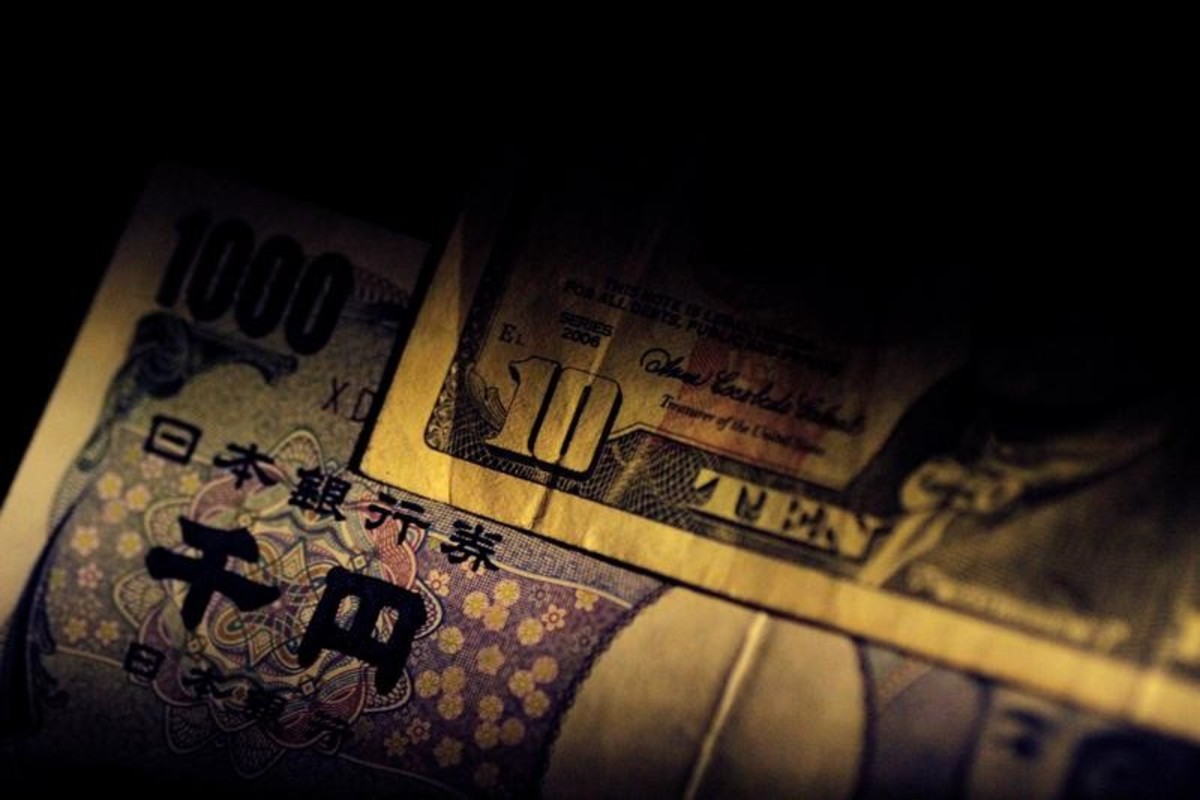
At 1200 GMT on Wednesday, the dollar traded flat against a basket of its rivals <.DXY> at 95.09, its highest since mid-July 2017.
"Market volatility remains very low and the headline risks from trade concerns should push that higher," said Hans Redeker, global head of currency strategy at Morgan Stanley in London.
Led by the U.S. Federal Reserve, global central banks are pulling back from their financial-crisis policies, and market expectations are for volatility to pick up.
Morgan Stanley estimates that FX volatility remains one standard deviation below its long-term average. U.S. bond market volatility was more than 1.5 standard deviations below its long- term average.
A gauge of perceived equity market swings <.VIX> rose to a two-week high of 14.64 vol on Tuesday before pulling back.
EURO
The euro slipped a quarter of a percent, with traders wary of pushing it higher before some large option expiries this week. In addition, European Central Bank policymaker Ewald Nowotny said on Wednesday the euro weakness was caused by the growing interest rate differential between the United State and Europe.
Roughly $2 billion of currency options on the euro/dollar are set to expire this week between $1.1550 and $1.1500, dampening any large moves in the cash markets.
Emerging currencies won some reprieve, with the Mexican peso <MXN=D3> stronger on the day along with the Taiwan dollar <TWD=> and the South African rand <ZAR=D3>
The Australian dollar, considered sensitive to shifts in sentiment towards China, fell to a 13-month low of $0.7347 <AUD=D4> on Tuesday before pulling back slightly to $0.7388.
The Swiss franc slipped 0.2 percent to 0.9962 franc per dollar <CHF=EBS>, handing back the previous day's gains.
Before Thursday's Bank of England policy decision, the pound struggled near a seven-month low of $1.3151 <GBP=D3>.
No economists polled by Reuters expect the BoE to raise rates on Thursday, and some are getting cold feet about their forecasts for a rate rise in August, which would be only the central bank's second increase since the 2008 financial crisis.
Before market opening on Wednesday, the People's Bank of China lowered the midpoint rate <CNY=PBOC> by 0.54 percent to 6.4586 per dollar. Traders said the daily fixing was far stronger than their models suggested, an attempt to stabilise sentiment and prevent the yuan from sinking further.
Markets also turned their focus to Sintra in Portugal, where U.S. Federal Reserve Chair Jerome Powell, European Central Bank President Mario Draghi, Bank of Japan Governor Haruhiko Kuroda and Reserve Bank of Australia Governor Philip Lowe are all scheduled to speak at a conference on Wednesday.
(Reporting by Saikat Chatterjee; Editing by Alison Williams)