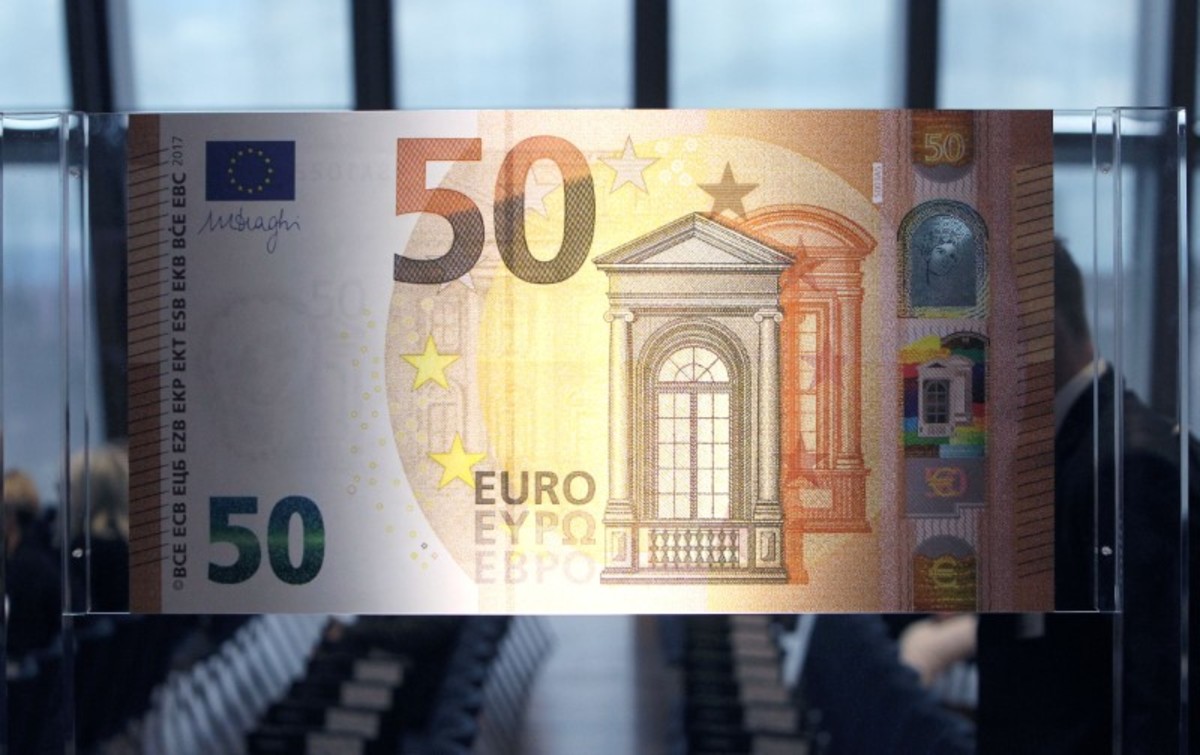
NEW YORK (Reuters) - The euro fell on Friday, marking its biggest weekly loss of the year a day after the European Central Bank decided to prolong its bond purchases and signalled its willingness to stick with an ultra-loose policy stance.
The tension between Madrid and Catalonia's secessionists also stoked selling in the single currency after the Catalan parliament on Friday declared independence from Madrid following a secret ballot. Spain Prime Minister Mariano Rajoy retaliated by sacking the Catalan government and set elections on Dec. 21.
"The dovish surprise from the ECB was its openness to extend the duration of its bond purchase program," said Omer Esiner, chief market strategist at Commonwealth Foreign Exchange in Washington.
On Thursday, the ECB said it will extend its bond purchases into September 2018 while reducing its monthly purchases by half to 30 billion euros starting in January.
The move raised bets the ECB was unlikely to raise interest rates until 2019 as the U.S. Federal Reserve has remained on its path to hike U.S. rates further.
The Fed will hold a two-day policy meeting next Tuesday and Wednesday where policy-makers are expected to leave rates unchanged.
The euro <EUR=> was down 0.5 percent at $1.1595, bringing its weekly loss against the dollar to 1.6 percent for the biggest in 11 months.
Against the yen, the common currency <EURJPY=> was 0.6 percent lower at 131.98 yen after touching its weakest level in nearly two weeks.
The Catalan parliament vote revived some safe-haven demand for the yen and Swiss franc <CHF=>.
Even in the aftermath of Friday's political turmoil, "the situation in Spain seemed largely contained for now," Eisner said.
As the euro wobbled this week, the dollar strengthened on upbeat economic data, hopes for a tax cut and speculation about President Donald Trump's selection of someone who favours a faster pace of rate increases than current Fed Chair Janet Yellen, whose term expires in February.
The U.S. government reported on Friday that the economy grew at a 3.0 percent annual rate in the third quarter, faster than the 2.5 percent forecast among economists polled by Reuters.
Earlier Friday, Bloomberg reported that Trump leans towards nominating Fed Governor Jerome Powell as the next Fed chief, but has not made up his mind.
The dollar pared gains briefly on that report as Powell is seen less hawkish than Stanford University economist John Taylor, another potential nominee to lead the central bank.
Trump, who is expected to announce his Fed chief candidate next week, is also considering Yellen, former Fed Governor Kevin Warsh and his economic adviser, Gary Cohn, for the Fed's top job.
The index that tracks the dollar against six currencies <.DXY> was up 0.3 percent at 94.919 after hitting a three-month high at 95.150. It gained 1.3 percent for its biggest weekly increase so far this year.
(Additional reporting by Saikat Chatterjee in London; Editing by Dan Grebler and Chizu Nomiyama)