NEW YORK (Reuters) - The dollar fell on Friday as investors took on riskier assets after top U.S. and Chinese leaders said a trade deal between their countries was likely.
Just over a week remains before higher tariffs can be triggered by the expiration of a U.S.-imposed deadline for an agreement.
But on Friday, U.S. President Donald Trump and Chinese President Xi Jinping both said significant progress had been made in the trade talks and that a deal was possible in the near future. Xi's message was delivered in a letter to Trump.
Trump also said on Friday that if he saw progress in trade talks with China, he might be inclined to extend negotiations beyond a March 1 deadline, and suggested it was likely the globe's two largest economies would be able to make a deal.
"The market has moved back to a risk on-mode putting downward pressure on the dollar," said Alfonso Esparza, senior market analyst at OANDA in Toronto.
"Stocks and commodities have moved up on dollar softness and the optimism that even if the March 1 deadline approaches it will not immediately trigger new tariffs," he added.
In afternoon trading, the dollar index was down 0.1 percent at 96.493.
The greenback this week has fallen 0.5 percent, after gaining more than 1 percent the previous week, in an uneven performance following mixed U.S. economic data.
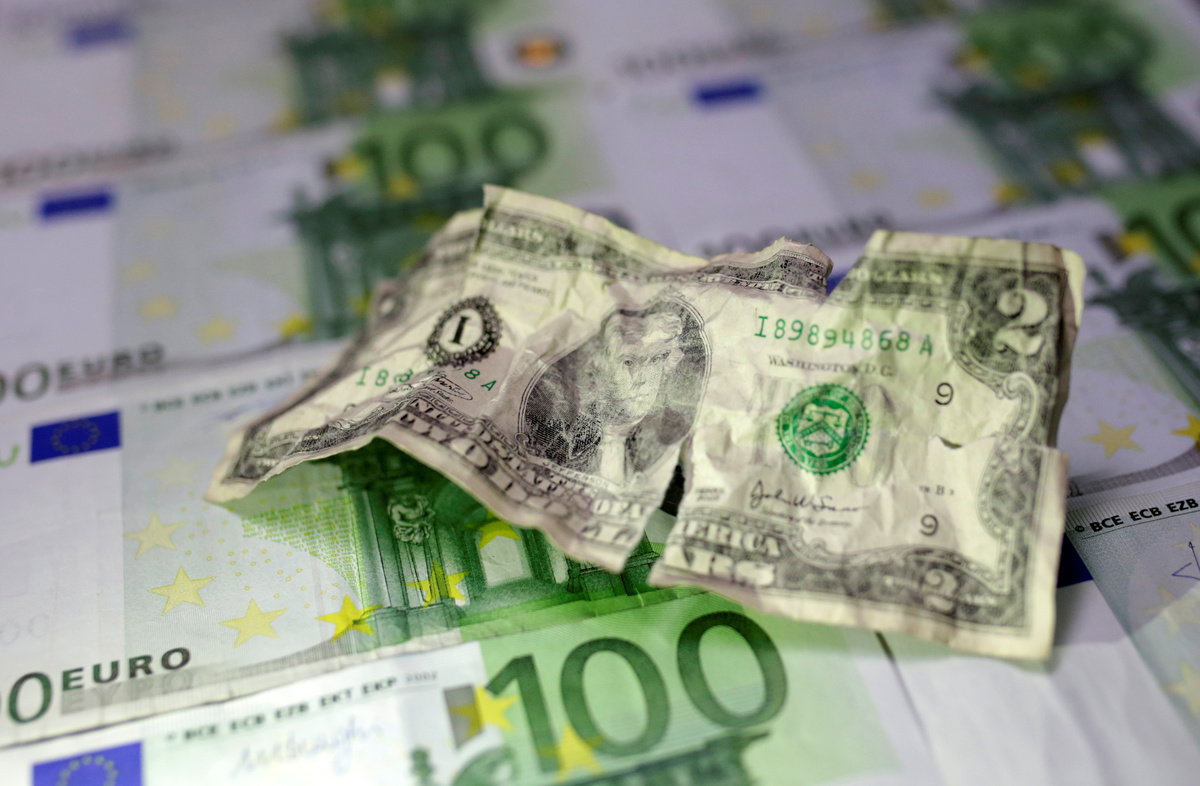
The euro was flat against the dollar on Friday. Weak data since January has undermined support for the single currency, which last traded at $1.1334 . It hit a two-week high on Wednesday, helped by hopes for an easing of the U.S.-China trade conflict.
Analysts assessing the euro's prospects are focused on whether a slowdown in European growth is likely to be protracted. A survey on Friday showed business morale fell in February for a sixth straight month in Germany, the mainspring of the European economy.
The Australian dollar, however, rebounded after China denied it had banned imports of the country's coal. Reuters reported on Thursday that the Chinese port of Dalian had barred imports of Australian coal indefinitely, pushing the Aussie dollar down 1 percent.
China said on Friday, however, that imports would continue, but customs has stepped up checks on foreign cargoes.
The Aussie dollar was last up 0.6 percent at US$0.7134.
(Graphic: G10 FX MTD link: https://tmsnrt.rs/2VcPDtK)
(Reporting by Gertrude Chavez-Dreyfuss; Editing by Steve Orlofsky and Richard Chang)