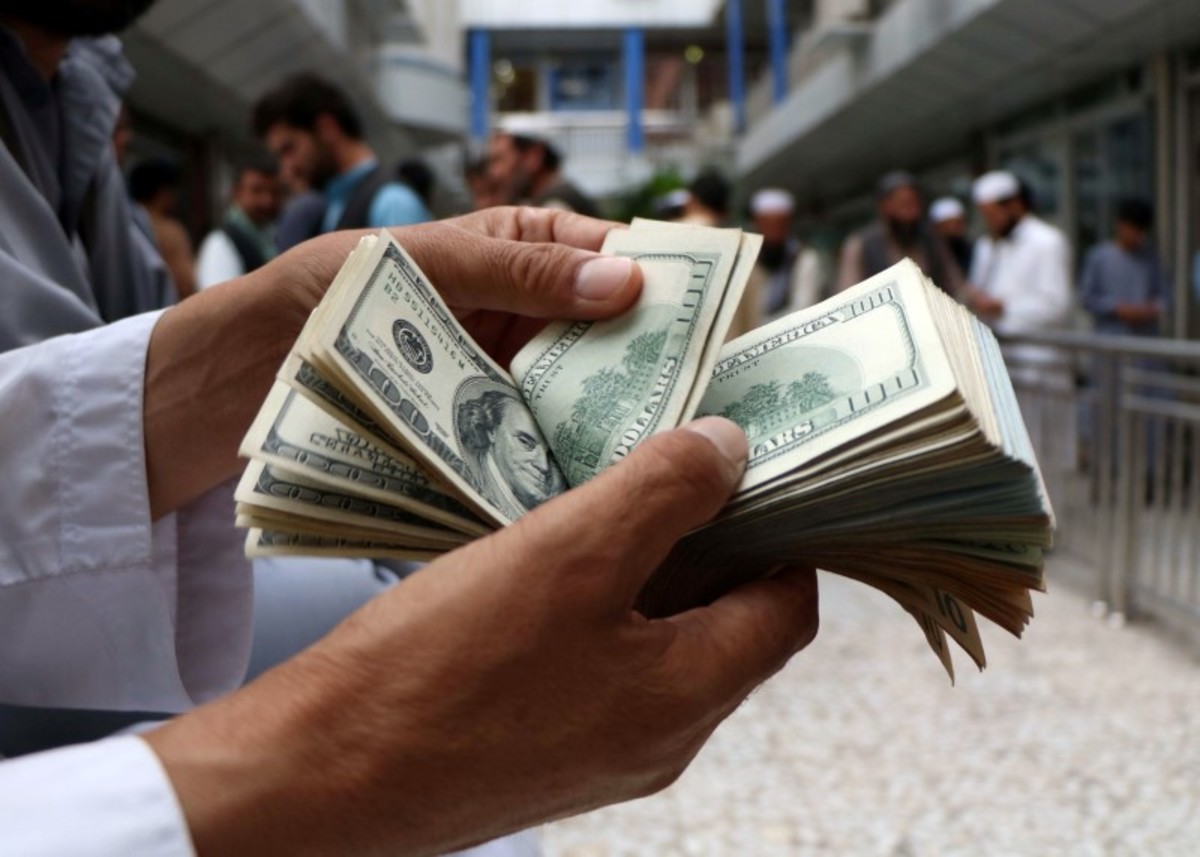
LONDON (Reuters) - The dollar rose for a fourth straight day on Friday, benefiting from turbulence caused by an escalating U.S.-China trade conflict, as investors prepared for a U.S. jobs report due later in the day.
China has said it will retaliate if U.S. President Donald Trump follows through on a threat to increase tariffs to 25 percent from 10 percent on $200 billion in Chinese imports.
Worries about the impact that tariffs would have on growth spread from Asian to European markets yesterday, where equity markets tumbled.
The euro on Friday fell to a five-week low of $1.1577 as the dollar rallied <EUR=EBS>.
China's offshore yuan, which has been under pressure on worries the months-long trade dispute will hurt its economy, slid a further 0.4 percent to as low as 6.9064 yuan <CNH=>, its weakest since May 2017.
"The strength of the U.S. dollar is likely to continue as we look ahead to the prospect of another two rate rises by year- end, along with some haven flows over the trade war escalation," said Michael Hewson, chief analyst at CMC Markets.
Others warned, though, that the dollar's nearly eight percent rise since February might not be sustainable.
"While running amok in terms of trade policy and sanctions may support the dollar in the short term because the currency serves as a safe haven, it will increase medium to long-term risks for the currency," said Commerzbank currency strategist Ulrich Leuchtmann, in Frankfurt.
The dollar index <.DXY>, which measures it against a basket of six currencies, rose 0.2 percent to 95.362, off last week's 3 1/2-week low of 94.084.
The Australian dollar, seen as a proxy for Chinese growth because of Australia's export-reliant economy, was under pressure as the Sino-U.S. trade tensions undermined upbeat retail sales data at home. The Aussie fell to an 11-day low of $0.7354 <AUD=D3>.
Elsewhere, the pound remained frail even after the Bank of England on Thursday raised its policy interest rate from 0.5 to 0.75 percent following an unanimous decision of its nine-member policy board.
That was probably because the Bank of England Governor Mark Carney said monetary policy needed to "walk not run" and expressed concern about the risks of a cliff-edge Brexit.
Sterling on Friday traded at $1.2985, an 11-day low. <GBP=D3>
The U.S. Labor Department is expected to report non-farm payrolls grew by 190,000 in July after surging by 213,000 in June.
"Well-behaved inflation and wage growth remain important in preventing the Fed from speeding up rate hikes," said analysts at MUFG.
There is risk, though, that the situation could change if the non-farm report provides more compelling evidence of strengthening wage growth, said the analysts.
(Additional reporting by Daniel Leussink in Tokyo, editing by Larry King)