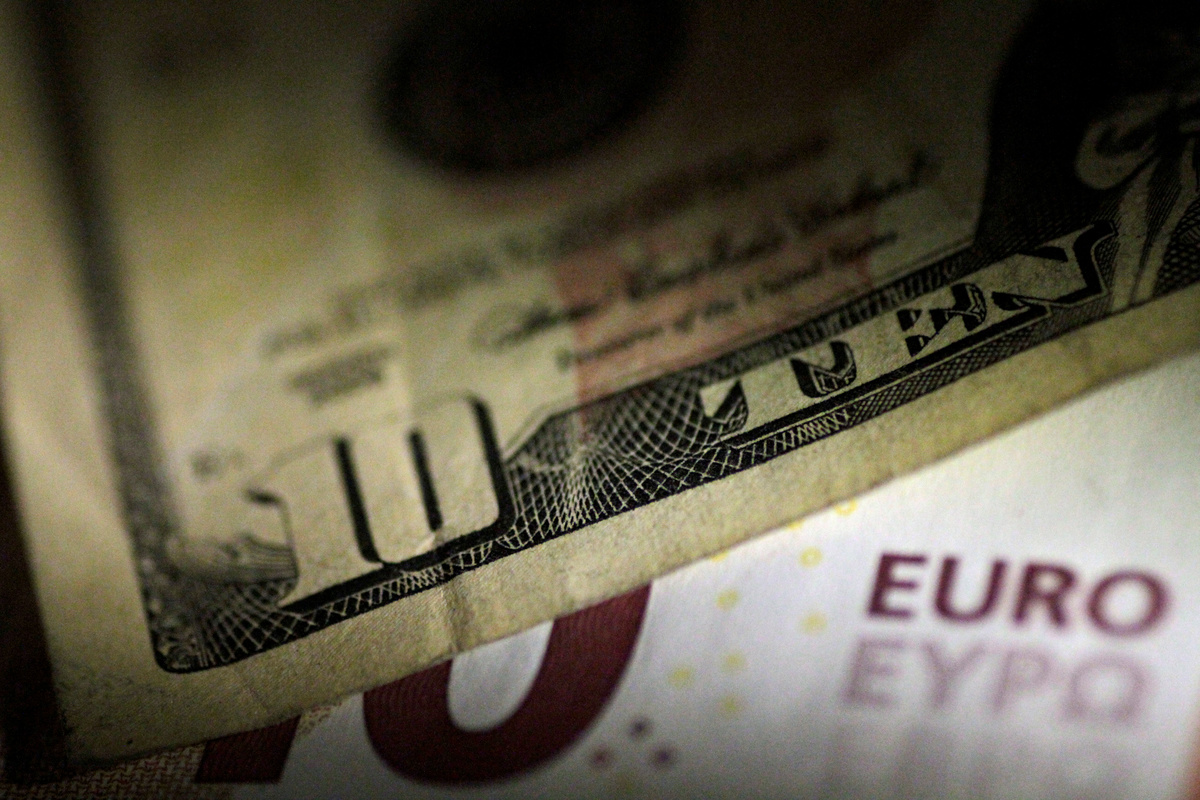
NEW YORK (Reuters) - The euro retraced earlier losses against the U.S. dollar on Wednesday after administration officials said that U.S. President Donald Trump is expected to delay a decision on tariffs on imported cars and parts by up to six months.
A formal announcement is expected by Saturday, the due date for Trump to make a decision on recommendations by the Commerce Department to protect the U.S. auto industry from imports on national security grounds.
“The assumption is that that’s going to delay any tariffs on European autos, which has been the issue hanging over the broader trade talks,” said Shaun Osborne, chief FX strategist at Scotiabank in Toronto.
The greenback has benefited from its safe-haven status even as the United States and China remain locked in a trade war.
Trump threatened higher tariffs on billions of dollars of Chinese imports last week, and Beijing responded with planned tariff hikes of its own on Monday.
The euro had weakened earlier on Wednesday as Italy’s Deputy Prime Minister Matteo Salvini criticized European Union rules for the second day.
"If there are European rules that are starving a continent, these rules must be changed," Salvini said on Wednesday, a day after he said the government was ready to breach EU rules that seek to limit budget deficits and curb excessive debt.
“There are definitely concerns heading into the European elections next week that there could be some more rhetoric against the EU,” said Erik Nelson, a currency strategist at Wells Fargo in New York.
Salvini’s comments overshadowed data showing Germany’s economy returned to growth in the March quarter as householders spent more freely and construction activity picked up.
Safe-haven currencies including the Japanese yen and U.S. dollar were also boosted after weak economic data in China raised new concerns about growth there.
China reported surprisingly weaker growth in retail sales and industrial output for April, adding pressure on Beijing to roll out more monetary stimulus as the trade war with the U.S. escalates.
“This data preceded the latest round of tariffs, so that’s a bit worrying that even before this flared up we saw some weakness,” Nelson said.
U.S. data on Wednesday showed that U.S. retail sales unexpectedly fell in April as households cut back on purchases of motor vehicles and a range of other goods while U.S. industrial production also dropped last month.
(Editing by James Dalgleish and Cynthia Osterman)