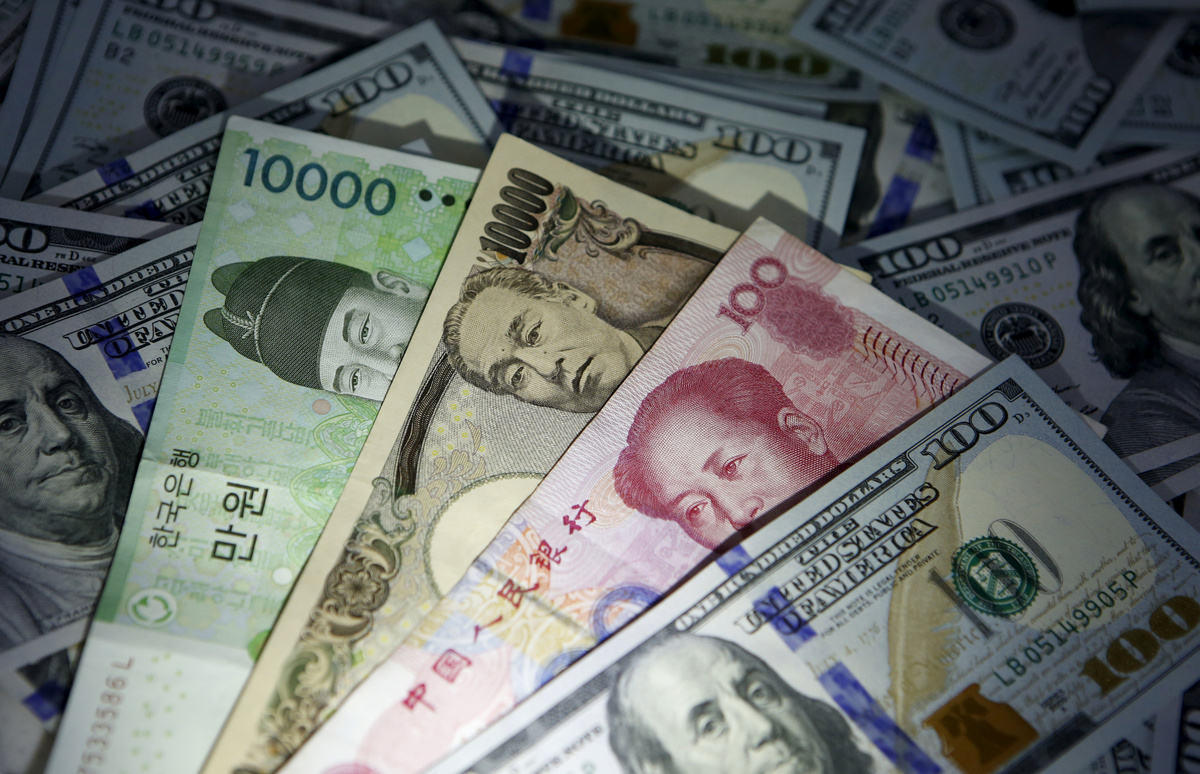
The safe-haven Japanese yen jumped on Monday as investors worried about the spreading coronavirus outbreak fled riskier assets, even after the U.S. Federal Reserve slashed rates to zero and launched what is effectively a new round of quantitative easing.
The Fed cut U.S. interest rates on Sunday and said it would expand its balance sheet by at least $700 billion in the coming weeks.
The move is expected to help resolve some market dislocations including illiquidity in the U.S. Treasury market, but companies may still struggle as people avoid going out because of the virus and some businesses face mandatory shutdowns.
“What’s needed is more direct support to industries that are hit directly by the virus. That can only be provided by fiscal policy, and governments have not shown the same swift reaction that central banks have,” said Marshall Gittler, head of investment research at BDSwiss Group.
Leaders of the Group of Seven wealthy democracies said they were committed to doing "whatever is necessary" to battle the coronavirus pandemic and to work together more closely to protect public health, jobs and growth.
The dollar index against a basket of major currencies <=USD> gained 0.24% to 98.11 while the dollar dipped 1.60% to 106.18 yen <JPY=>.
The euro <EUR=> gained 0.49% against the greenback to $1.11.
The greenback has gained in the past week as companies drew on credit lines and bank lenders sought out the currency to fund the loans. That has led to strains in sourcing dollars.
To address this, the Fed and other major foreign central banks also cut pricing on their swap lines to make it easier to provide dollars to financial institutions around the world.
Multiple global central banks acted to ease conditions on Monday.
The Bank of Japan said at an emergency meeting it would buy more corporate bonds, commercial debt and establish a new corporate lending scheme. New Zealand's central bank slashed rates in an emergency move while the Reserve Bank of Australia (RBA) injected extra cash into the financial system.
The People's Bank of China injected 100 billion yuan ($14.28 billion) into financial institutions, minutes before data showed China's retail sales, industrial output and fixed-asset investment all tumbled in January and February.
"The measures introduced to stop the spread of the virus in China may have led to a sharper slowdown in activity than will be the case elsewhere, but it's clear that the measures central banks have taken, and whatever they do next, cannot prevent a major economic hit being felt globally," Societe Generale strategist Kit Juckes said.
The dollar was last down 0.19% against the offshore yuan <CNH=> at 7.007.
(Additional reporting by Tommy Wilkes in London; Editing by David Gregorio)