NEW YORK (Reuters) - The dollar was lower on Friday afternoon as some optimism for the ongoing trade talks with China buoyed trade-linked currencies like the euro and the British pound.
U.S.-China negotiations continued on Friday as both sides sought to hammer out a "phase one" trade pact. U.S. Commerce Secretary Wilbur Ross said progress was being made on the agreement's details, which helped lift trade-exposed currencies at the expense of safe-haven assets such as the Japanese yen.
Ross, in an interview on Fox Business Network, said there was a very high probability the United States would reach a final agreement on a phase one trade deal with China, but would not say whether he expected a deal to be reached before U.S. tariffs on Chinese goods are set to go into effect on Dec. 15.
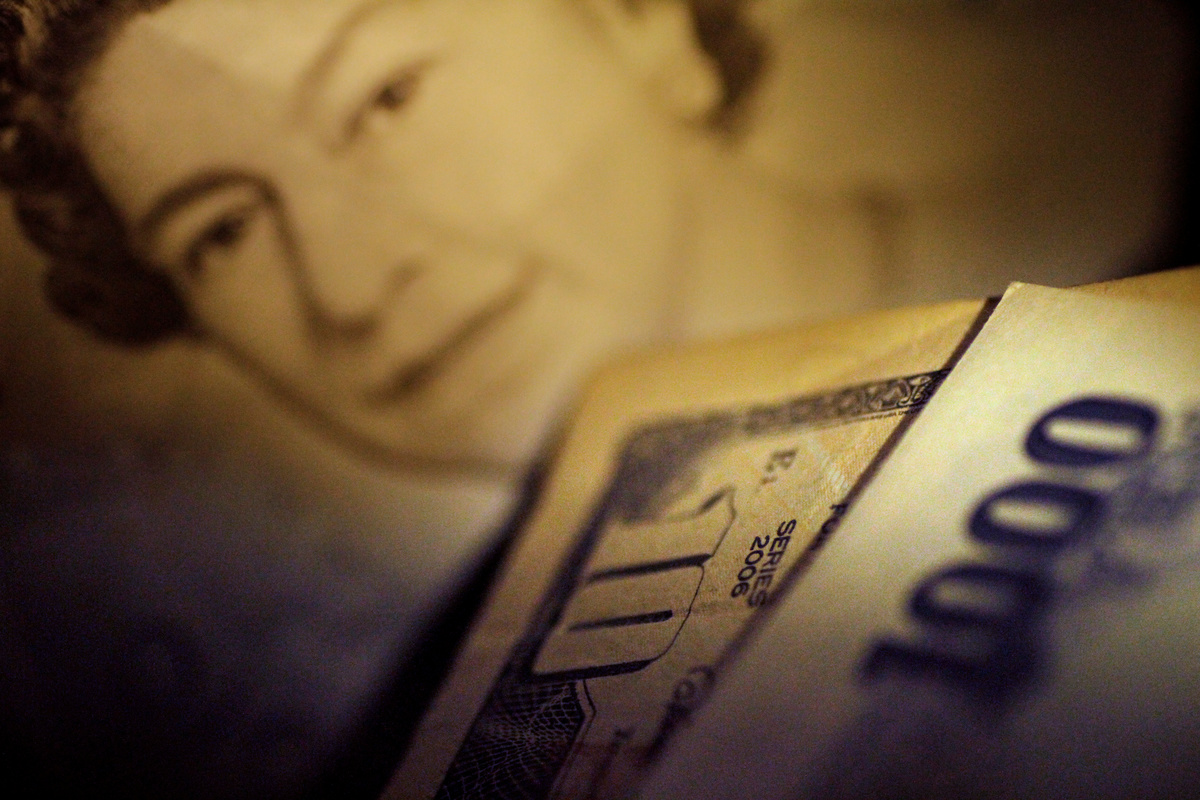
The dollar fell 0.28% against the euro <EUR=> and 0.18% against the British pound <GBP=>, at $1.105 and $1.290 respectively. It rose 0.41% versus the yen <JPY=>, last at 108.81, after the safe-haven currency had gained this week as political unrest in Hong Kong and trade uncertainty reduced appetite for risk. The Swiss franc also weakened 0.21% versus the dollar <CHF=>.
Bleak Chinese data earlier in the week was still bolstering hopes for a deal, some analysts argued.
"The belief is that perhaps, even though the numbers in the United States are barely expansionary ... the fact that China is slowing down means that there is perhaps economic leverage on the U.S. side and that China will sign on to whatever," said Juan Perez, senior foreign exchange trader and strategist at Tempus Inc.
On Friday, the Commerce Department reported that U.S. retail sales rebounded in October, but consumers cut back on purchases of big-ticket household items and clothing, raising questions about the consumer strength currently underpinning the U.S. economy.
That may have also contributed to the rise in the euro and the pound.
"When we were looking at second-quarter numbers for Europe and the United Kingdom, those numbers were very worrisome, but now that we're looking at the third-quarter numbers, their progress has been a little bit better and their pace has been at expectation or beyond, whereas the United States has actually slowed down," said Perez.
"The dollar is finally today reacting to those numbers and saying the economic pace of the United States is not that great."
(Reporting by Kate Duguid and Elizabeth Howcroft; editing by Jonathan Oatis and Tom Brown)