The United States government has admitted fault in a Washington, DC plane crash in which 67 people were killed, and will now pay out compensation to families.
The midair collision over the Potomac River between a passenger plane and an Army Black Hawk helicopter on January 29 this year was a “wholly avoidable tragedy” and occurred due to the helicopter pilots’ “failure to maintain vigilance,” a Department of Justice filing made on 17 December stated.
The DOJ’s filing in federal court came in response to a lawsuit filed by Rachel Crafton, the wife of one of the passengers killed in the accident.
The lawsuit had accused the Federal Aviation Administration, the Army, American Airlines, and its subsidiary PSA Airlines of “systemic failures” that led to the crash. Meanwhile, other families of victims from the disaster have also filed similar claims.
“The United States admits that it owed a duty of care to Plaintiffs, which it breached, thereby proximately causing the tragic accident on January 29, 2025,” the Justice Department said in a 209-page document.
"The United States admits that the [Black Hawk helicopter] pilots failed to maintain vigilance so as to see and avoid the [plane] and their failure to do so was a cause-in-fact and a proximate cause of the accident."
The crash occurred when the helicopter flew into the path of the American Airlines regional jet as it descended toward Ronald Reagan National Airport.
The collision sent wreckage from both aircraft plunging down into the Potomac River, where rescuers later pulled 28 bodies from the icy waters.
All 64 people on board the plane and three crew members on the helicopter were killed during the mid-air collision.
The U.S. government's admitted liability also stems, in part, from errors by air traffic control staff at Ronald Reagan National Airport. Despite the admissions, some finger-pointing persists, as the filing suggests liability may lie with other parties, including the jet's pilots and the airlines.
American Airlines and its partner, PSA Airlines, named in the document, have filed motions seeking dismissal.
Robert Clifford, one of the attorneys working for the family of victim Casey Crafton, said the DOJ filing admitted “the Army’s responsibility for the needless loss of life” and the FAA’s failure to follow air traffic control procedures.
He also said the document “rightfully” acknowledged that others – American Airlines and PSA Airlines – also contributed to the deaths.
The families of the victims “remain deeply saddened and anchored in the grief caused by this tragic loss of life,” he added.
In a statement, a US Army spokesperson said: “The Army understands and respects the need for families to receive more information regarding the tragic DCA crash.
“We acknowledge that many individuals are still seeking answers about the incident and the measures being taken to prevent a similar tragedy.”
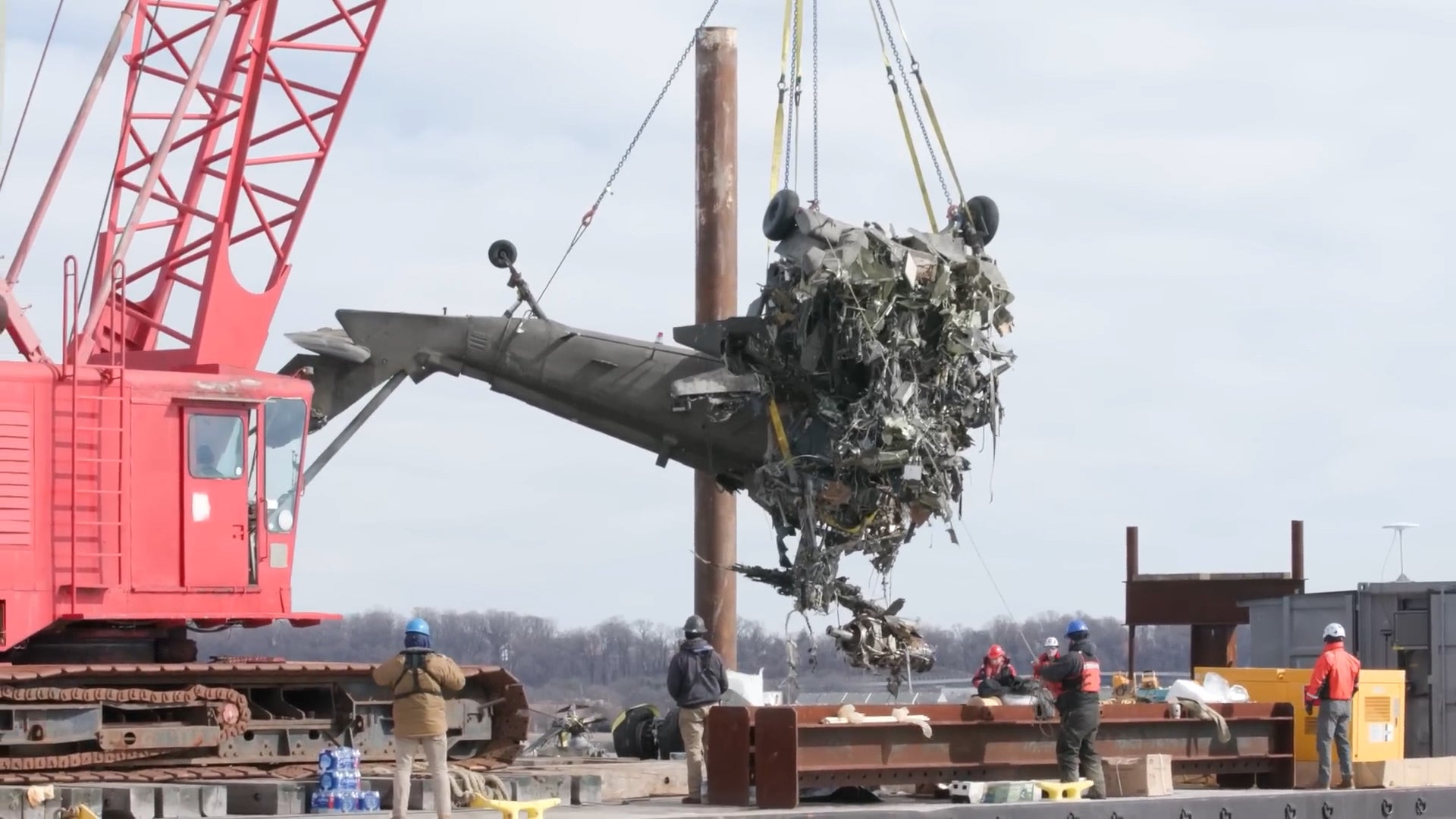
The National Transportation Safety Board is due to release a report detailing the cause of the crash in early 2026.
Still, investigators have highlighted several factors that may have contributed, including the helicopter allegedly flying too high on a hazardous route that left only a sliver of airspace for planes descending into the airport.
In the moments before the collision, the air traffic controller twice asked the Army helicopter pilots whether they had the aircraft in sight; the pilots said they did.
They then requested “visual separation approval,” which would allow them to use their own eyes to maintain distance between the aircraft.
At the NTSB’s investigative hearings, FAA officials acknowledged that controllers at the airport had become overly reliant on the use of visual separation – a practice which has since been ended.
Furthermore, the NTSB said the FAA failed to recognize and mitigate the risk around the busy airport, despite an astonishing 85 near misses in just the three years before the crash.
The Independent has contacted American Airlines for comment.
Modest but steady economic growth lets Europe get by without an interest rate cut
Arab female directors drive change at the Red Sea Film Festival in Jeddah
Unreliable data mask just how bad the air quality crisis is in India
Inflation spikes 2.7 percent despite Trump’s claims ‘prices are down’
PM says he wouldn’t let someone talk to his daughter the way Trump spoke to reporter
Trump team is pushing to yank American citizenship from more foreign-born people